
Field operations · File 08
New operation
Sugar Loaf
Okinawa · the night of 15 to 16 May 1945
Three wounded men out past the wire, star shells over the mud, and first light at five.
The briefing
Three wounded. One night.
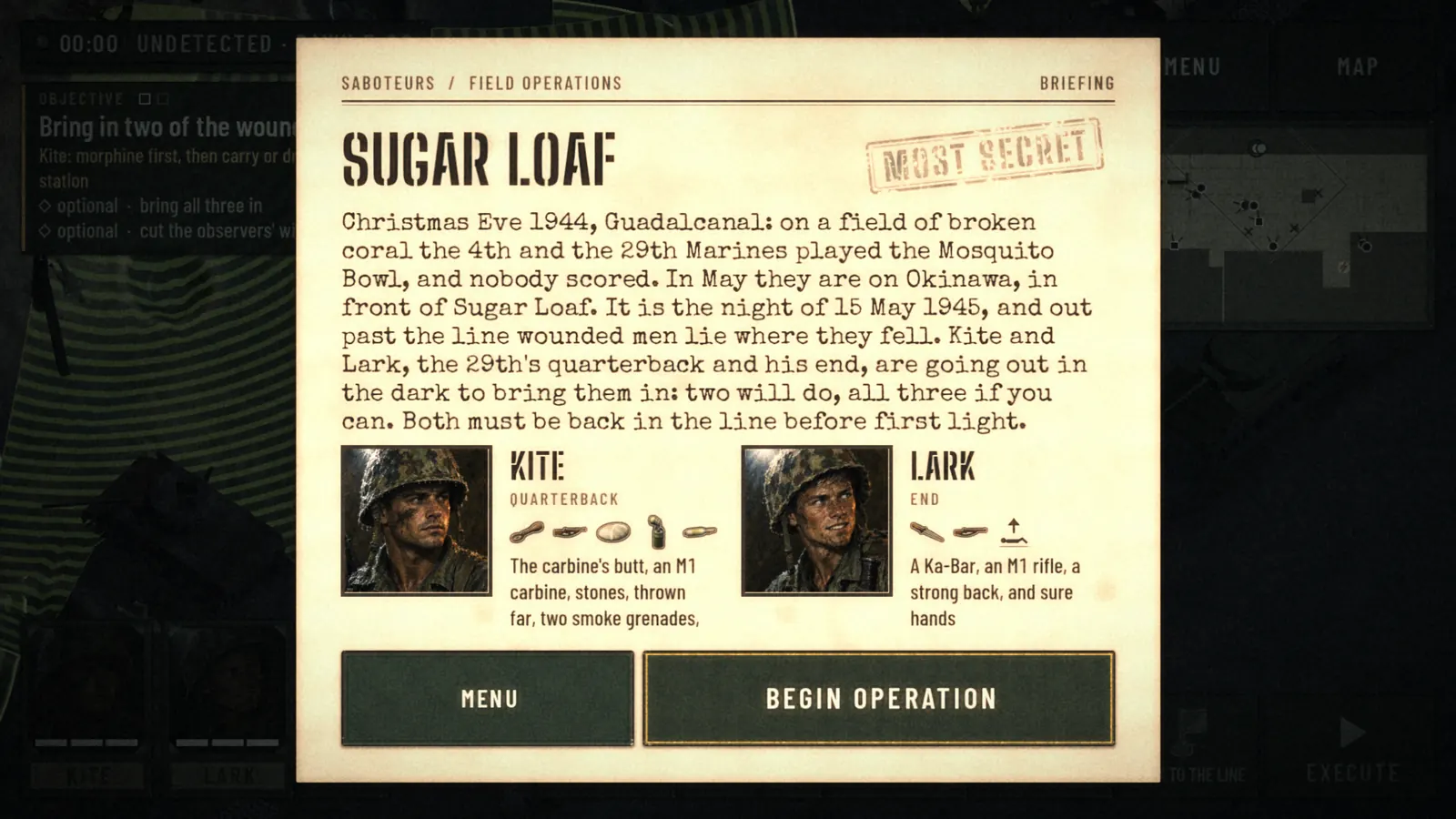
Christmas Eve 1944, Guadalcanal: on a field of broken coral the 4th and the 29th Marines played the Mosquito Bowl, and nobody scored. In May they are on Okinawa, in front of Sugar Loaf. It is the night of 15 May 1945, and out past the line wounded men lie where they fell. Kite and Lark, the 29th's quarterback and his end, are going out in the dark to bring them in: two will do, all three if you can. Both must be back in the line before first light.
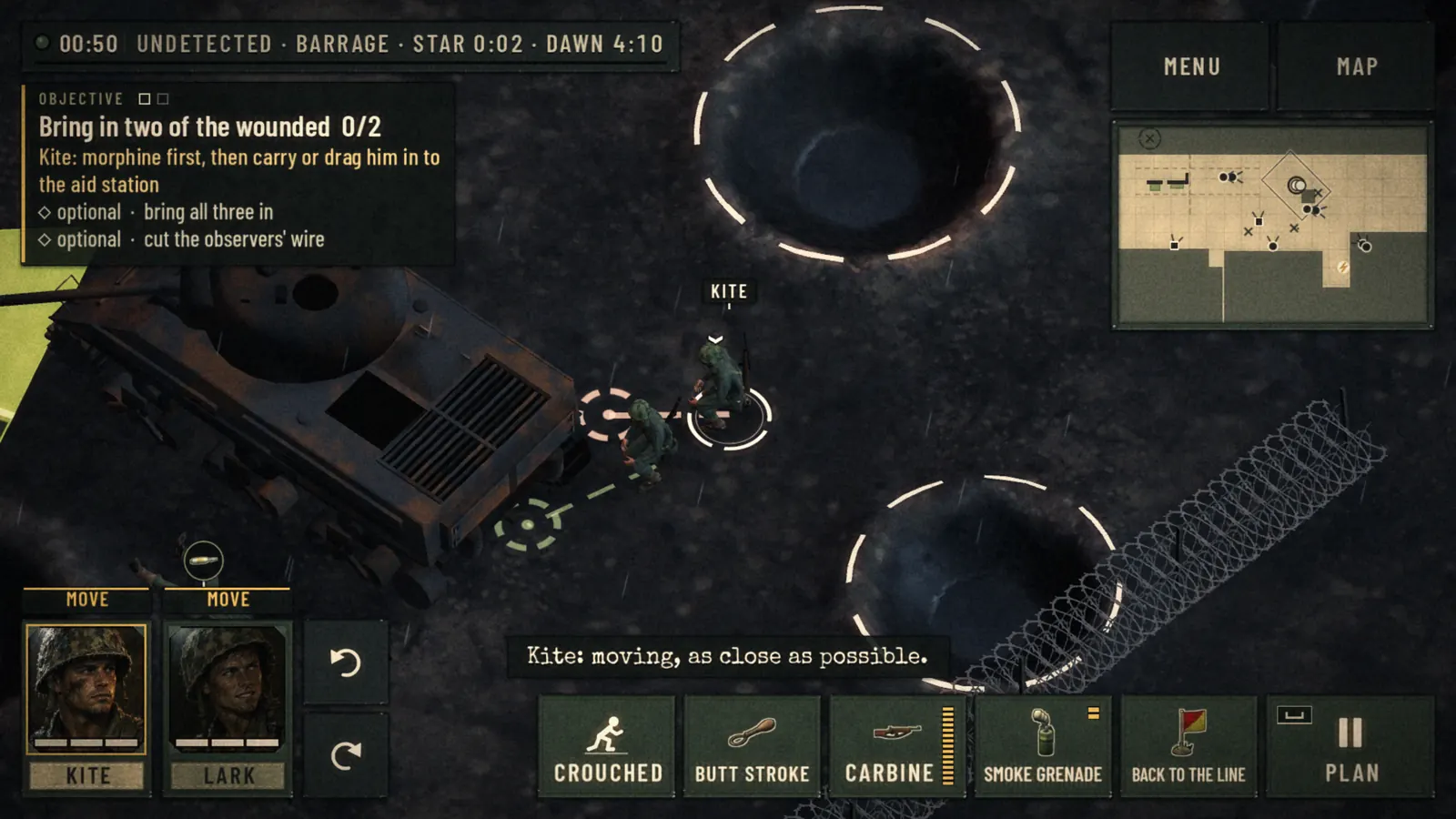
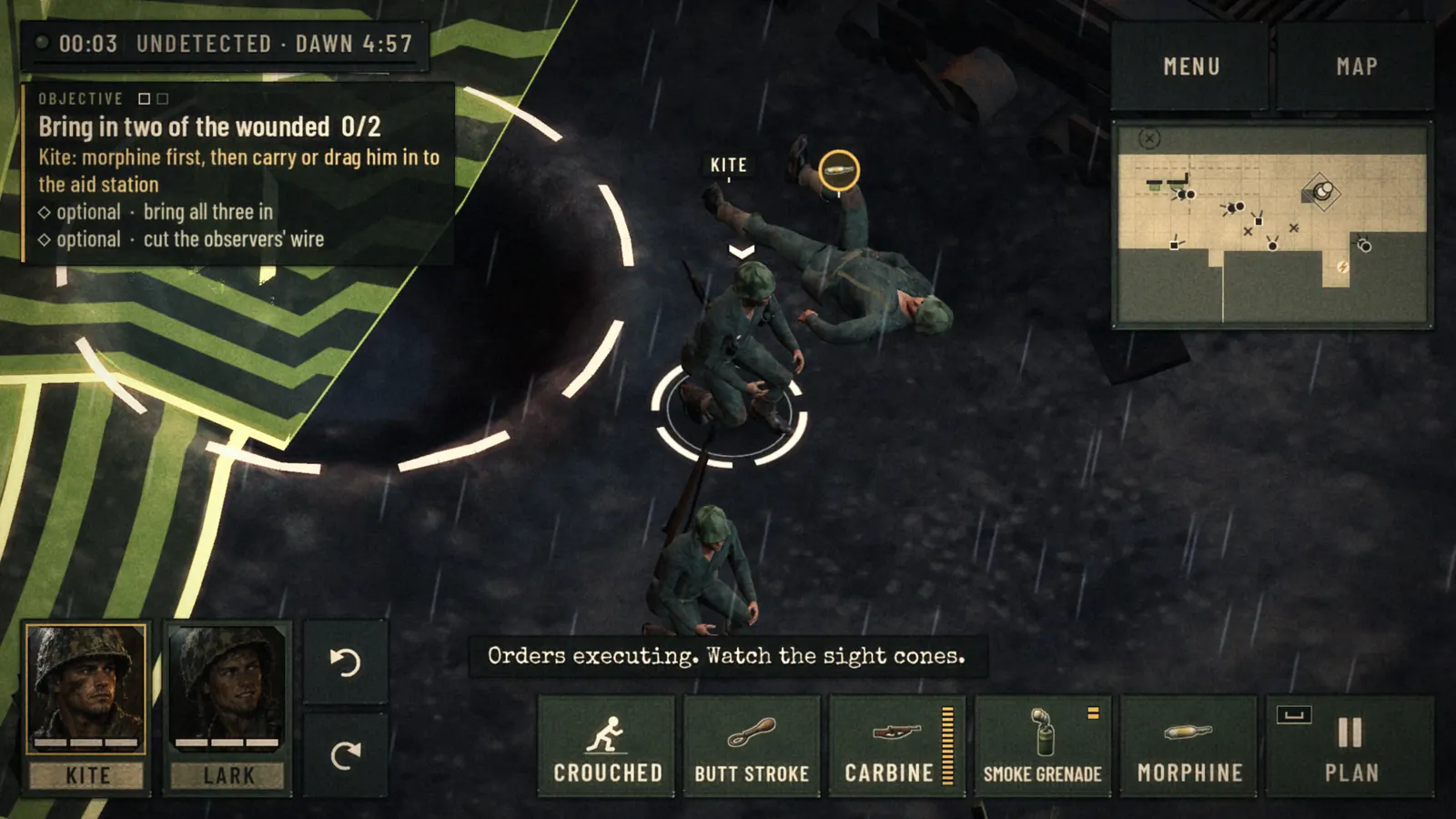
- Bring in two of the wounded Kite gives each man his morphine first; Lark carries him in to the aid station, at the line's west end.
- Bring all three in Optional The third lies against a shattered tree high on the slope, under the gun.
- Cut the observers' wire Optional Only Lark cuts it, where it crosses the gully between Sugar Loaf and Half Moon. Then the observers can only shout.
- Back to the line Both of them, before it is light at 5:00.
Lose either of them and it is over. The eighth operation.
The squad
A quarterback and his end.
-
Kite
New
Quarterback
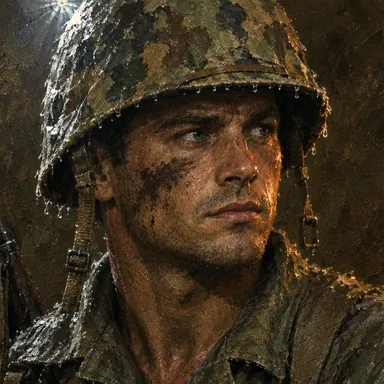
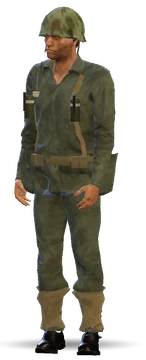
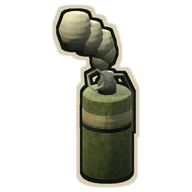
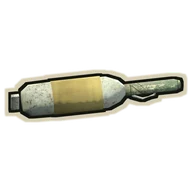
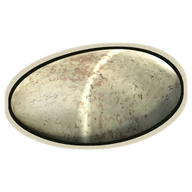
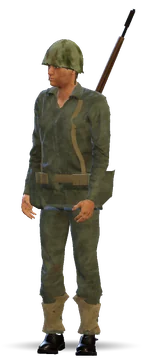
The 29th's quarterback, new to the squad. He throws his two smoke grenades exactly where he means them, out to thirty metres, or passes one into Lark's hands. His three syrettes of morphine keep a wounded man quiet when he is moved; untreated, a man cries out at every step.
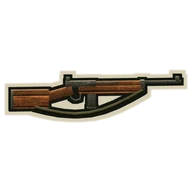
Kit two smoke grenades, three morphine syrettes, stones, an M1 carbine
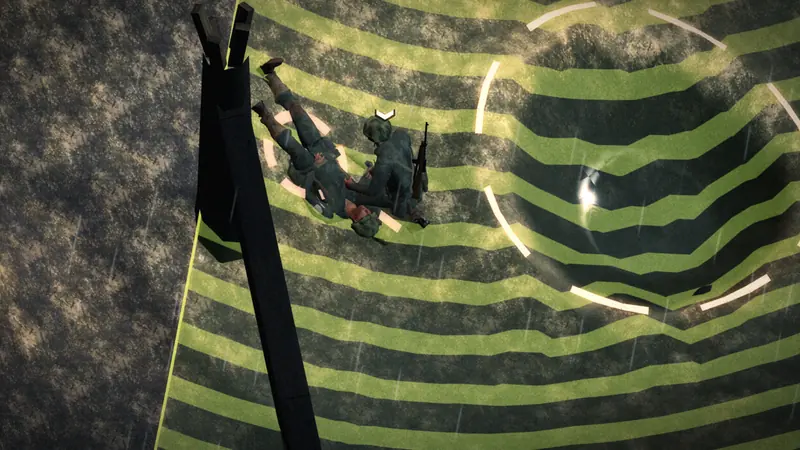
The morphine. Treated, a man keeps quiet when he is moved. -
Lark
New
End
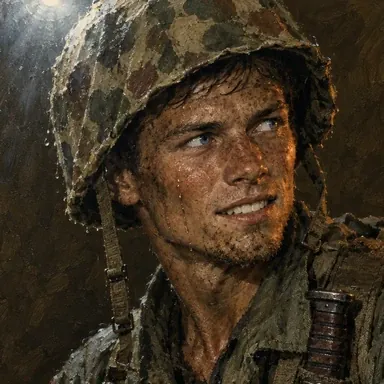
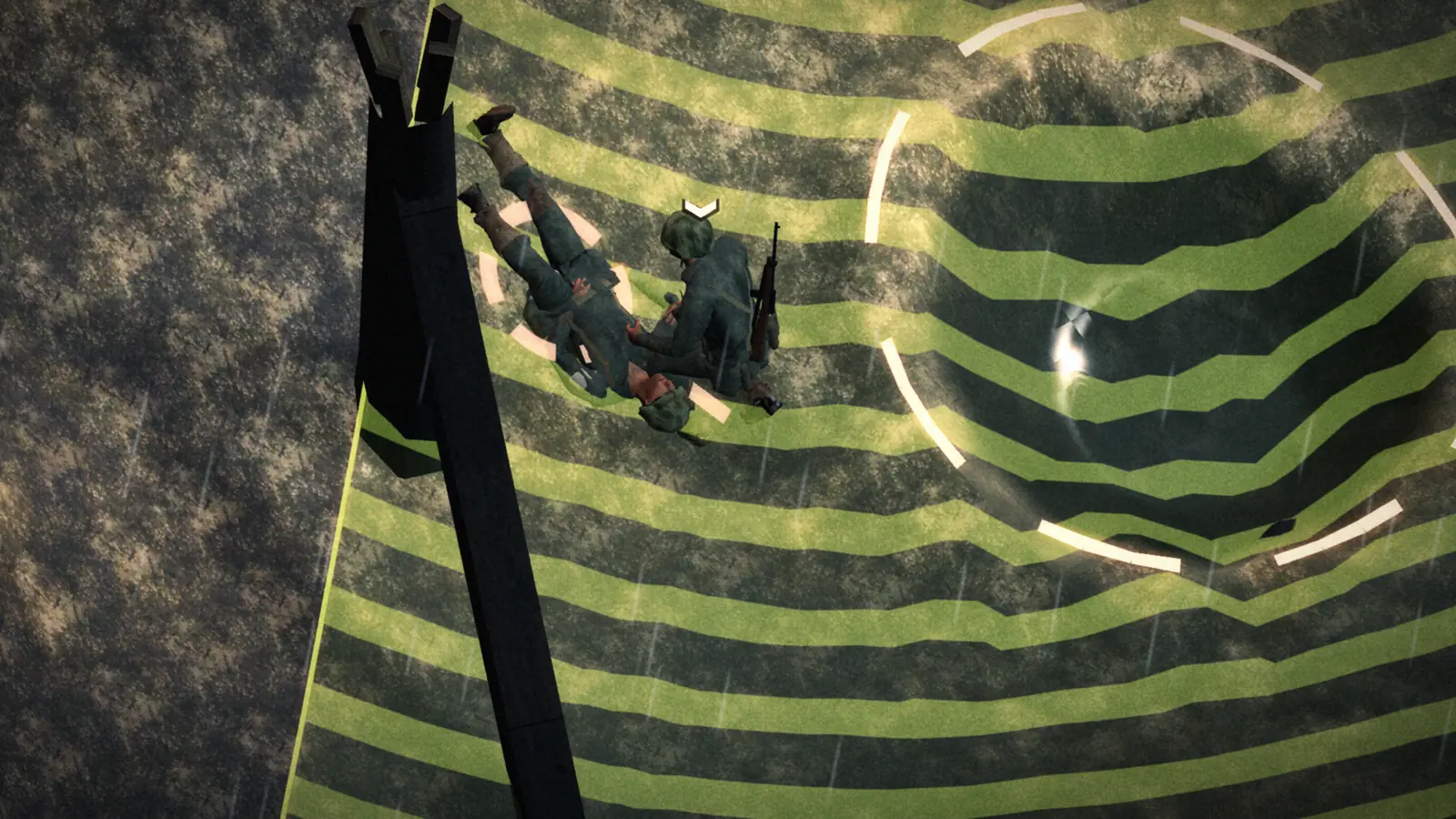
The end Kite throws to, new to the squad. He carries a wounded man at a jog, faster than anyone in the game carries anything, or drags him along the ground, crouched and slow. He catches the pass, and he cuts the observers' telephone wire.
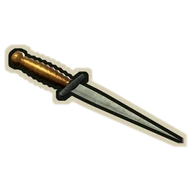
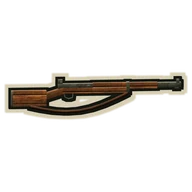
Kit a Ka-Bar, an M1 rifle, a strong back, and sure hands
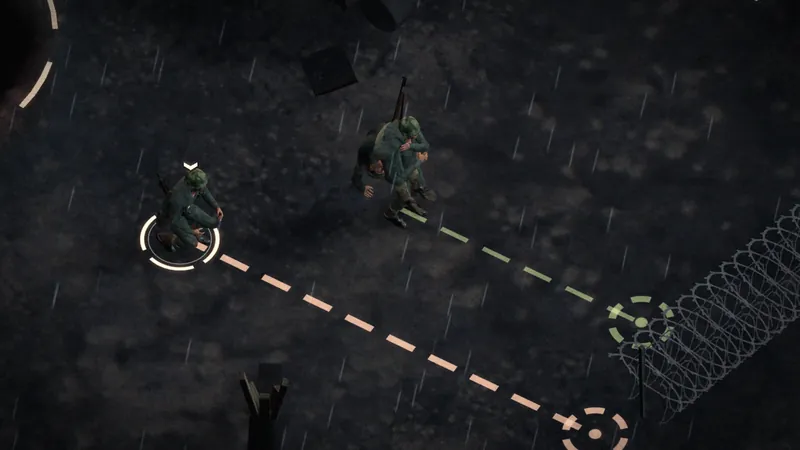
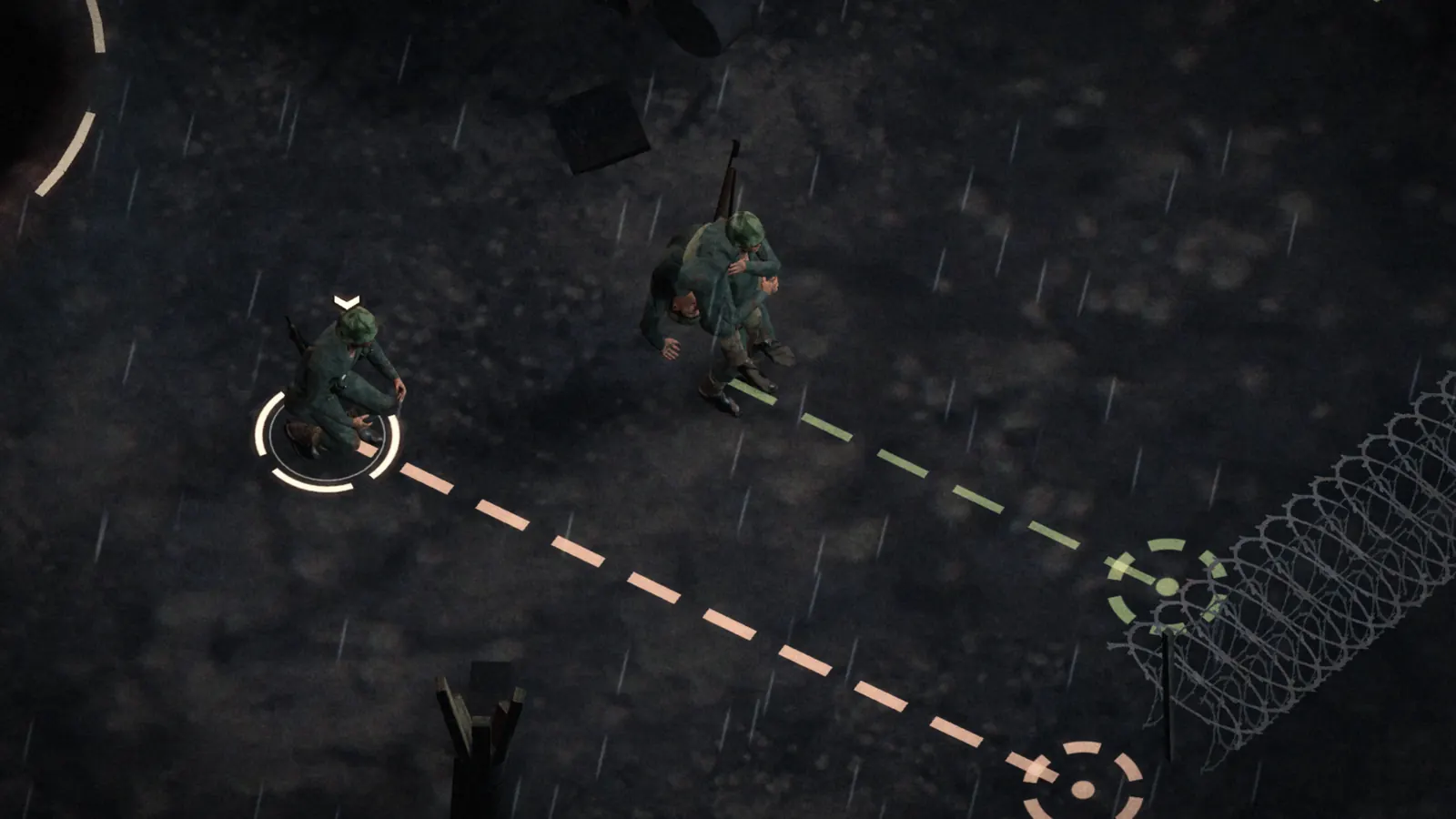
The carry. At a jog, with Hale across his shoulders.
The other side
Who's on watch
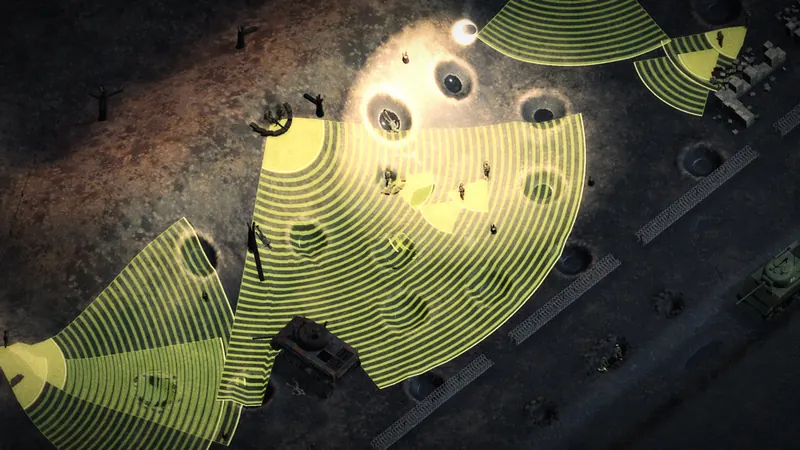
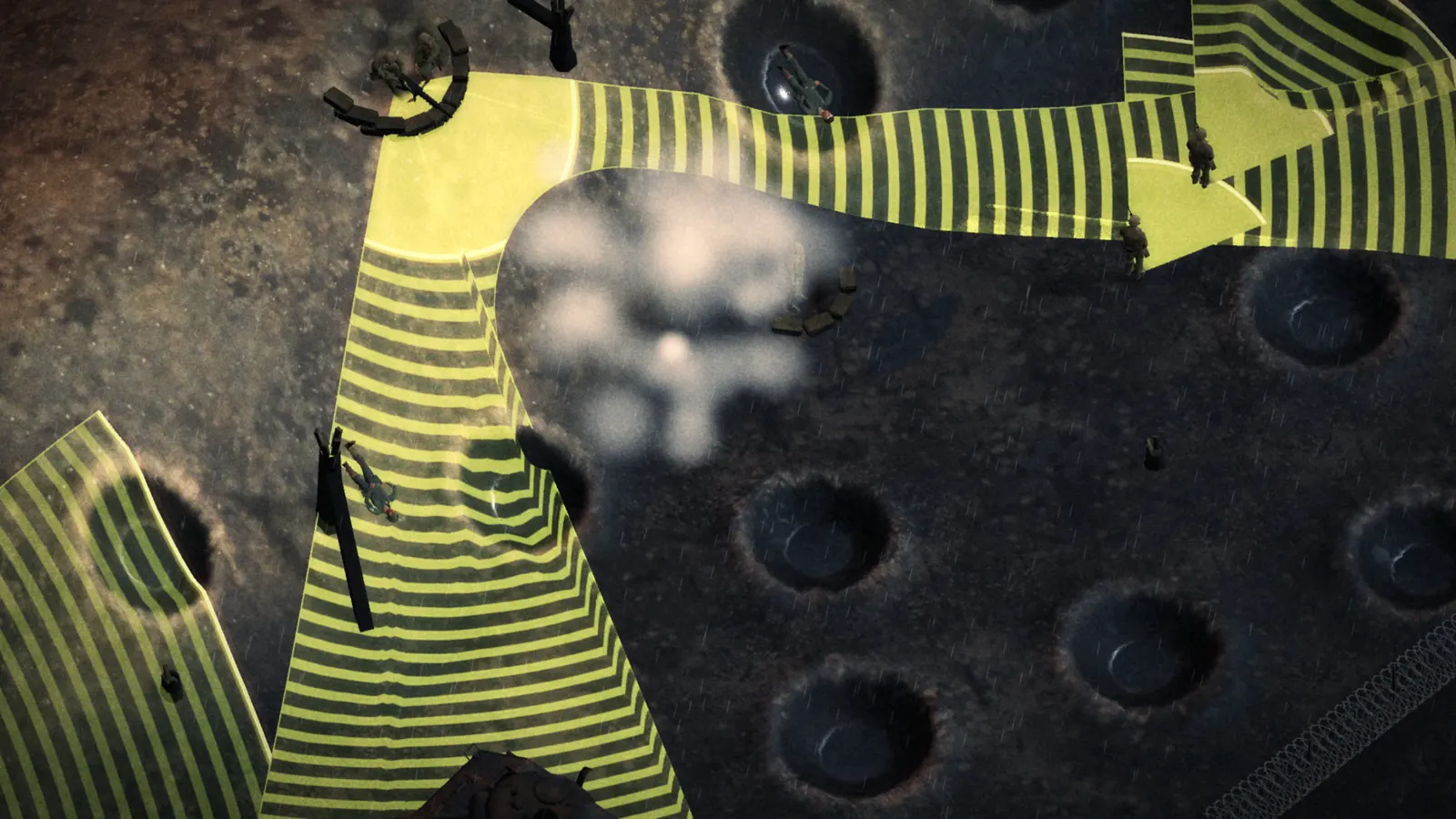
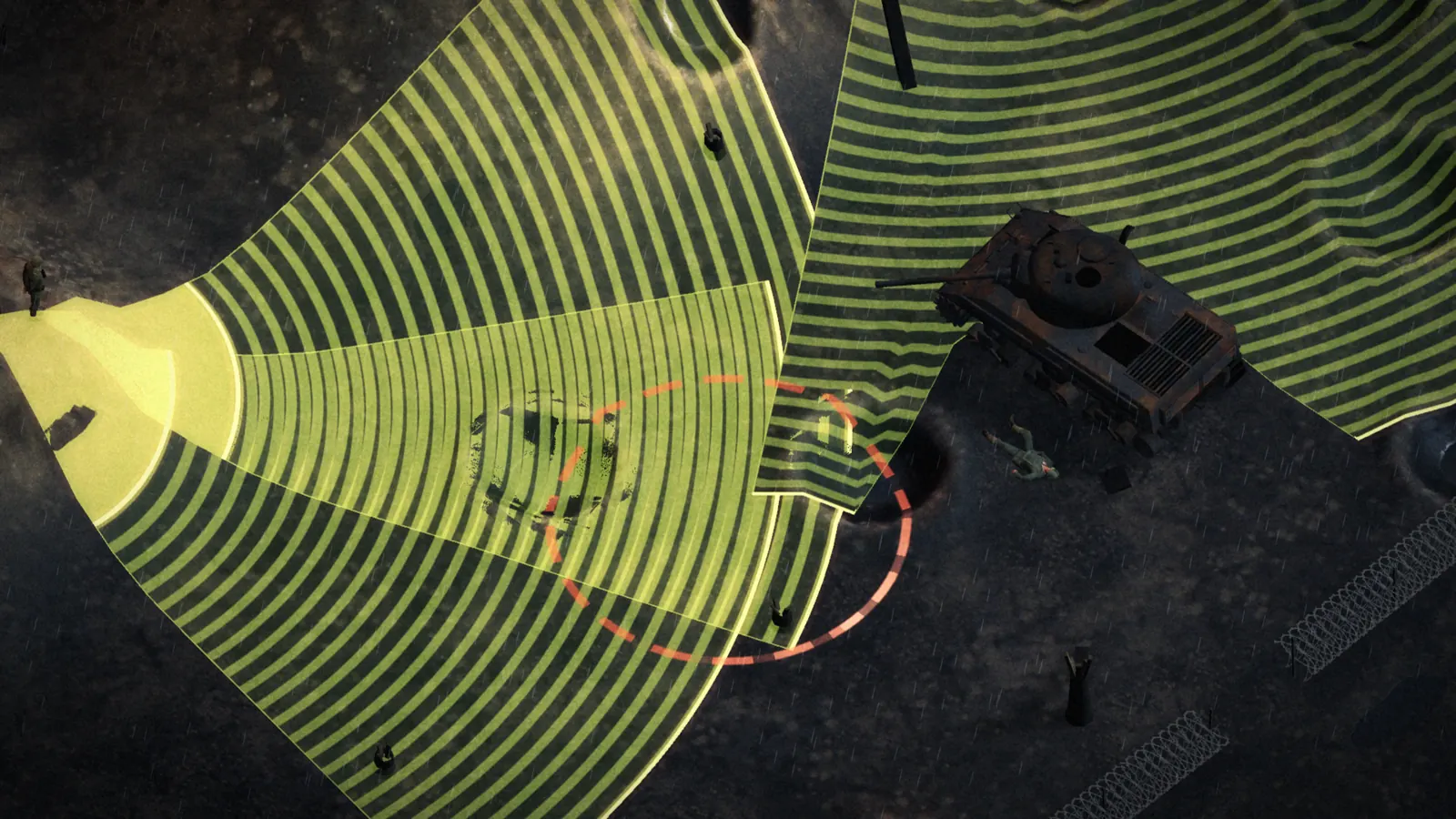
Every guard has a cone you can see and a beat you can learn.
-
Gun crew
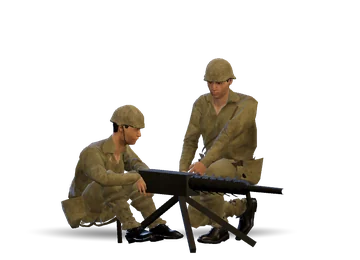
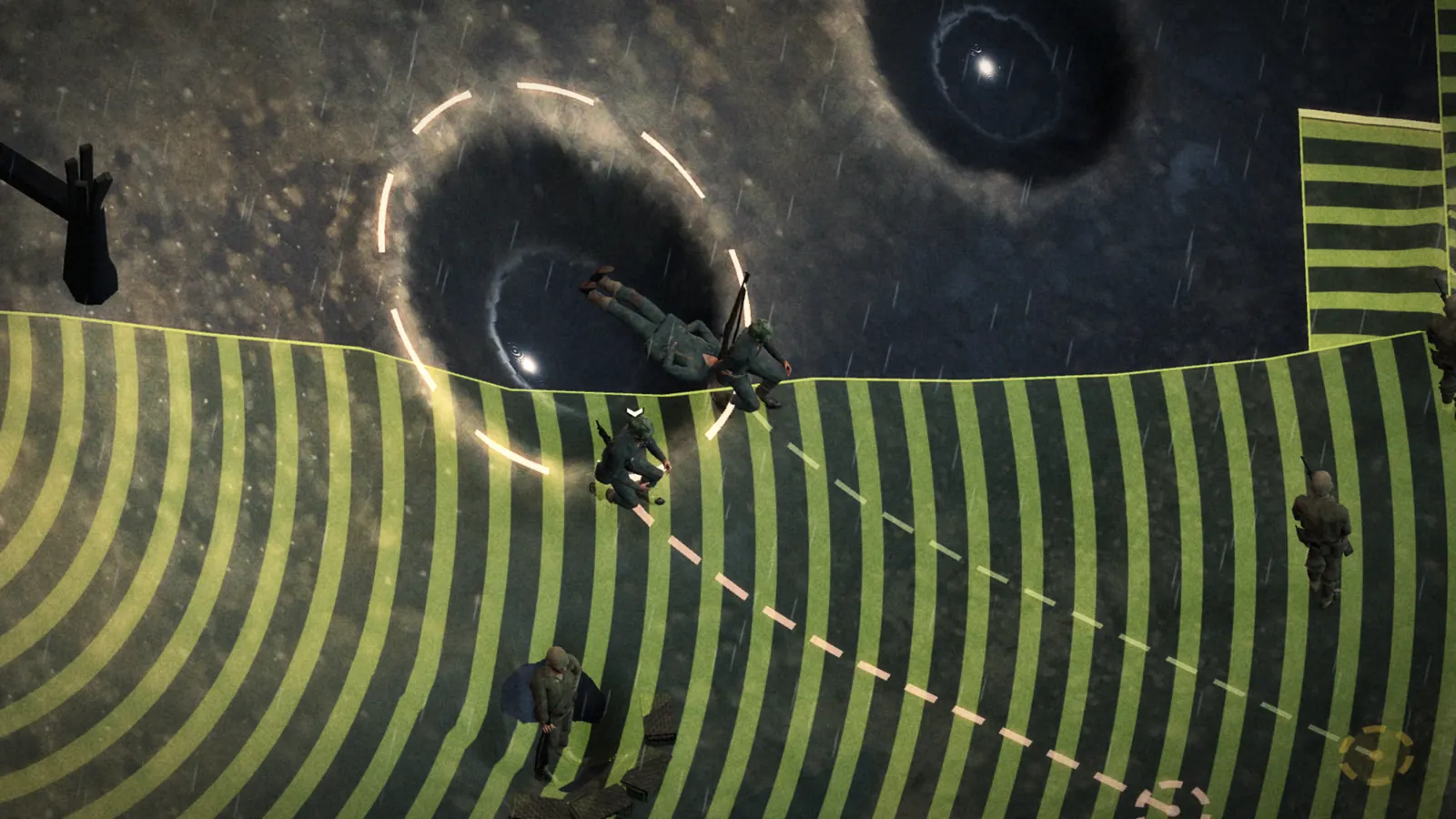
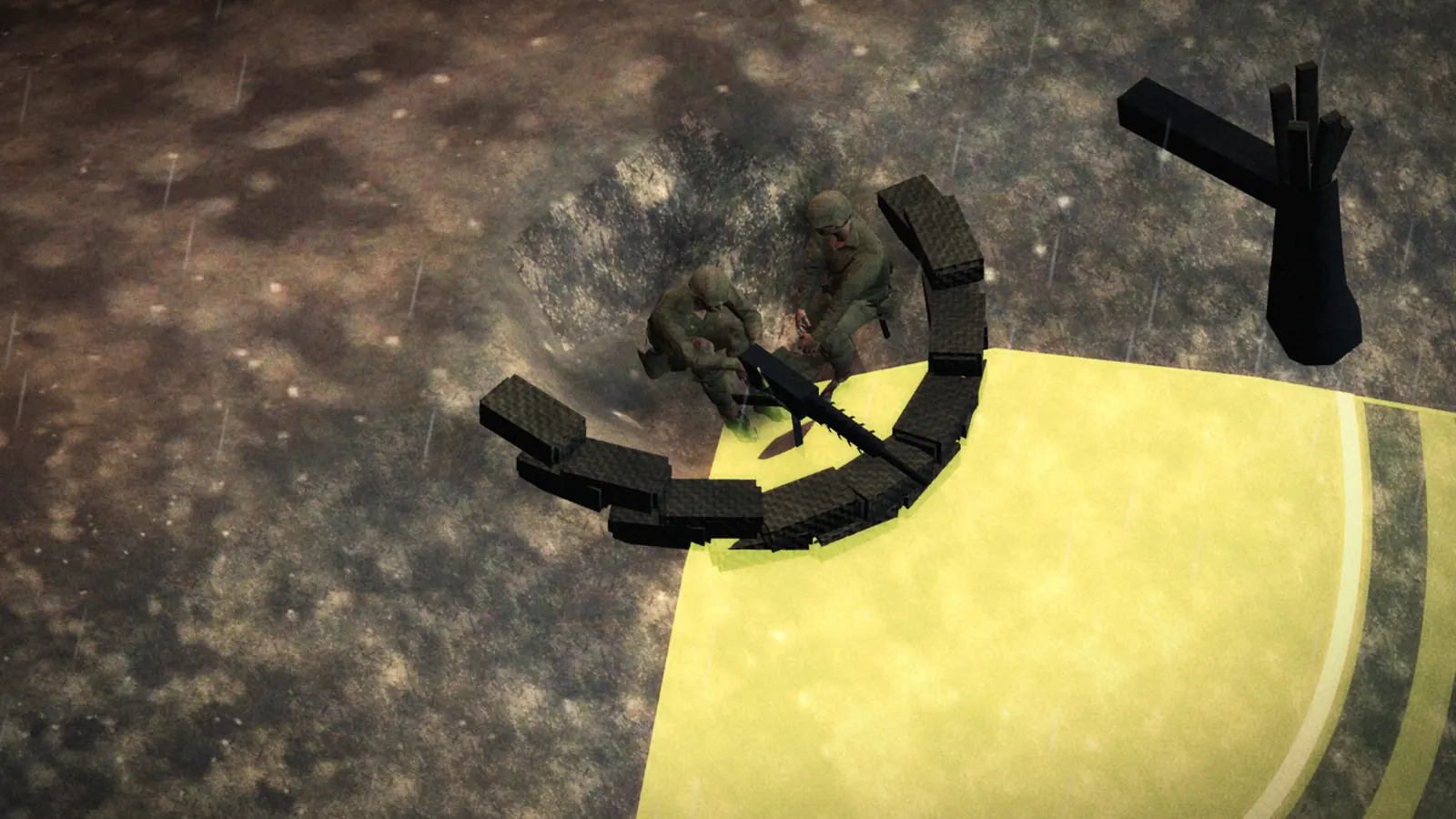
Two men and a Type 92 dug in on the crest, its lane down the slope. It turns to no noise, but smoke blinds it, and so does a barrage.
-
Observer
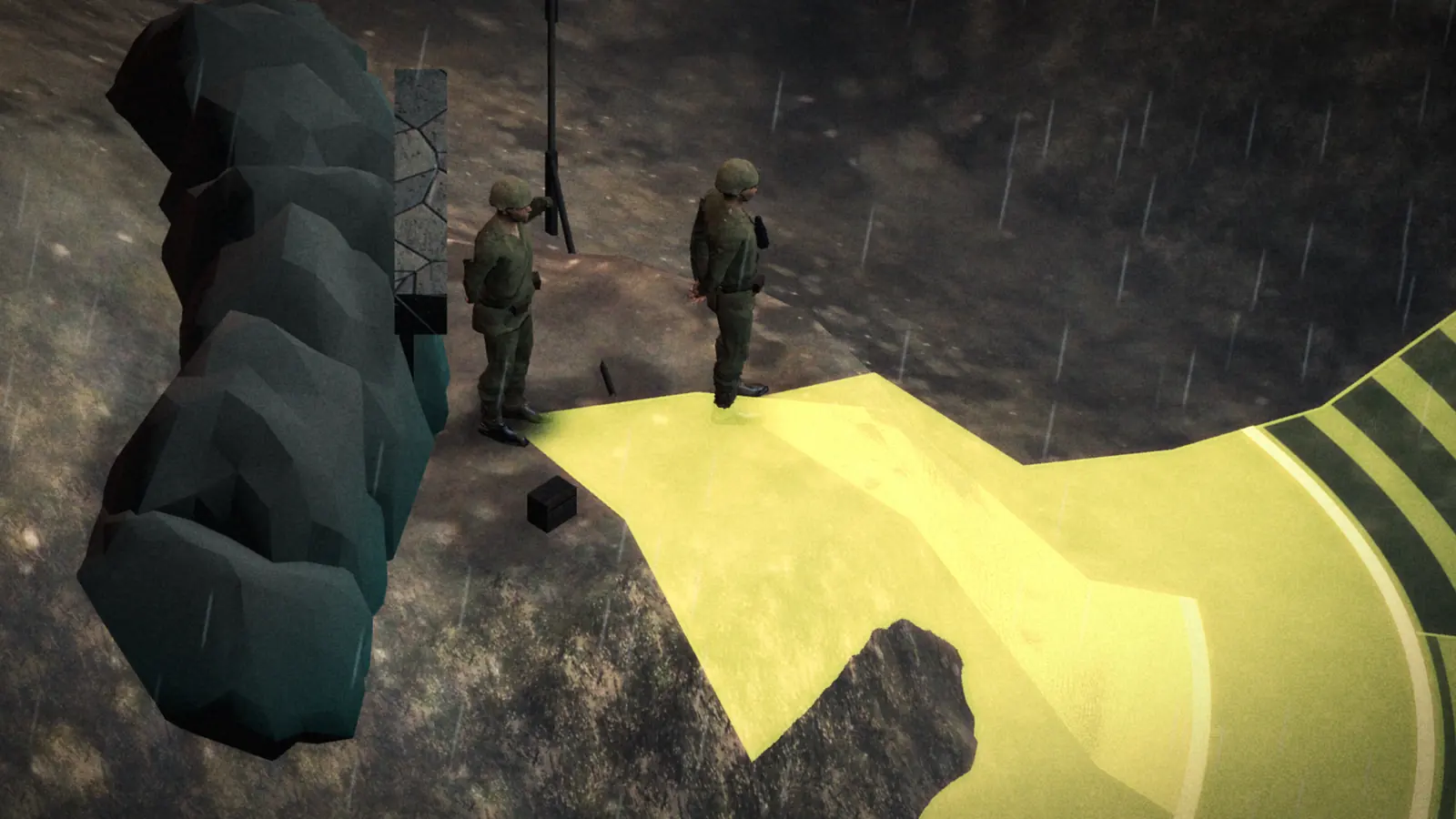
Two of them up in a cave mouth on Half Moon, with binoculars and a field telephone. What they see, the mortars behind the hill hit seconds later, unless the wire is cut.
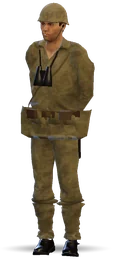
Out in the dark
The machines
Built in the game after the real thing.
-
Litter jeep
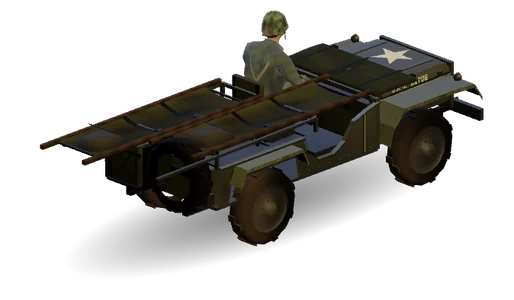
At first light the wounded go back on jeeps rigged for litters: the right seat out, two litters on a frame of pipe, a corpsman at the wheel.
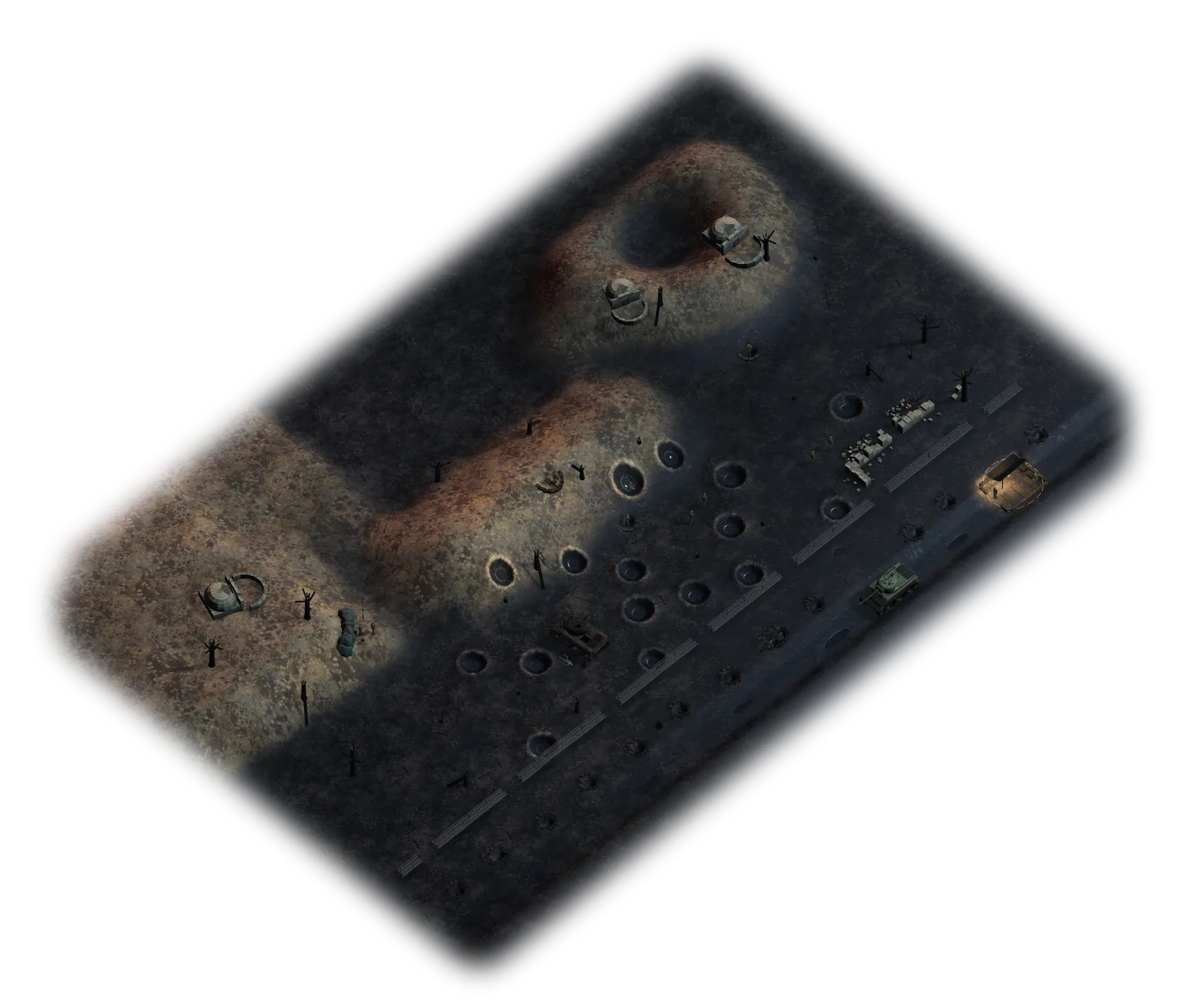
From above
The whole ground
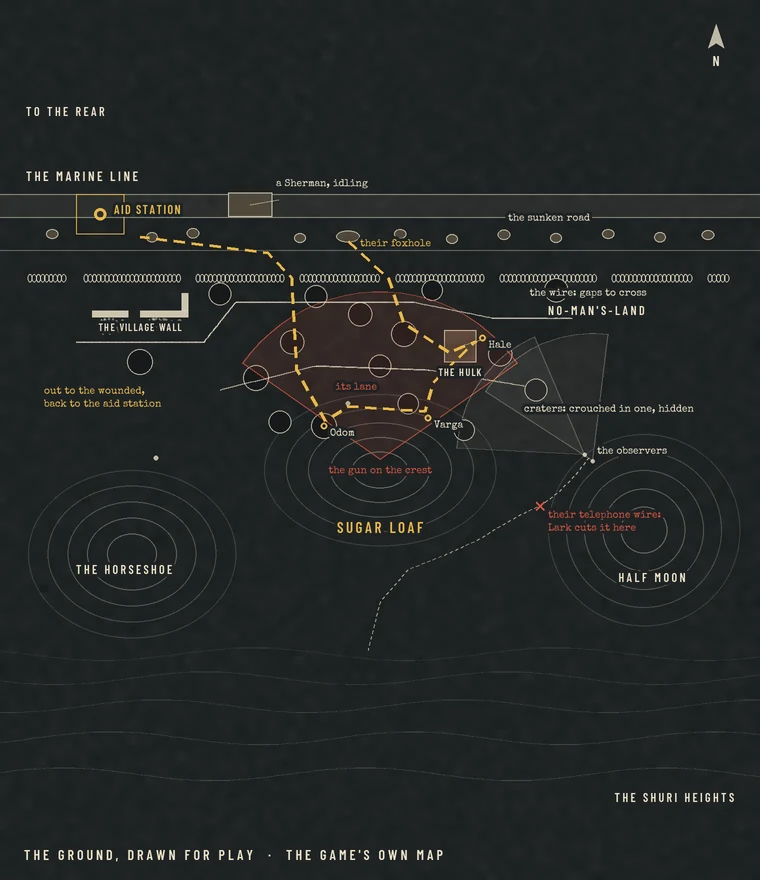
All of it at once, as the game draws it on the night: the squad at their start, the guards on their rounds. Drag it about, and zoom in on anything.
New in this operation
Four new tricks
-
Star shells
A star shell's pop comes a few seconds before it bursts, and under its light crouching in the open hides nobody. Get down into a crater: crouched in one, a man is hidden even with a star shell burning over it.
-
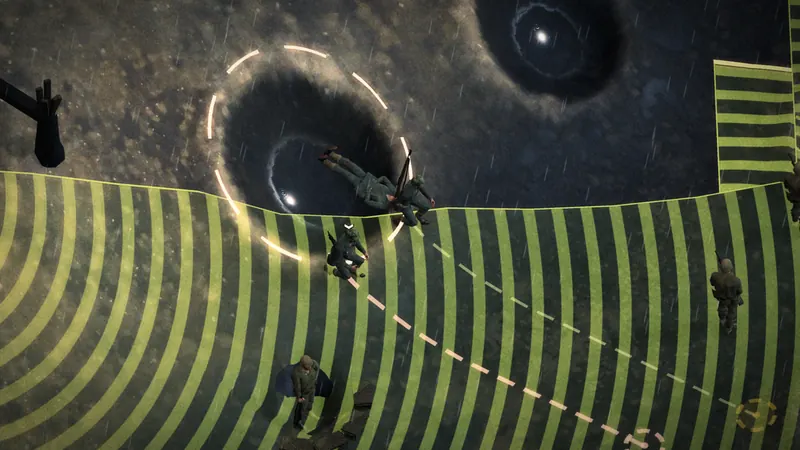
The drag
With a man on his shoulders a Marine is upright and easy to see. Crouched, he can drag him along the ground instead: slow, but no easier to see than crouched.
-
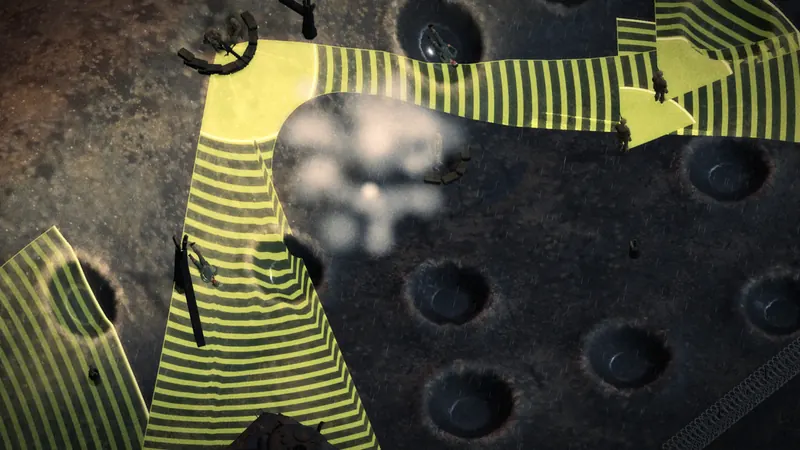
Smoke and the pass
Kite's smoke grenades blind every cone the smoke stands in front of, the gun's too, for twenty-five seconds. He can also throw one into Lark's hands, and Lark pops it at his feet.
-
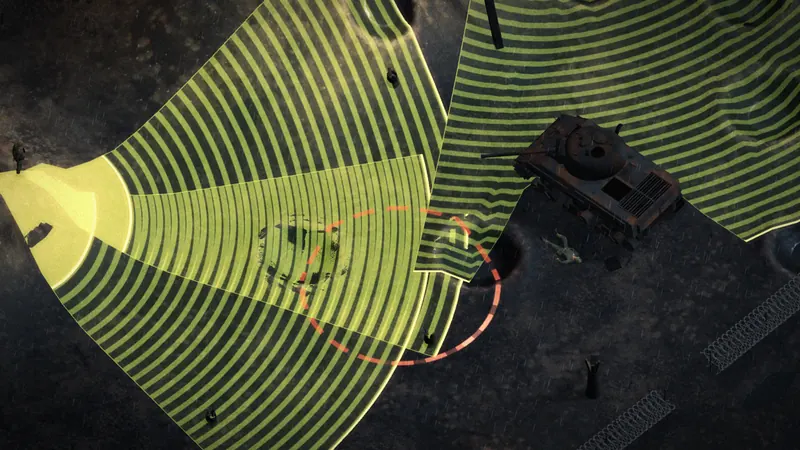
The observers
What the observers on Half Moon see, they telephone down to the mortars behind the hill, and six seconds later the rounds fall: move before they do. With their wire cut, they can only shout.
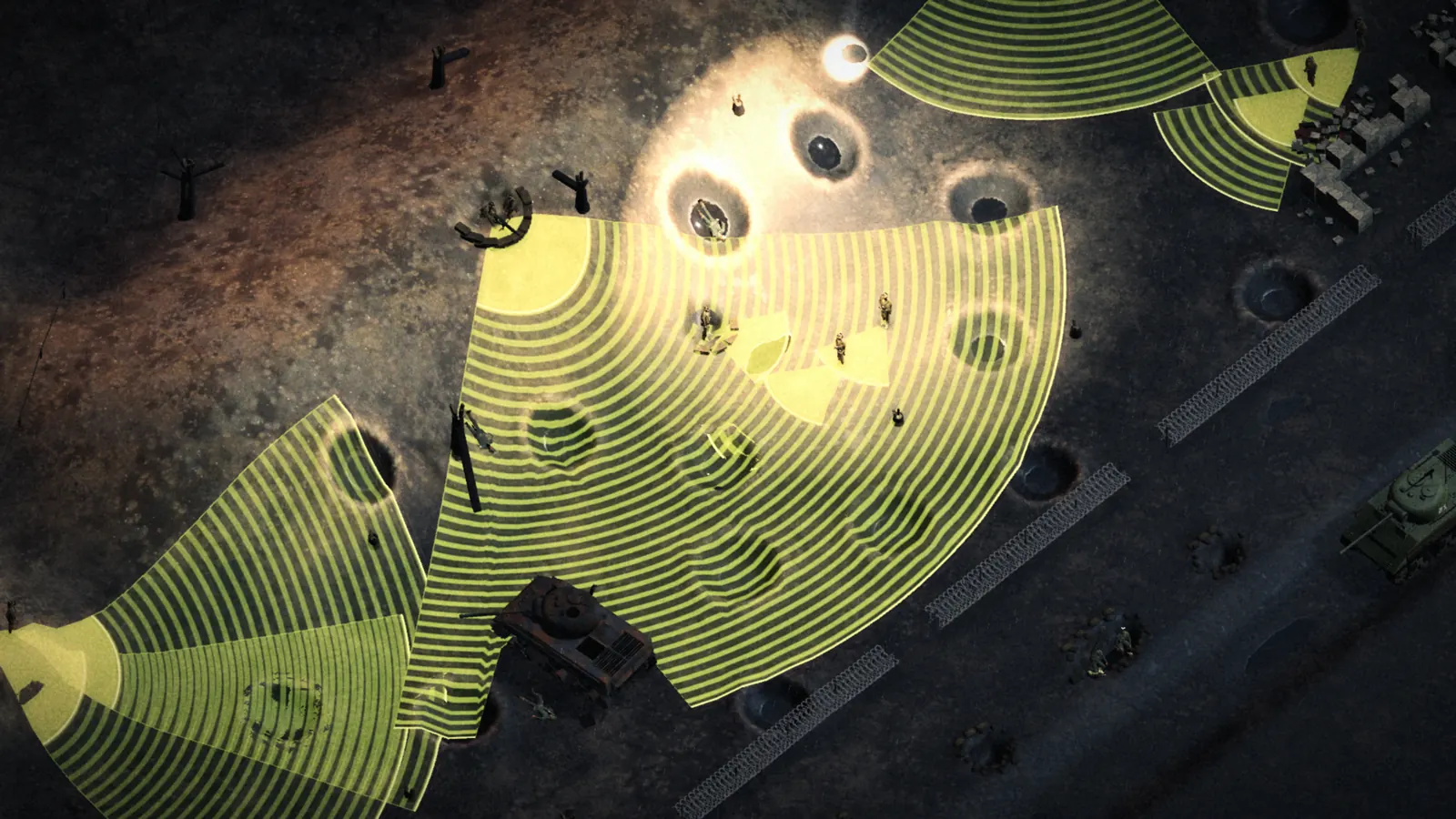
From no-man's-land

5:00
Five in the morning
At 4:40 the sky greys over the line, and every eye out there sees further. At five it is light, and anyone still out on the slope is seen from every hole on the hill. At first light the jeeps take the wounded back from the aid station. Three days after the night of 15 May, a company of the 29th took the hill with tanks and held it.
-
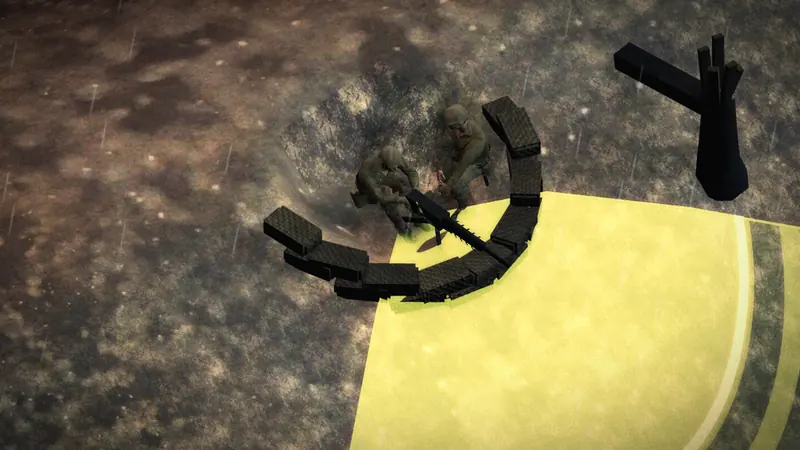
The gun on the crest. Smoke blinds it, and so does a barrage. -
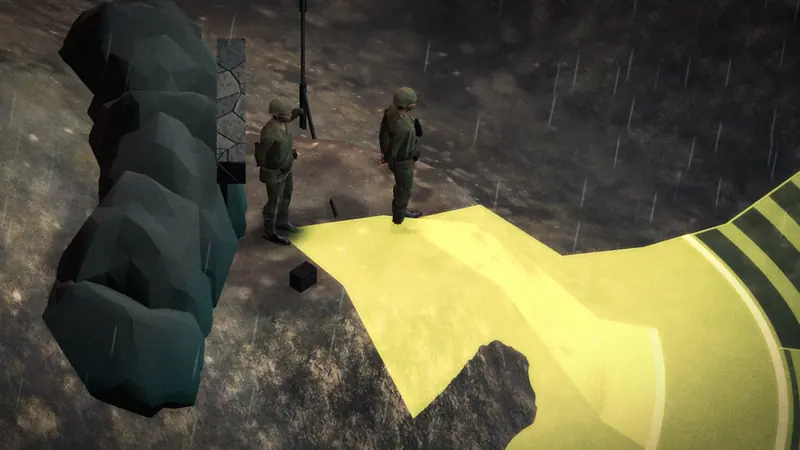
The observers. What they see, they telephone to the mortars. -
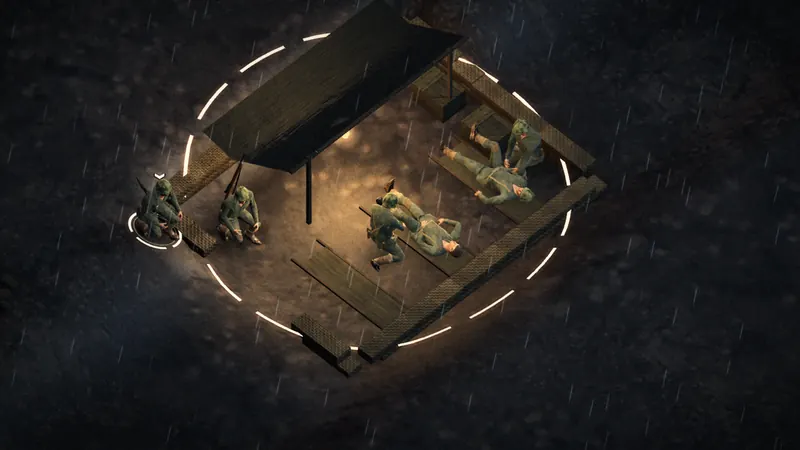
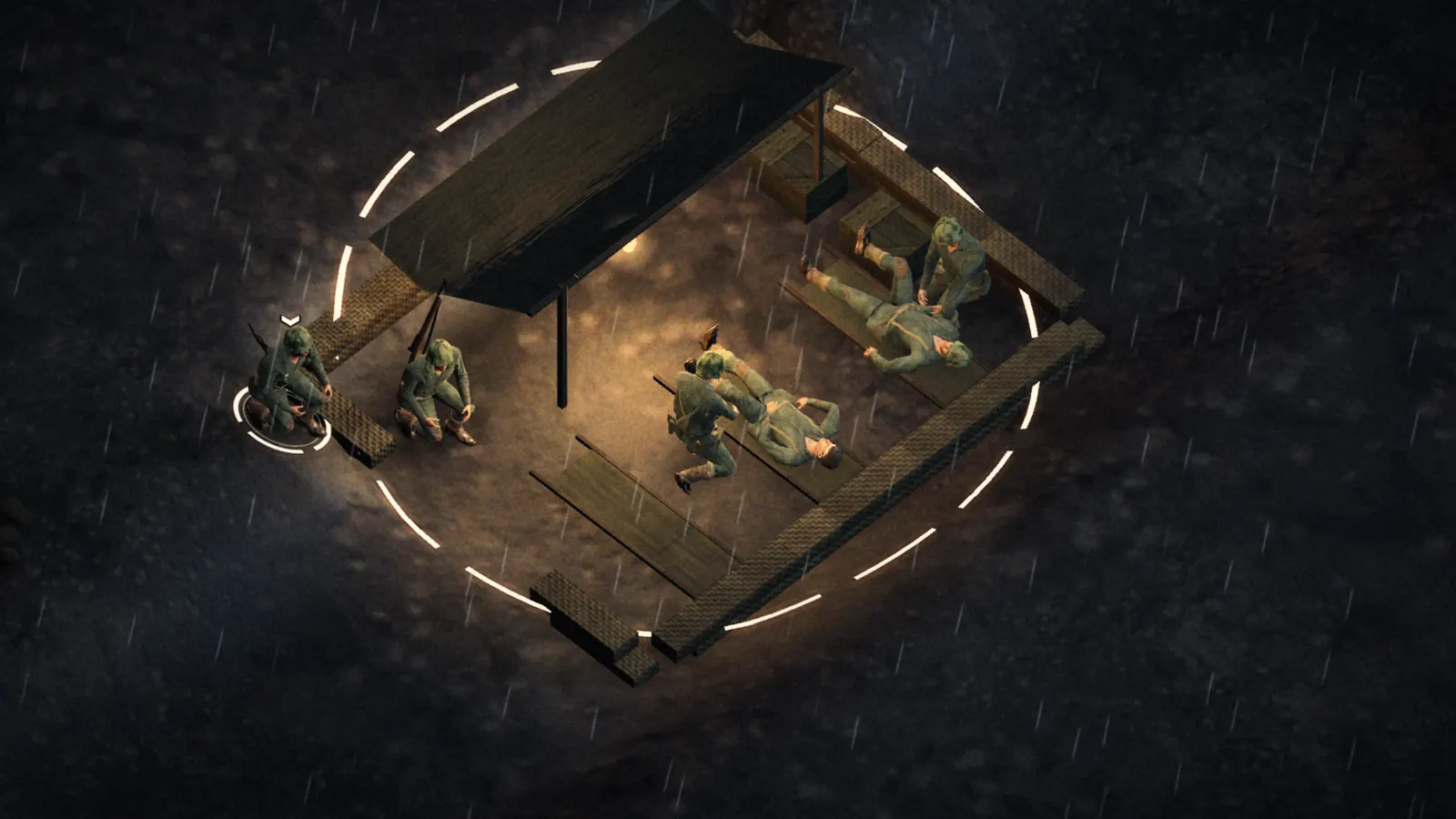
The aid station. The corpsmen take him.
Saboteurs / Field operations The real story
The real players · December 1944 to June 1945
The Mosquito Bowl
Two regiments of Marines, a field of coral on Guadalcanal, and Christmas Eve 1944.
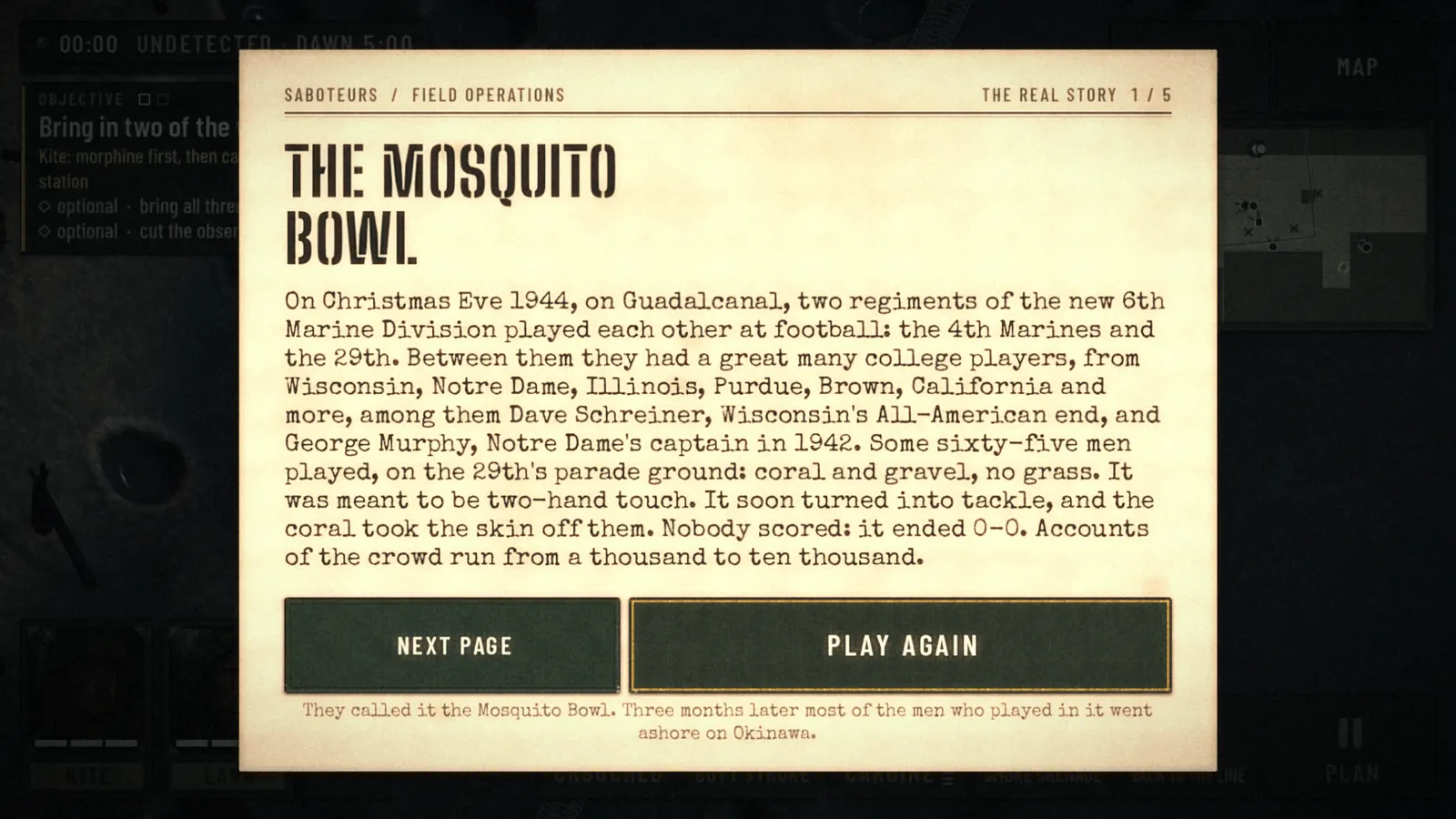
On Christmas Eve 1944, on Guadalcanal, two regiments of the new 6th Marine Division played each other at football: the 4th Marines and the 29th. Between them they had a great many college players, from Wisconsin, Notre Dame, Illinois, Purdue, Brown, California and more, among them Dave Schreiner, Wisconsin's All-American end, and George Murphy, Notre Dame's captain in 1942. Some sixty-five men played, on the 29th's parade ground: coral and gravel, no grass. It was meant to be two-hand touch. It soon turned into tackle, and the coral took the skin off them. Nobody scored: it ended 0-0. Accounts of the crowd run from a thousand to ten thousand.
They called it the Mosquito Bowl. Three months later most of the men who played in it went ashore on Okinawa.
We took liberties. Kite and Lark are made up, as are Hale, Odom and Varga, and this night. The wounded stand for the men brought in off those slopes every day and every night of the fighting, by the men beside them. The layout of the ground is the game's, drawn for play, not from maps of the hill.
-
Okinawa
On 1 April 1945 the American Tenth Army landed on Okinawa. The 6th Marine Division went north first: it took Mount Yae-Take on 16 April and had cleared the Motobu Peninsula by the 20th. In May it came south to the Shuri line, where the Japanese 32nd Army held the hills across the island, and on 8 May it took over the western end of the American line, on the Asa River. The general offensive began on 11 May. At night each regiment in the line had a ship standing by offshore to fire star shells over the ground in front of it, and every night the Japanese came out in the dark, to infiltrate and to counterattack.
Motobu cost the division 207 killed, 757 wounded and 6 missing.
-
Sugar Loaf
Sugar Loaf was a small, steep hill at the western end of the Shuri line, between Naha and Shuri: about 15 m (50 feet) above the ground in front of it, some say 60, and about 300 yards long. On its own it was nothing. Half Moon to the south-east and the Horseshoe to the south-west covered it, tunnels joined the three, mortars stood in the Horseshoe's hollow and the guns on the Shuri heights reached it from behind, so that whoever got onto it was under fire from every side. Its defenders held it from caves and from positions dug into its reverse slope. The 22nd Marines first reached its crest on 12 May and could not stay. On the night of 14 May, with the star shells held off for the attack, Major Henry Courtney led some forty men up it with grenades. He was killed soon after midnight, by a mortar burst say some accounts, in the grenade fight say others, and was given the Medal of Honor.
How many times the hill changed hands nobody can say: the official histories give no number; one count says eleven.
-
The players
On 15 May a platoon of the 29th Marines went up Sugar Loaf with fixed bayonets to relieve the men on top. It was led by Lieutenant George Murphy, Notre Dame's captain in 1942 and one of the Mosquito Bowl's players. When their grenades were gone he ordered them back, and as they withdrew he stopped to help a wounded Marine and was killed. Eleven of the sixty came back. Three days later a company of the 29th took the hill with tanks and held it. In about ten days the division counted 2,662 killed and wounded, and 1,289 more lost to combat fatigue, exhaustion and sickness. Tony Butkovich of Illinois and Purdue had been killed in April; Bob Bauman of Wisconsin was killed on 6 June; Dave Schreiner was hit on 20 June and died the next day, the battle's eighty-second. At least twelve of the men who played on Christmas Eve died on Okinawa; the count now usually given is fifteen.
George Murphy lies in Riverview Cemetery in South Bend, Indiana.
-
The cost
The battle for Okinawa lasted eighty-two days. Some 12,500 Americans were killed or went missing, soldiers, Marines and sailors; later counts come nearer 14,000. Of the Japanese soldiers who held the island, between about 75,000 and 110,000 died, depending on whose count, among them, by the prefecture's count, some 28,000 Okinawans called up to serve. They fought from caves and tunnels, and few surrendered. Okinawa's own people suffered most: estimates of the civilians killed run from about 40,000 to 150,000, and the prefecture puts it at some 94,000.
The Cornerstone of Peace at Itoman, on Okinawa, bears more than 240,000 names of the war's dead, of every side; most of them are Okinawan.
In memory of the men of the Mosquito Bowl who died on Okinawa, and of
everyone the battle killed, on every side.
Read about the battle of Okinawa
Saboteurs · In beta on iPhone, Android and the web
Bring them in
Saboteurs is in beta on iPhone, Android and the web. Sugar Loaf is the eighth operation, and you can play it in your browser.
- iPhone Now in beta
- Android Now in beta
- Web Now in beta