
Field operations · File 11
New operation
Bir Hakeim
Libya · the night of 10 to 11 June 1942
A lane through your own mines, white tape and shaded lamps, and the column rolling under the flares.
The briefing
One lane. Six vehicles.
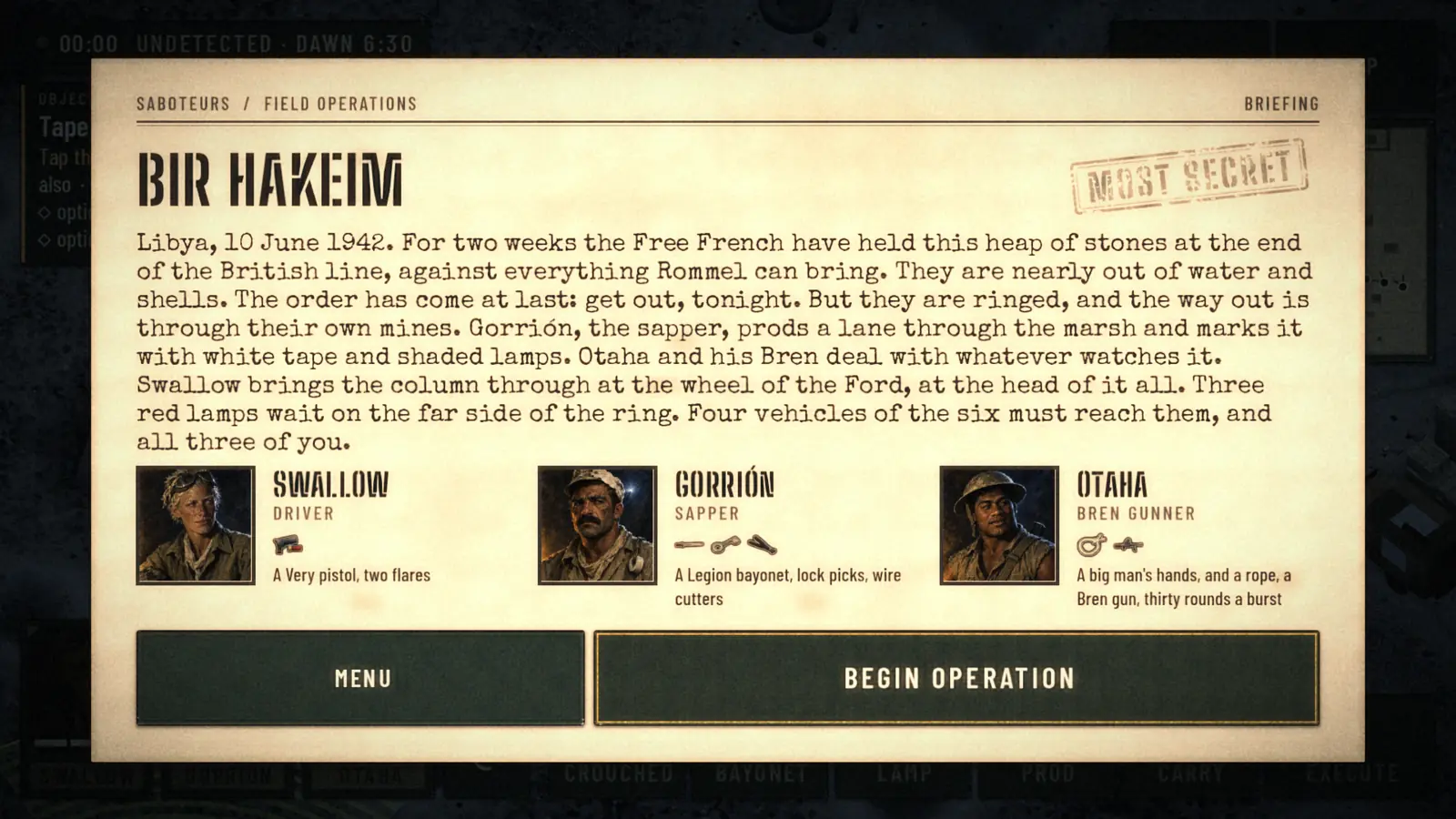
Libya, 10 June 1942. For two weeks the Free French have held this heap of stones at the end of the British line, against everything Rommel can bring. They are nearly out of water and shells. The order has come at last: get out, tonight. But they are ringed, and the way out is through their own mines. Gorrión, the sapper, prods a lane through the marsh and marks it with white tape and shaded lamps. Otaha and his Bren deal with whatever watches it. Swallow brings the column through at the wheel of the Ford, at the head of it all. Three red lamps wait on the far side of the ring. Four vehicles of the six must reach them, and all three of you.
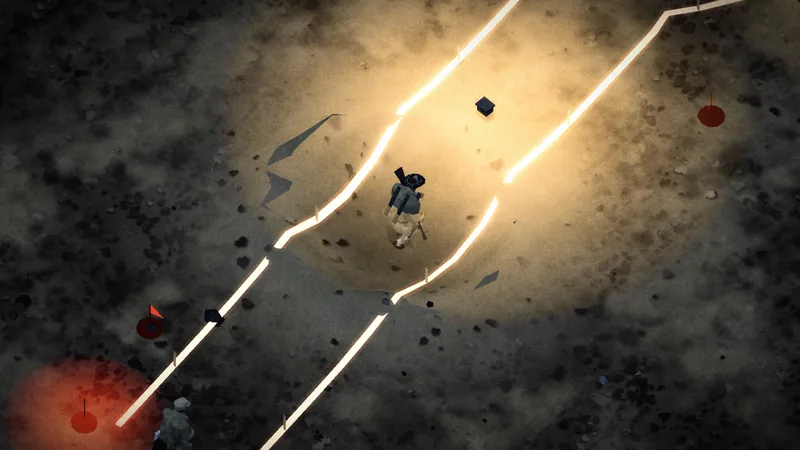
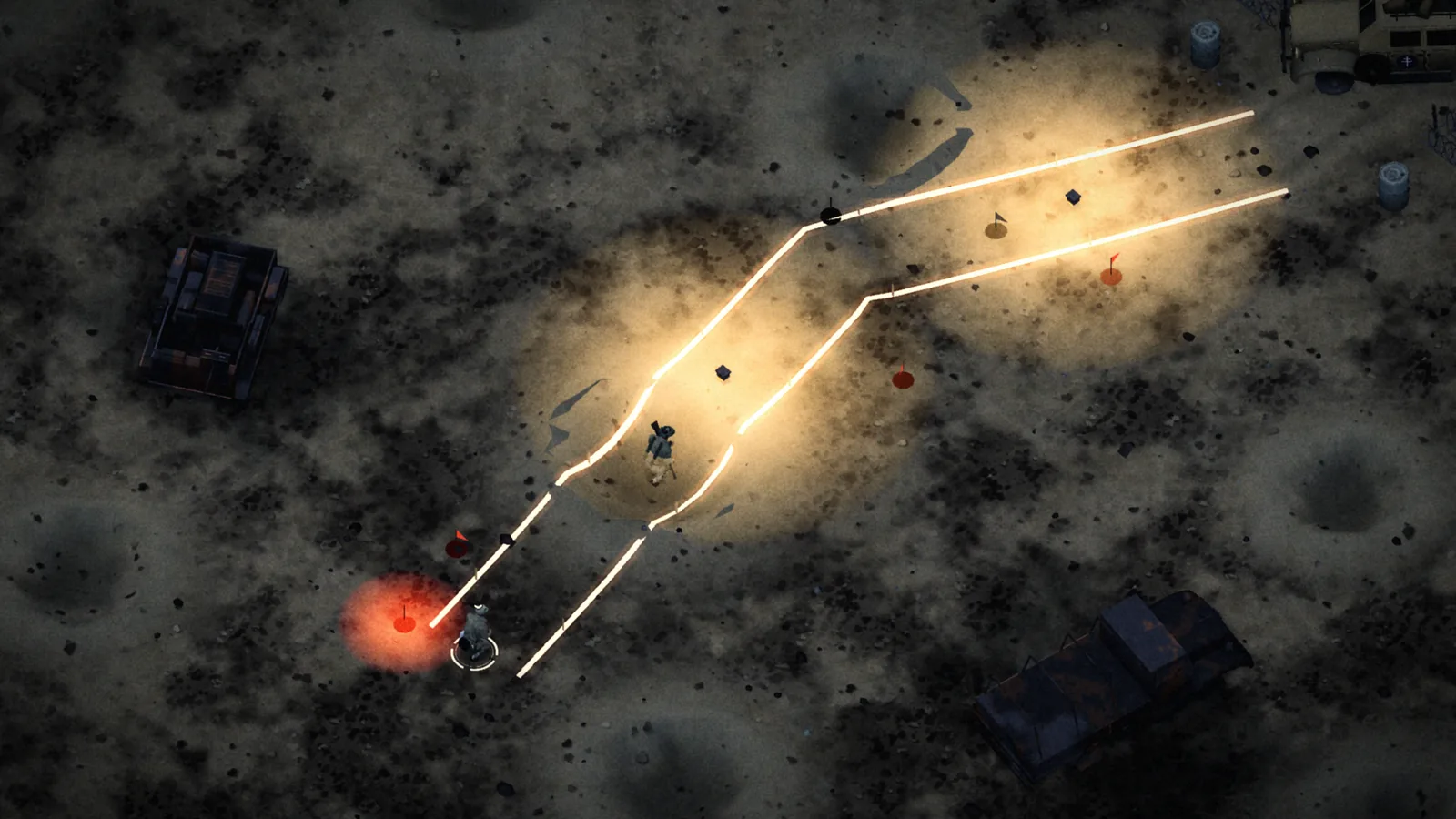
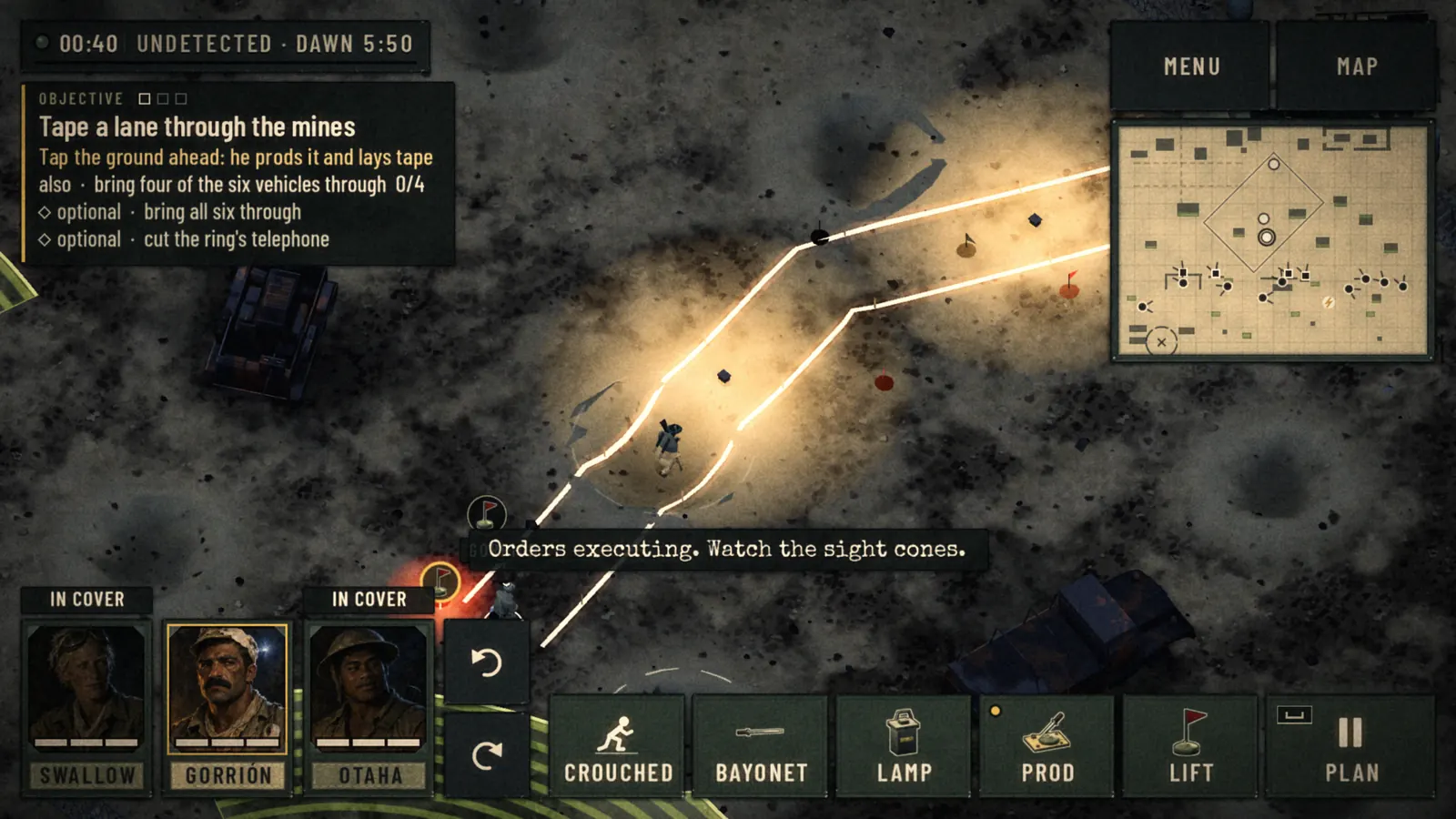
- Tape a lane through the mines Gorrión prods it and marks it, from the chicane to past the outer wire.
- Bring four of the six vehicles through Swallow at the wheel of the Ford, the column behind her along the tape.
- All three to the three red lamps South-west, on azimuth 213, before first light and the Stukas.
- Bring all six through Optional The ambulances too.
- Cut the ring's telephone Optional Only Gorrión, on the poles behind the Germans. Then an alarm brings no lorry-load of Afrika Korps.
A man can walk on these mines; a lorry cannot. The eleventh operation.
The squad
A driver, a sapper, a Bren gunner.
-
Swallow
New
Driver
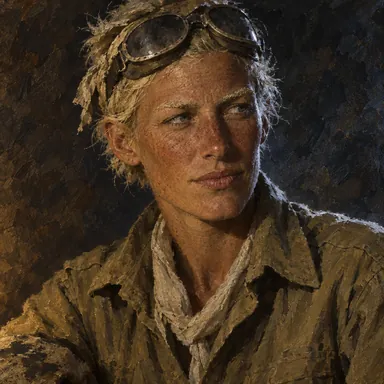
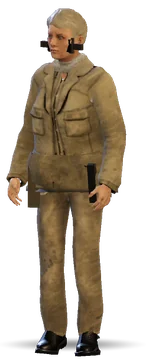
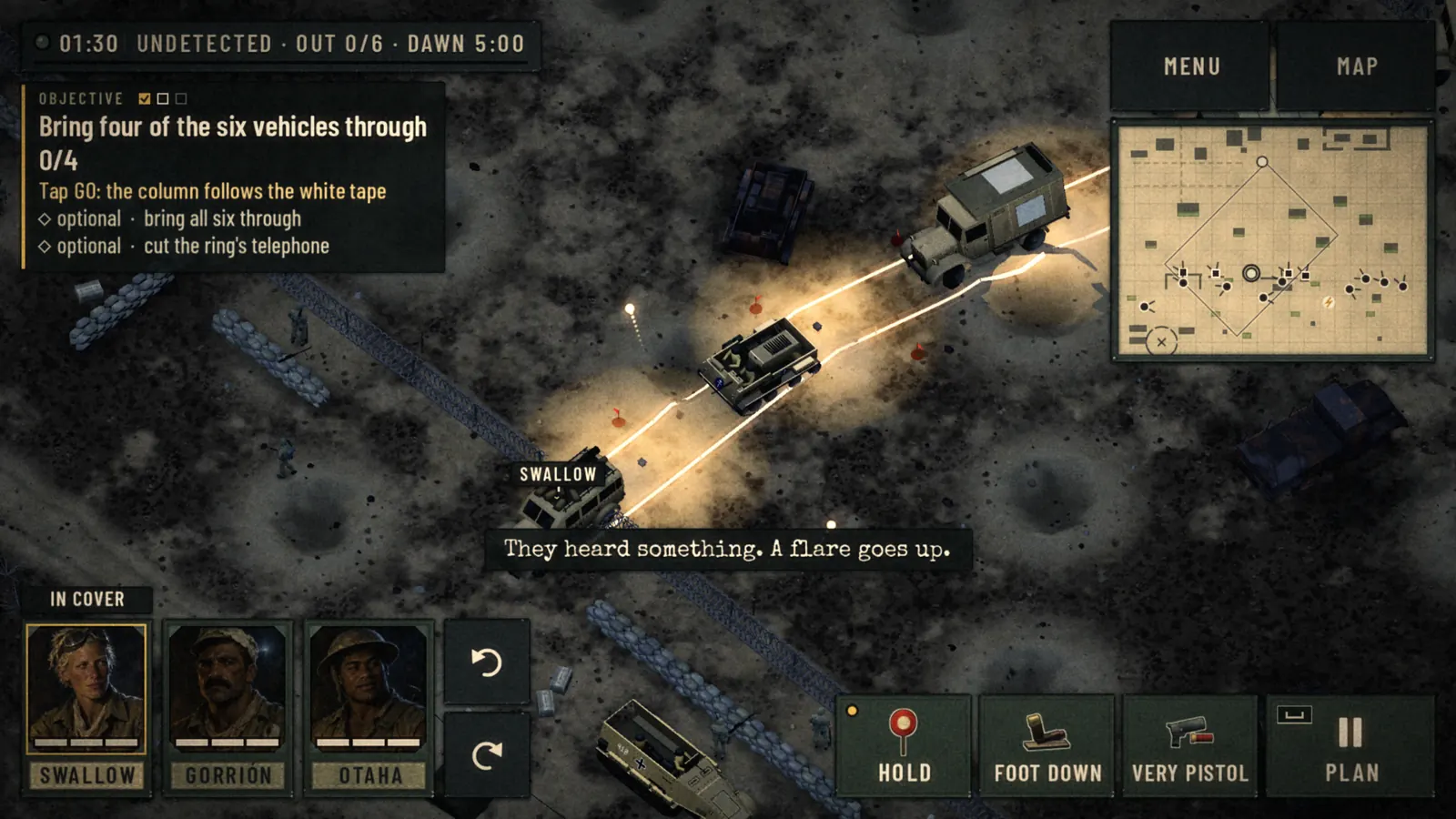
An Englishwoman of thirty-three in a French unit, new to the squad. She starts at the wheel of the Ford at the head of the column, and she stays there. GO and HOLD bring the column along the tape behind her or stop it. FOOT DOWN is for when it goes wrong: full speed, over the mines if need be, straight at the lamps.
Kit a Very pistol, two flares
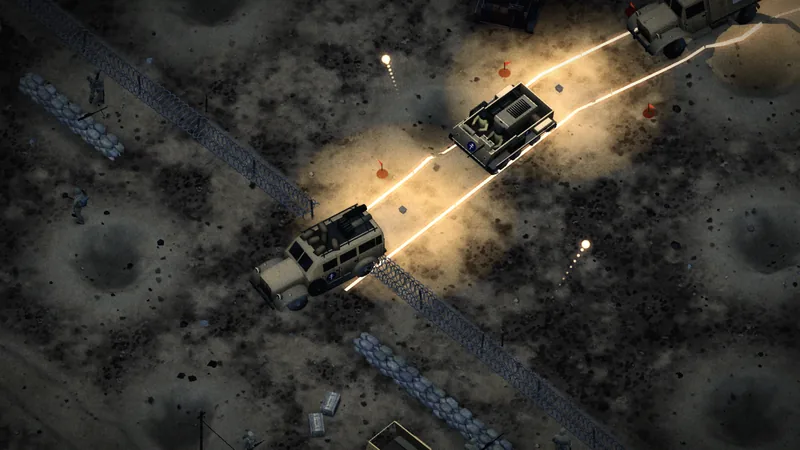
The Ford. She stays at the wheel. -
Gorrión
New
Sapper
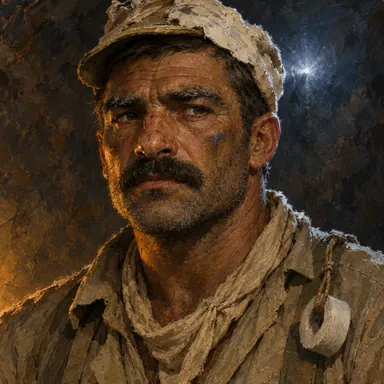
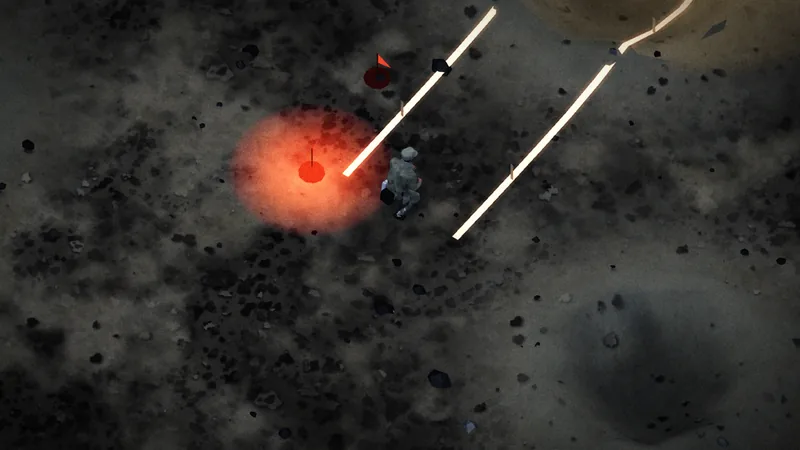
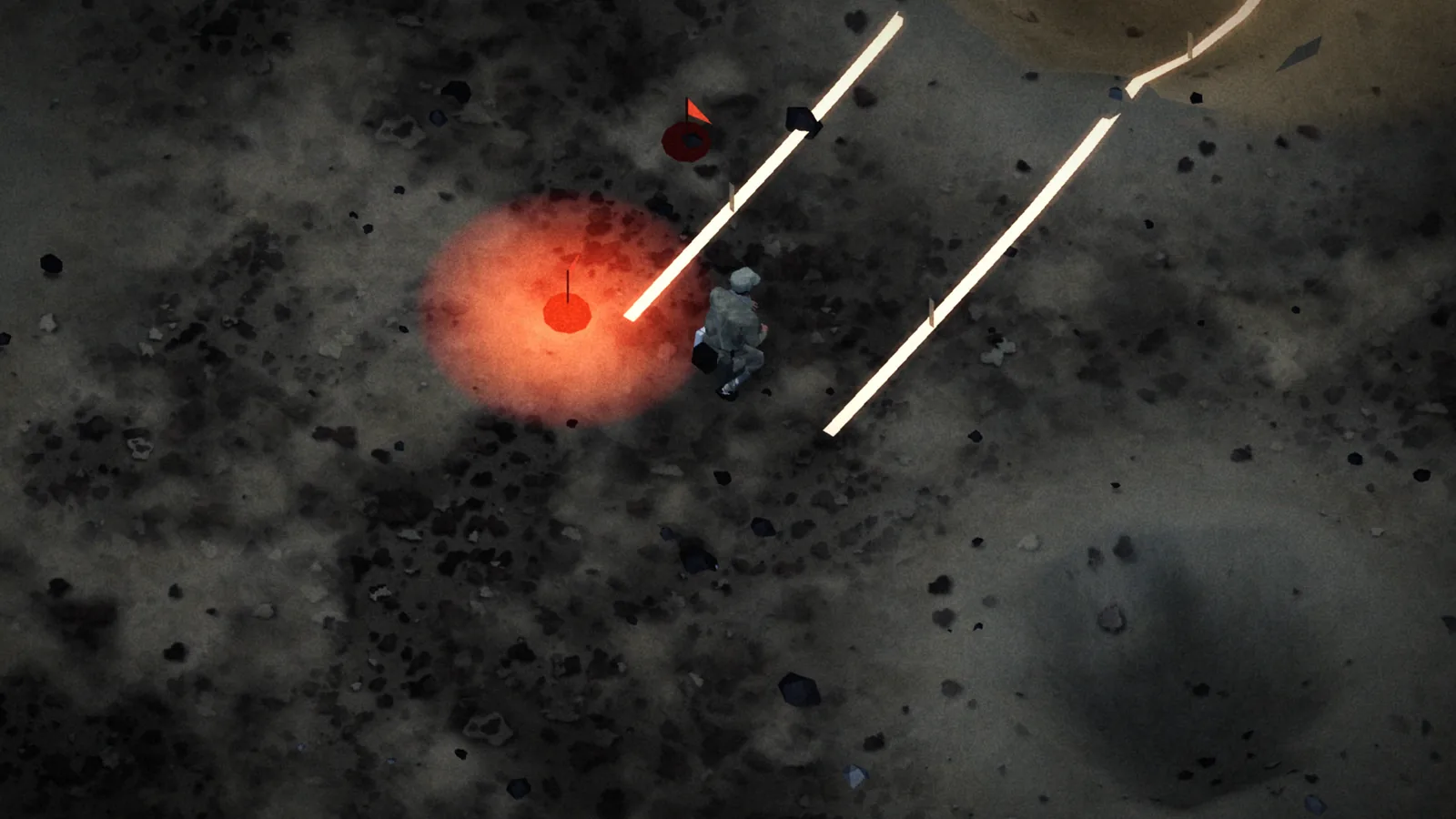
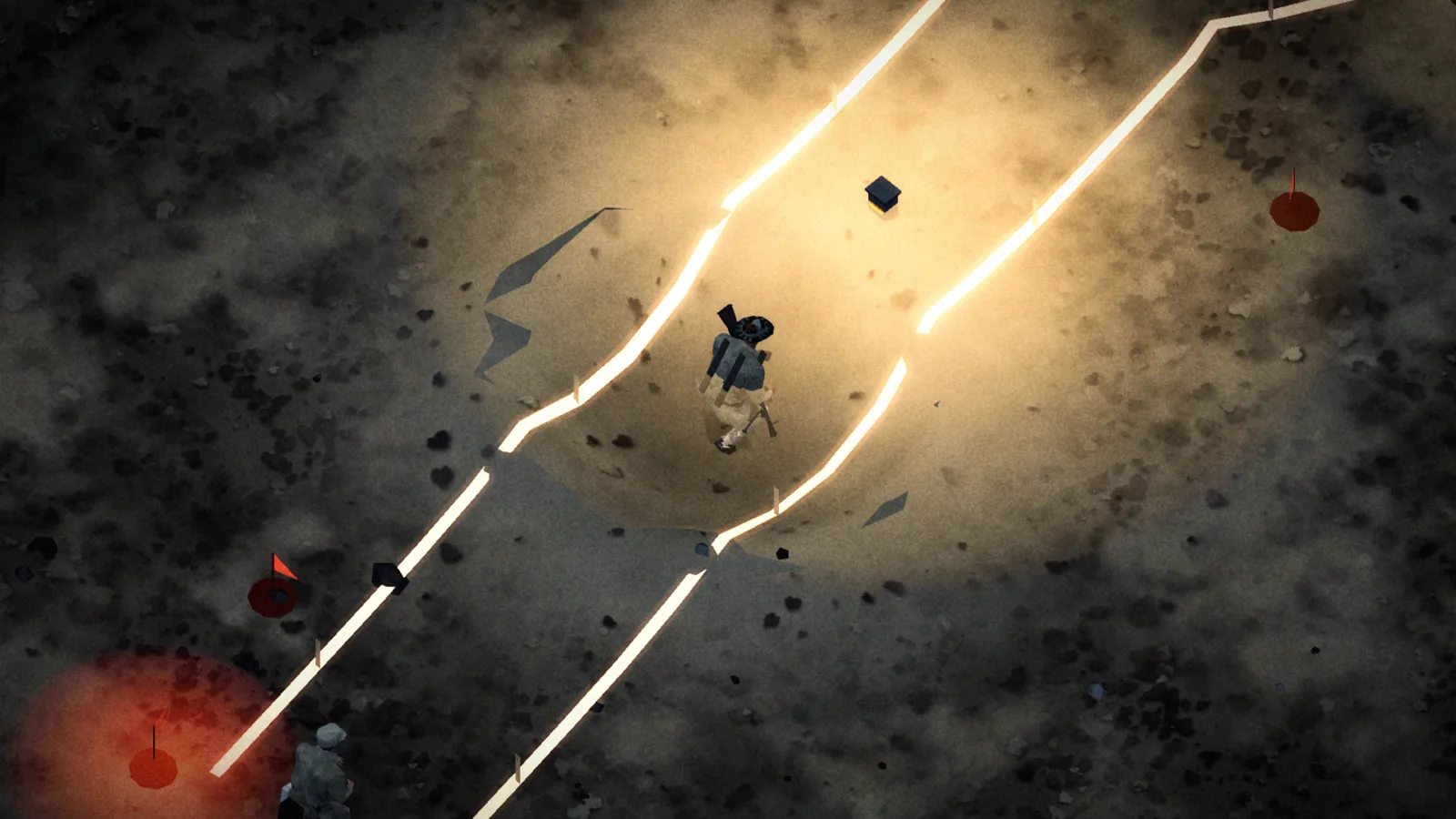
A Spanish Republican of thirty-eight, a sapper of the Legion, new to the squad. He crawls ahead, prodding with his bayonet, and white tape unrolls behind him. Six shaded lamps light it for the drivers. He lifts the mines he finds, cuts the wire, and sticks a bomb on a tank if he must.
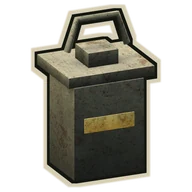
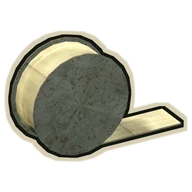
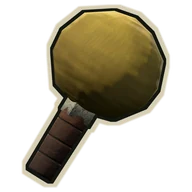
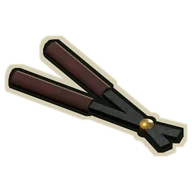
Kit the bayonet, for the ground, six shaded lamps, a drum of white tape, two sticky bombs, wire cutters
The prod. A red flag is a mine he has found. -
Otaha
New
Bren gunner
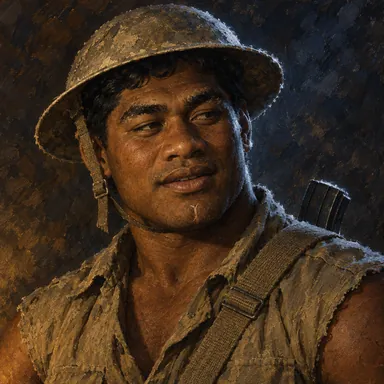
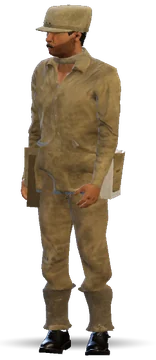
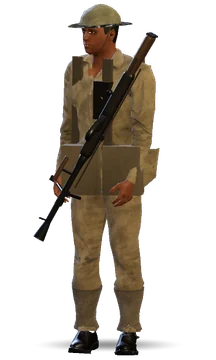
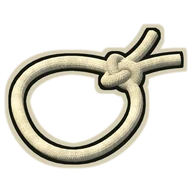
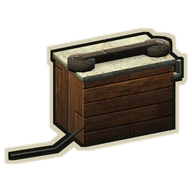
A Tahitian of twenty-four from the Pacific Battalion, new to the squad. The Bren is loud, and it pins whoever is near the target. A big man's hands and a rope deal with a sentry without a sound. Twice he can call the fort in Tahitian on the open wire: the rearguard opens up, and the ring's men look north.
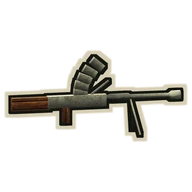
Kit a Bren gun, thirty rounds a burst, a big man's hands and a rope, the wireless, in Tahitian
The lane. He deals with whatever watches it.
The other side
Who's on watch
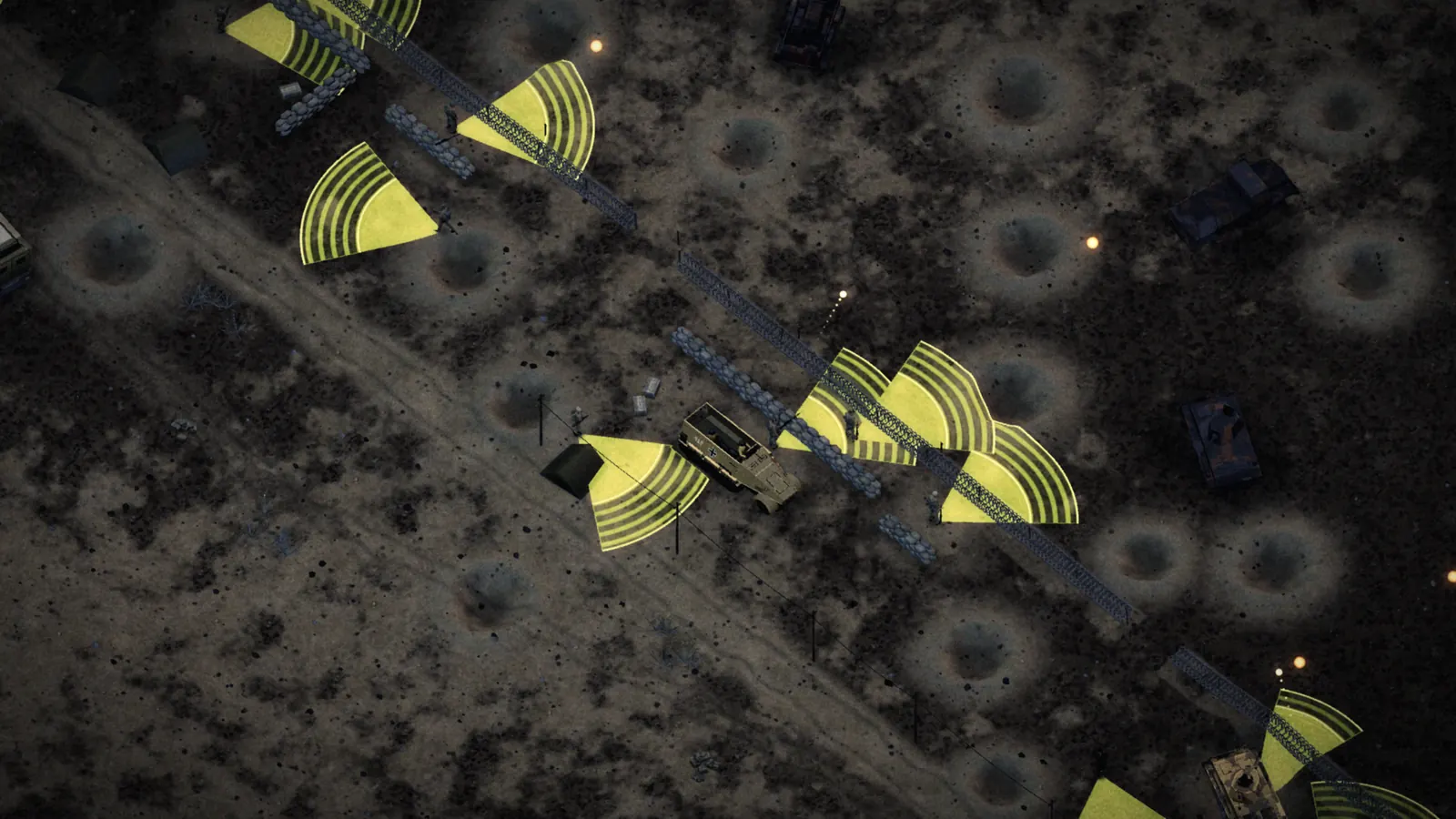
Every guard has a cone you can see and a beat you can learn. Under a flare, whoever moves is seen.
-
Bersagliere
Plumed helmets and a Breda in the west of the ring, sandbagged in, with a flare post of their own.
-
Afrika Korps
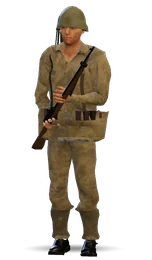
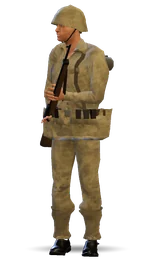
The middle of the ring: a half-track, sentries and the field telephone. With the line whole, an alarm brings a lorry-load more.
-
Ariete crew
Two M13s hull-down in the east, their crews on foot beside them. A flare man fires over each sector, by his clock and at any engine he hears.
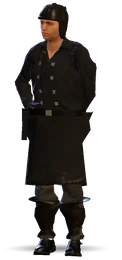
Out in the dark
The machines
Built in the game after the real thing.
-
The Ford
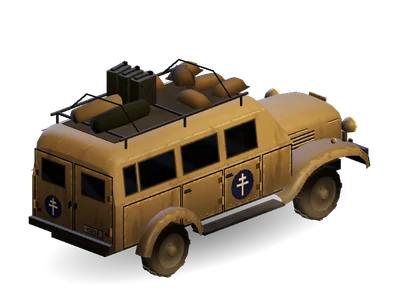
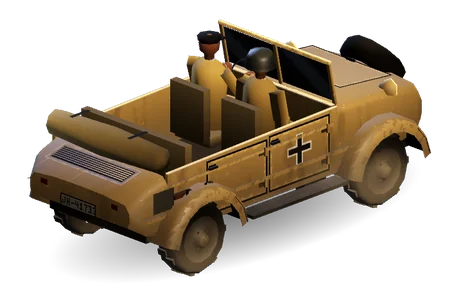
A heavy utility with sandbags, jerricans and bedrolls on the roof, at the head of the column. Swallow drives it, and the rest follow.
-
Bren carrier
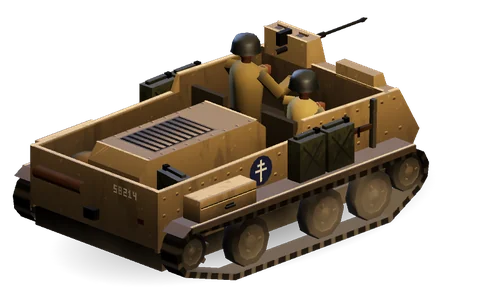
An open steel tub with a Bren in the front plate. Under FOOT DOWN the carriers fire as they go: whoever they have in sight is pinned.
-
M13/40
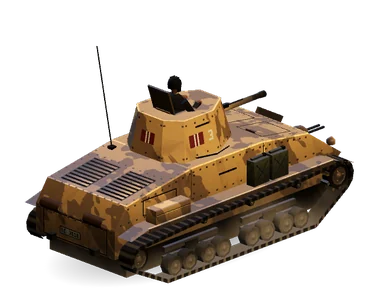
The Ariete's tank: riveted hull, 47 mm gun. Two stand hull-down in the east of the ring. It cannot be bound, but a sticky bomb can burn one.
-
Kübelwagen
It drives the ring's track behind the posts. Lay a lifted mine on its road, and it burns and the ring goes to look.
From above
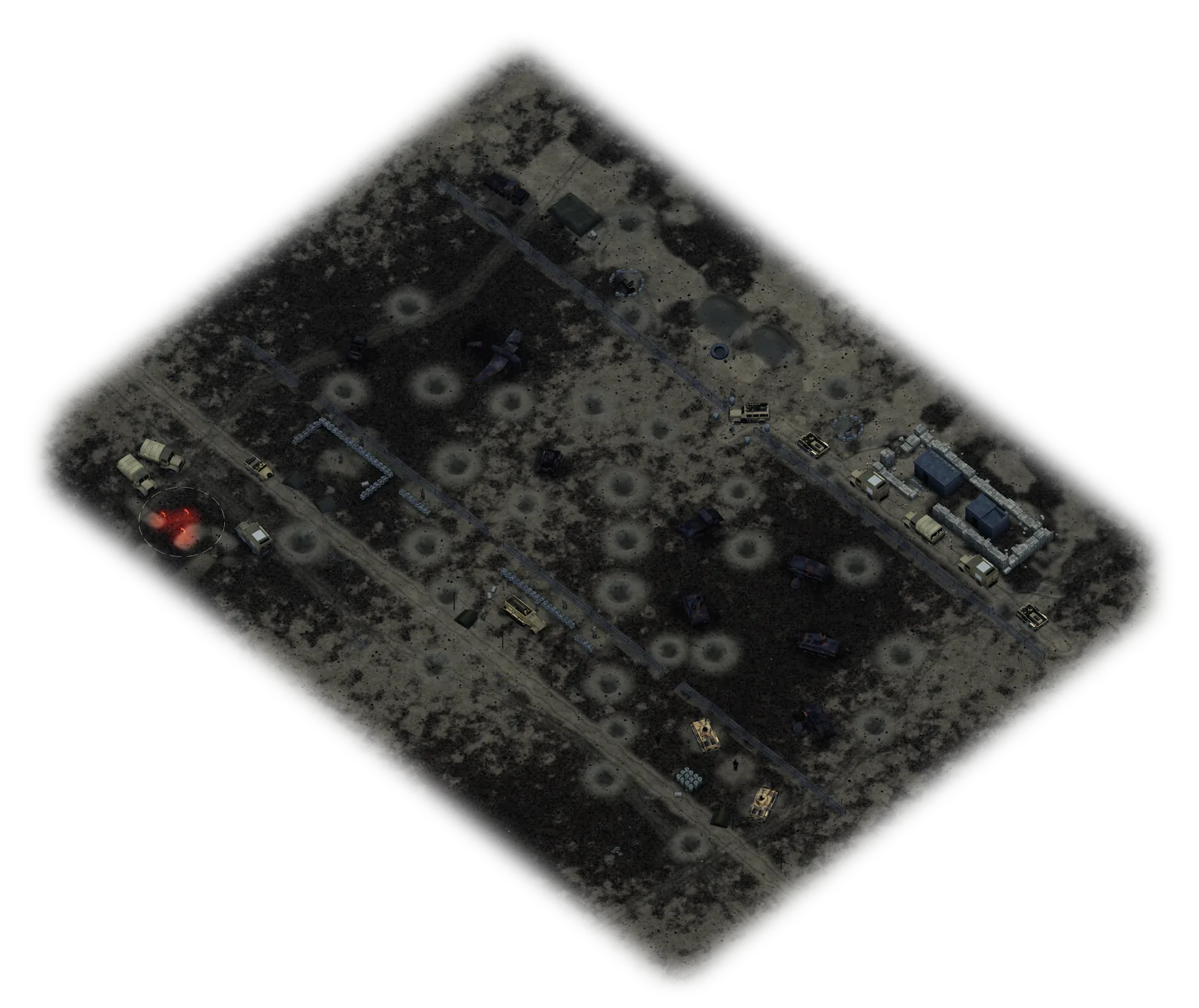
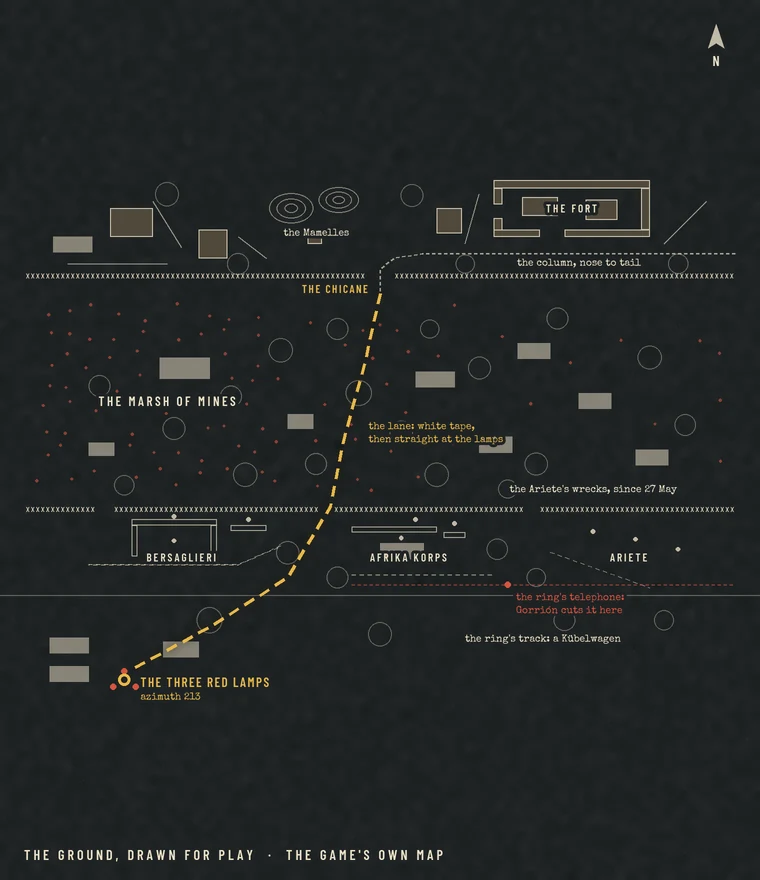
The whole ground
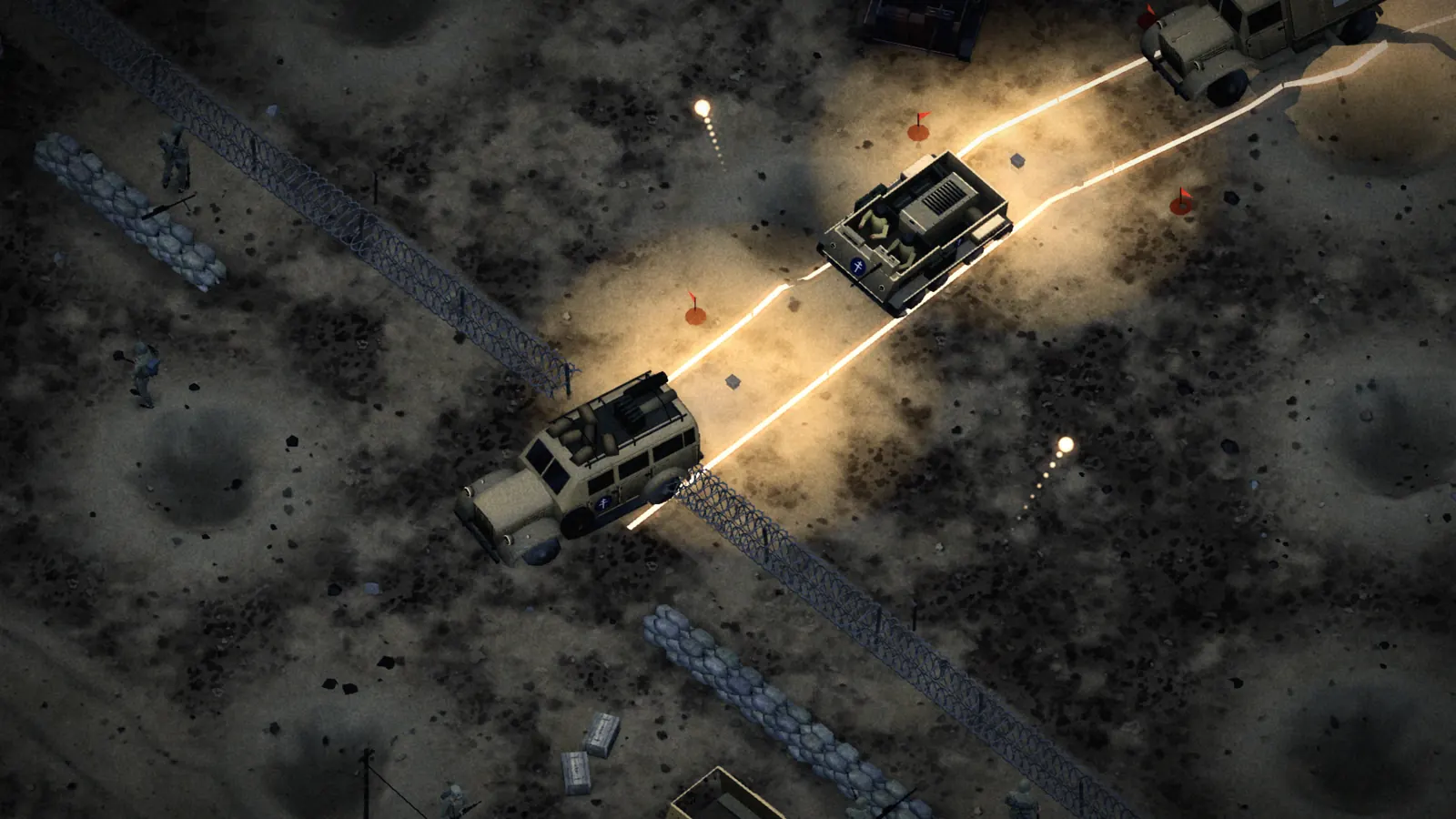
All of it at once, as the game draws it on the night: the squad at their start, the guards on their rounds. Drag it about, and zoom in on anything.
New in this operation
Four new tricks
-
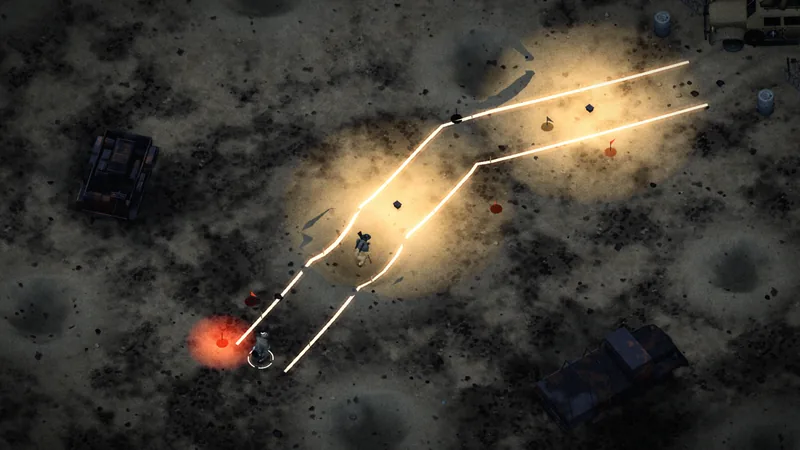
The tape
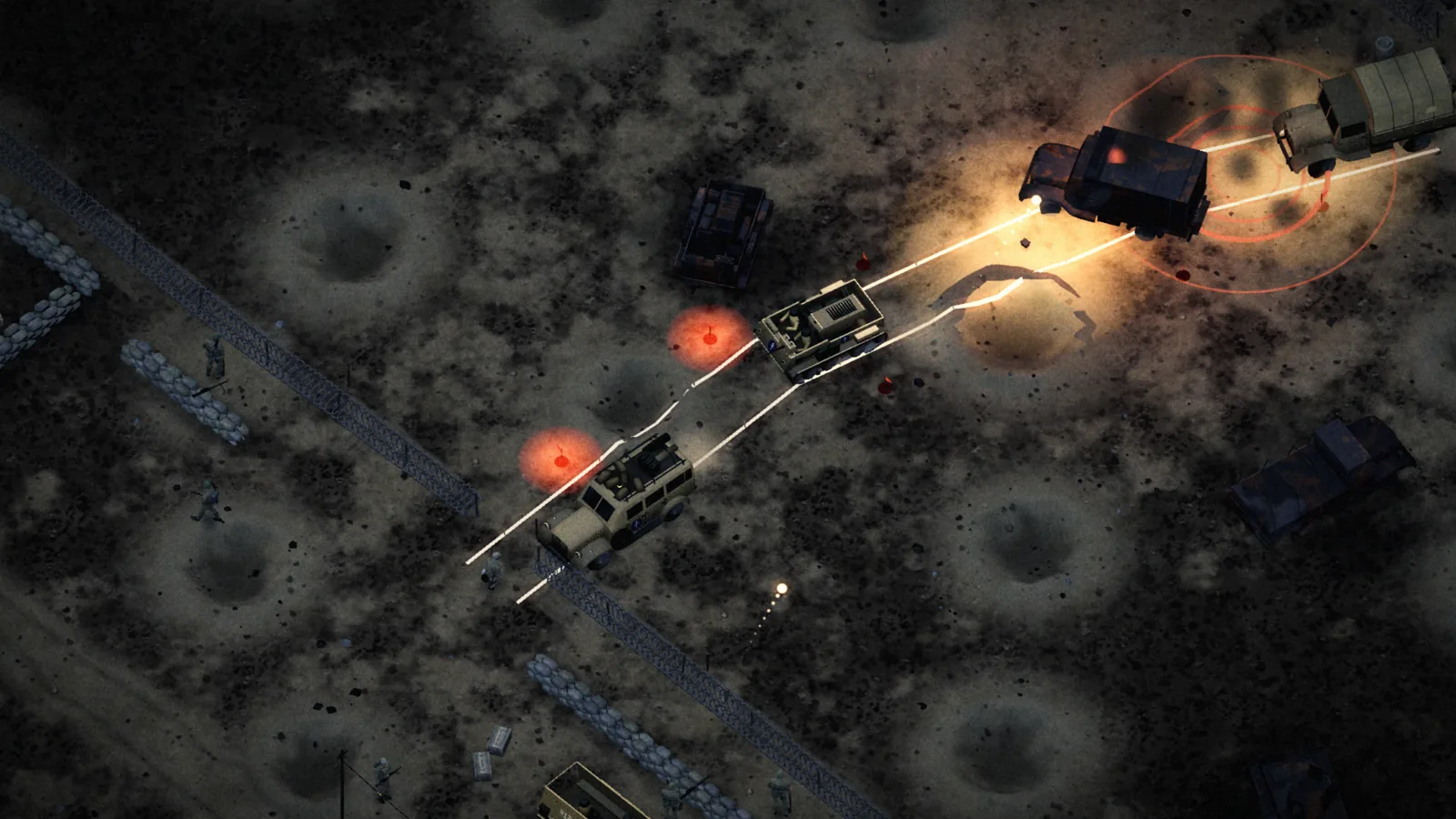
Where you tap, Gorrión crawls, prodding with his bayonet, and white tape unrolls behind him. Drivers keep to the tape only where a shaded lamp lights it. On dark tape they wander, and find any flag near it.
-
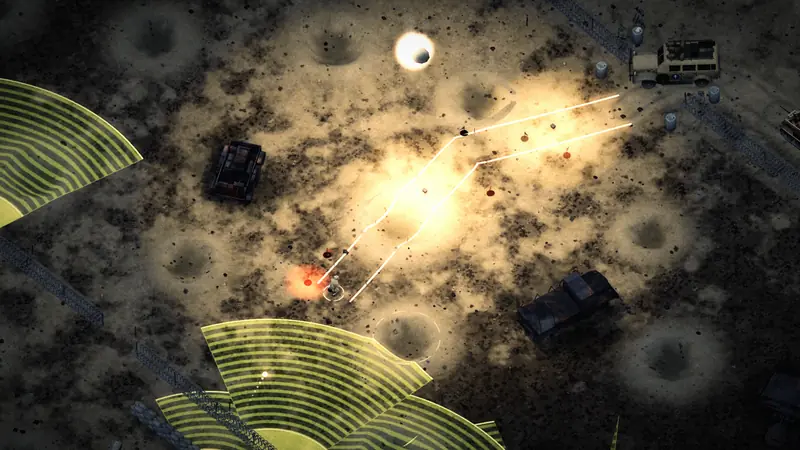
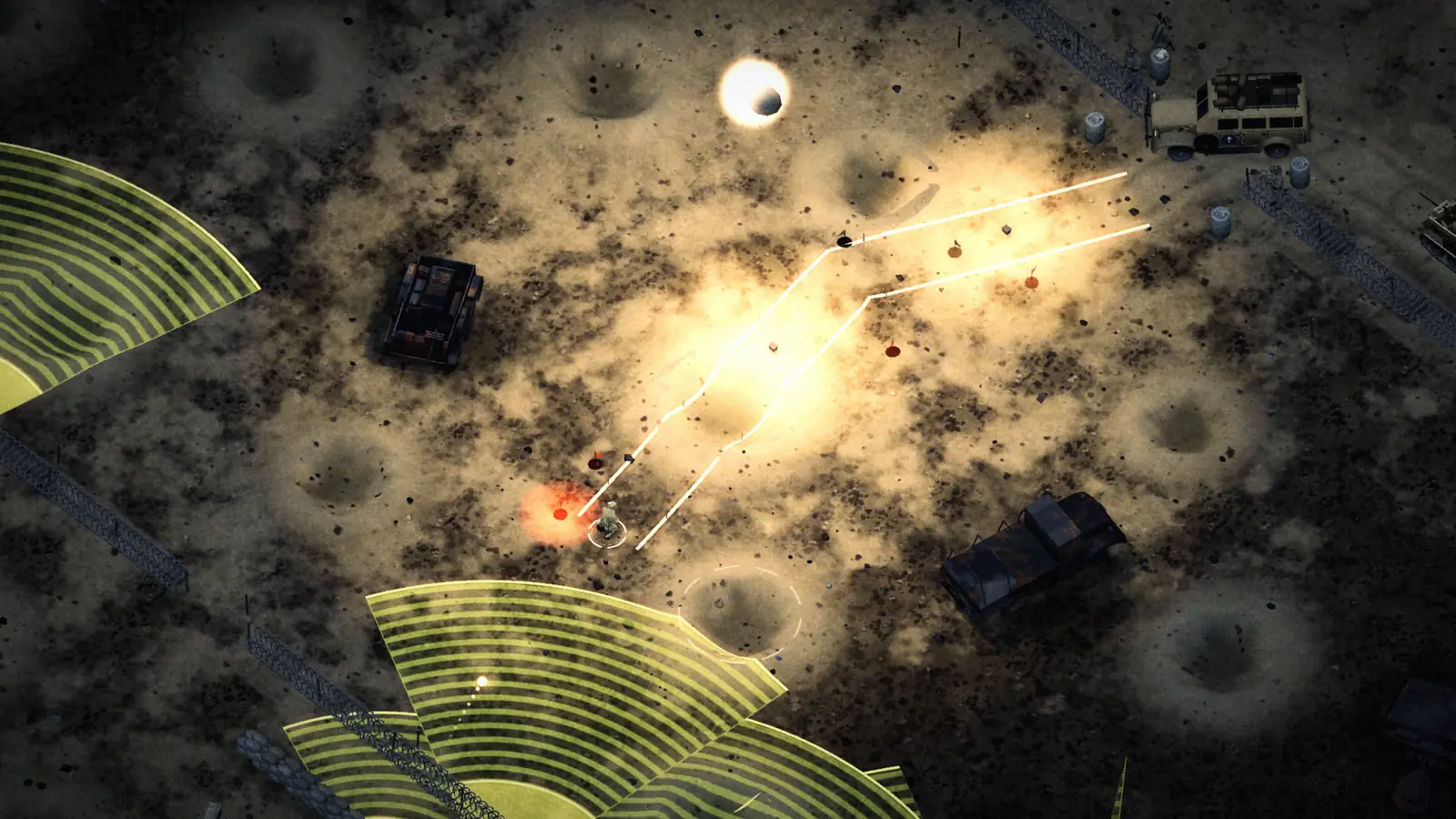
The flares
A flare man fires over his sector on his own clock, and at any engine he hears. Crouched men and the column stop by themselves until it dies. Don't stand up under one: you will be seen.
-
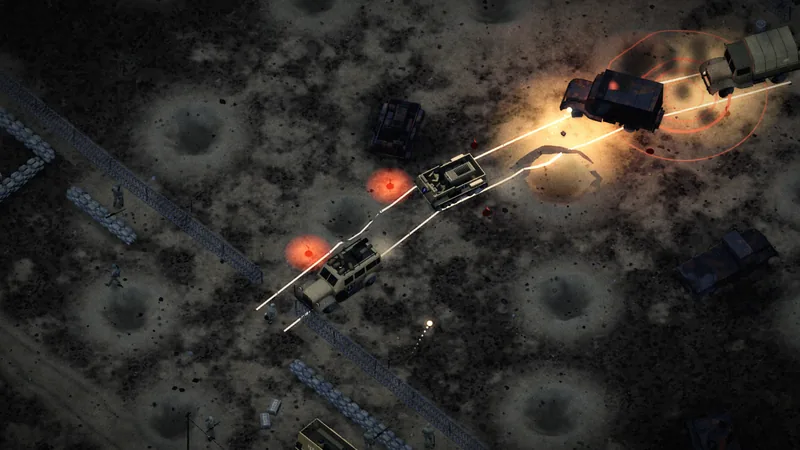
Foot down
Caught? Swallow's FOOT DOWN: full speed, straight at the lamps, over the mines if need be. It costs lorries. It saves the rest.
-
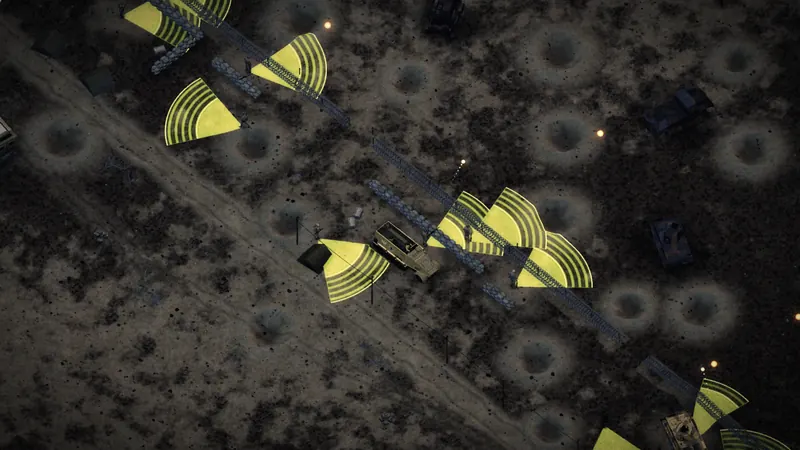
Call the fort
Otaha's CALL THE FORT: the rearguard opens up, and for a few seconds the ring's cones shrink and look away. Two calls. Use them when the column crosses.
From the marsh

213°
Three red lamps
The British waited on azimuth 213, by three red lamps, with lorries and ambulances. Three red lamps, and then a British corporal asking if anyone had a cigarette. Behind them the fort went on firing for another hour, for the look of it. In the morning the ring closed on an empty hole in the ground.
-
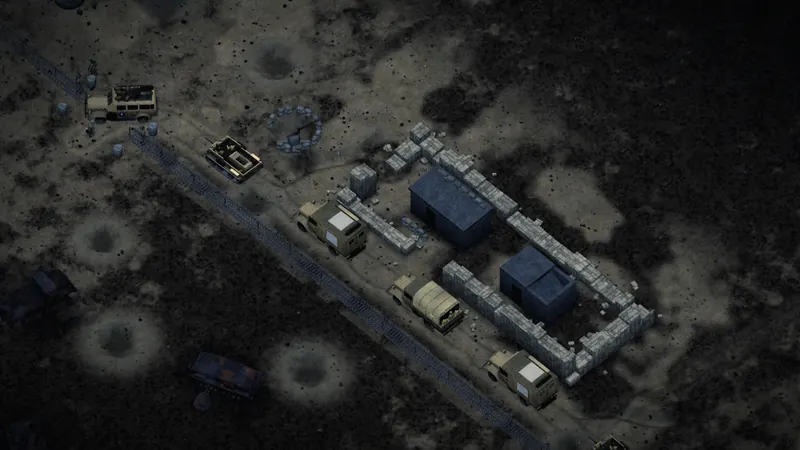
The fort. Two weeks on this heap of stones. -
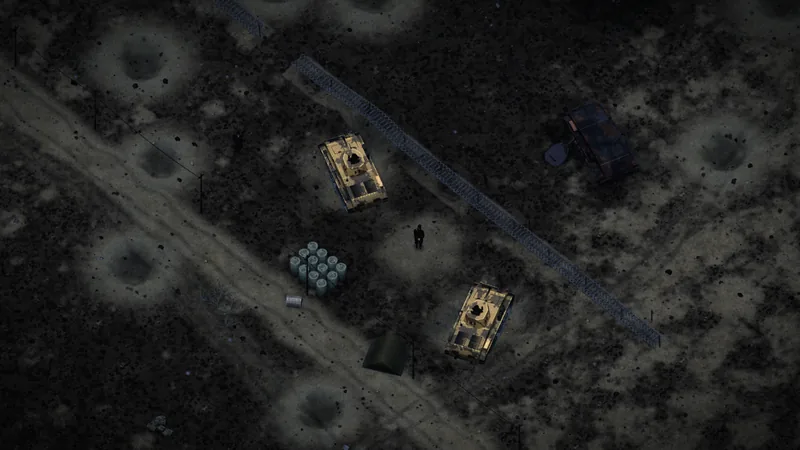
The Ariete. A tank cannot be bound. -
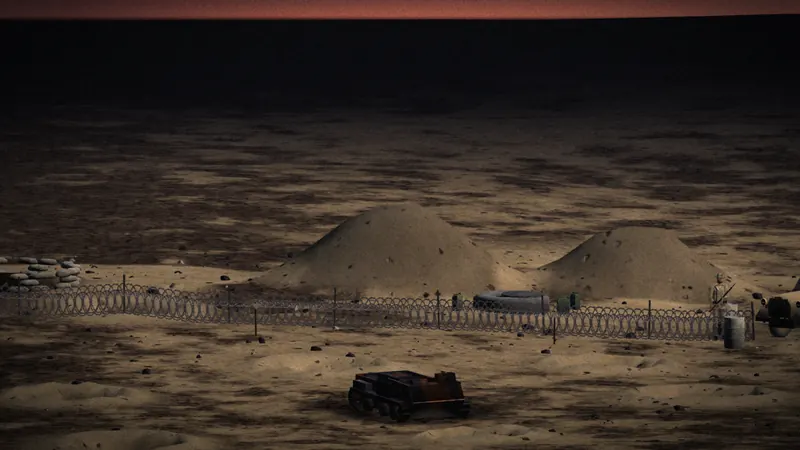
Morning. An empty hole in the ground.
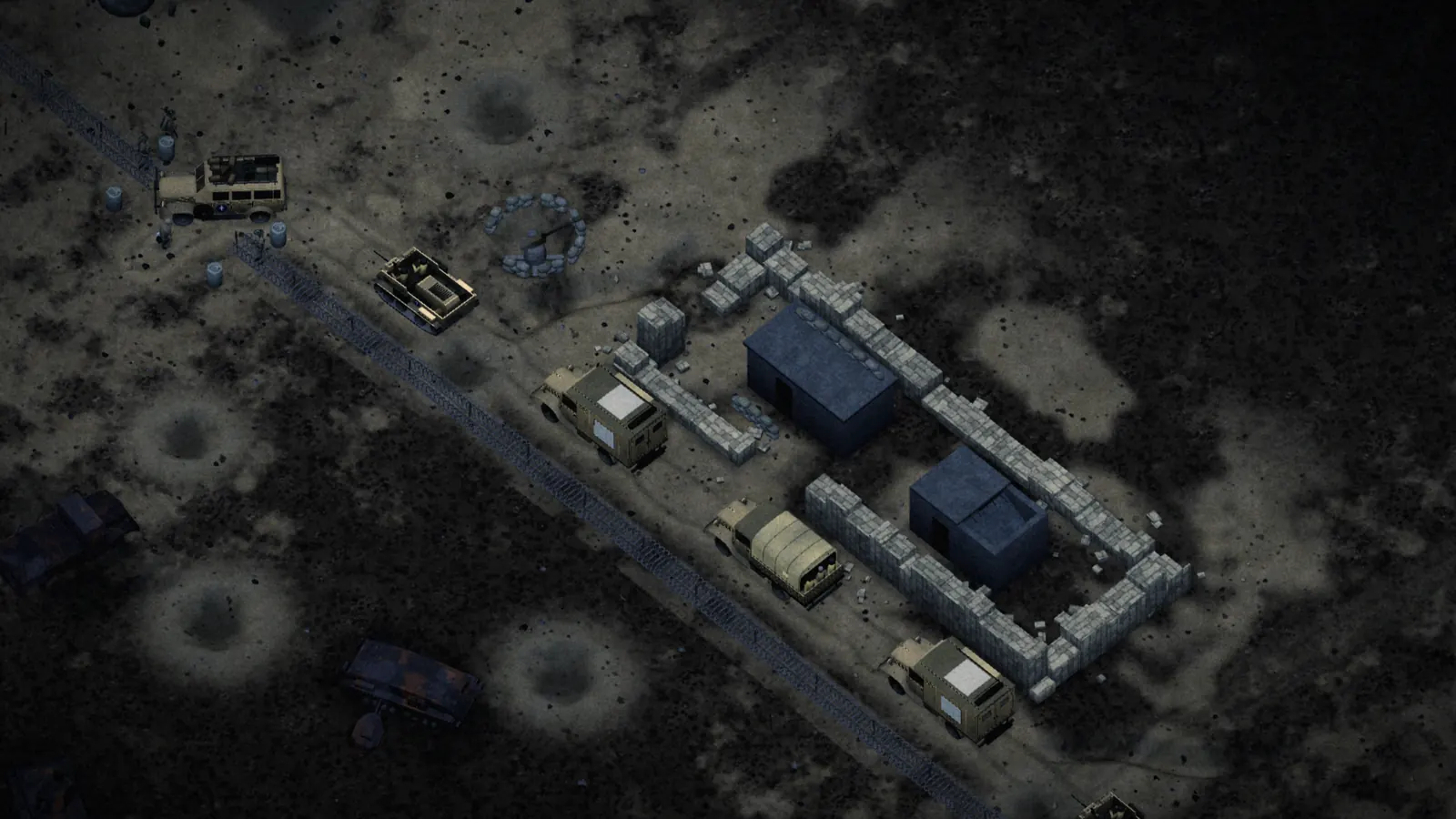
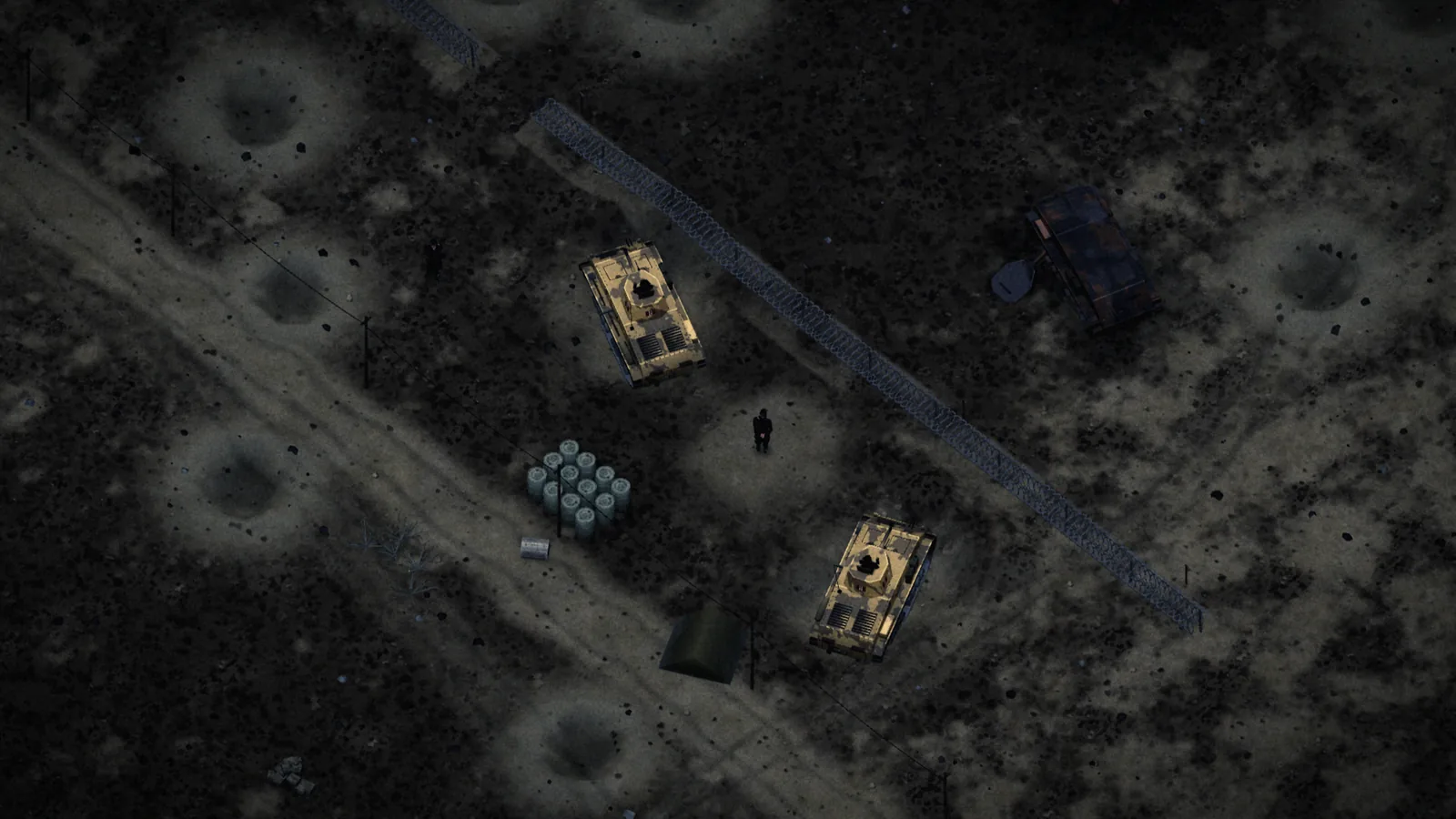
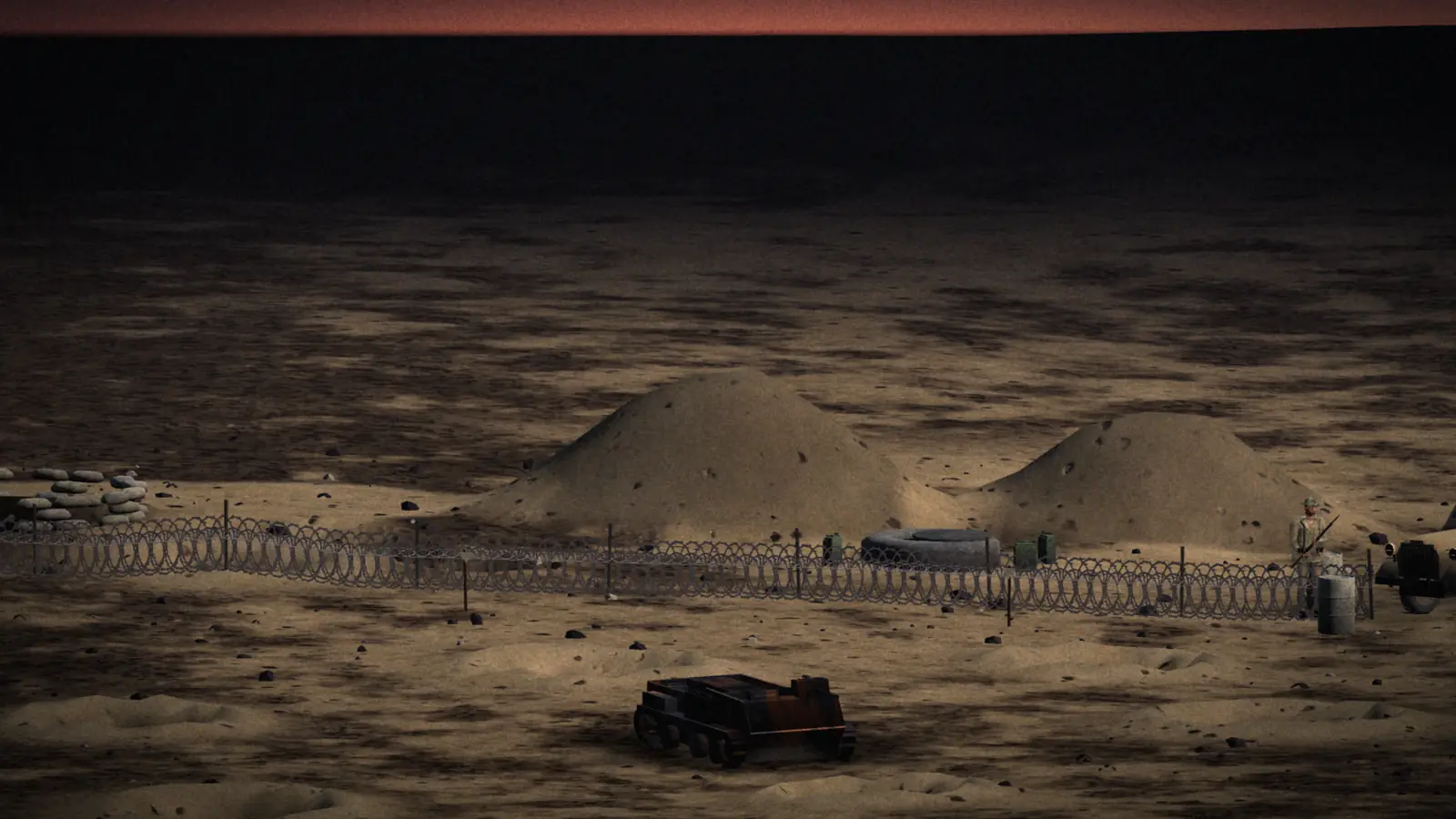
Saboteurs / Field operations The real story
The real breakout · 26 May to 11 June 1942
A Heap of Stones
Some 3,700 men, a dry well at the end of the British line, and fifteen days in the rock.
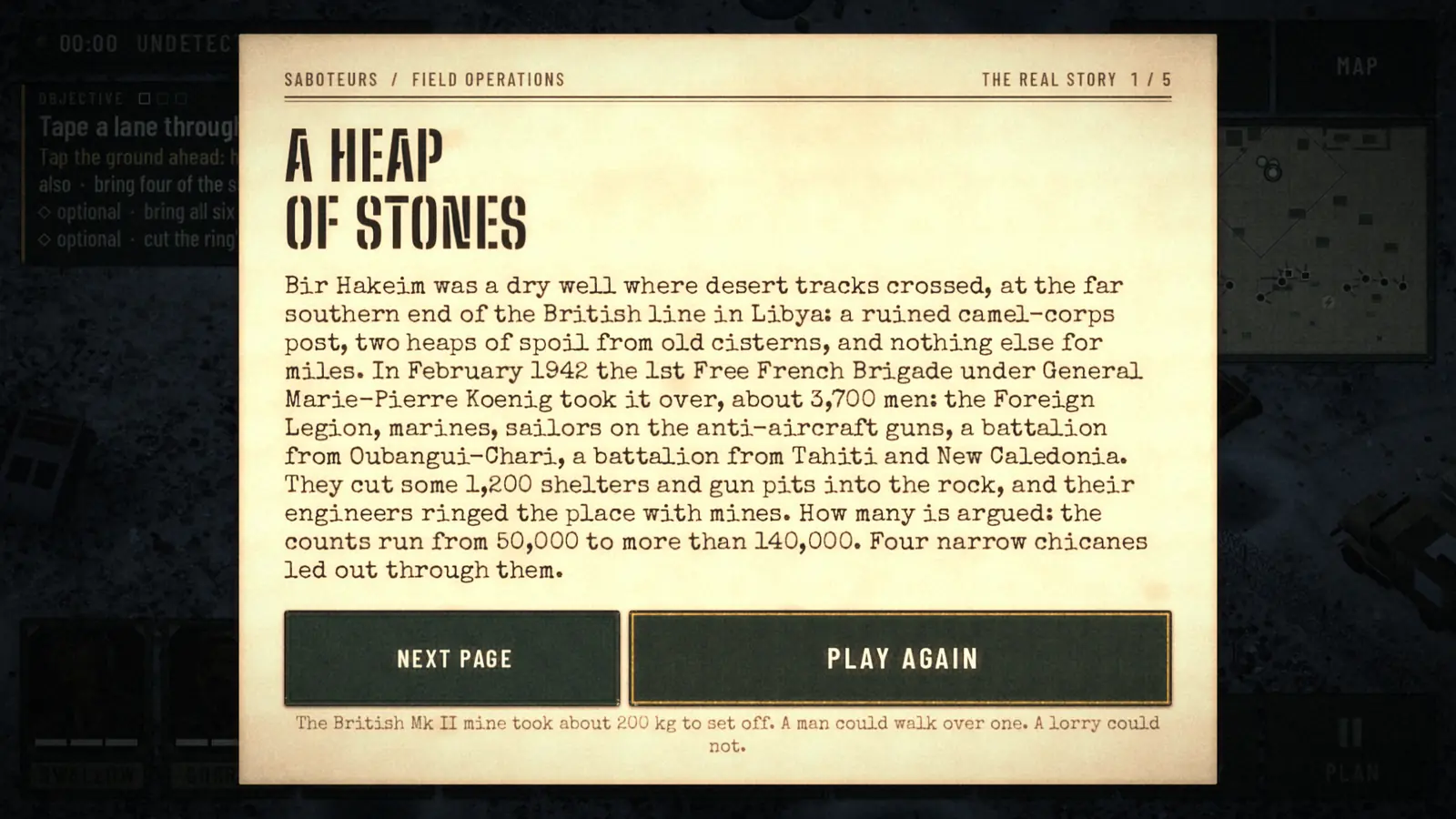
Bir Hakeim was a dry well where desert tracks crossed, at the far southern end of the British line in Libya: a ruined camel-corps post, two heaps of spoil from old cisterns, and nothing else for miles. In February 1942 the 1st Free French Brigade under General Marie-Pierre Koenig took it over, about 3,700 men: the Foreign Legion, marines, sailors on the anti-aircraft guns, a battalion from Oubangui-Chari, a battalion from Tahiti and New Caledonia. They cut some 1,200 shelters and gun pits into the rock, and their engineers ringed the place with mines. How many is argued: the counts run from 50,000 to more than 140,000. Four narrow chicanes led out through them.
The British Mk II mine took about 200 kg to set off. A man could walk over one. A lorry could not.
We took liberties. Swallow, Gorrión, Otaha and this one lane are made up. They stand for the sappers on their knees in the dark, and for those who drove.
-
Fifteen days
Rommel's attack went round the end of the line on 26 May. Next morning the Ariete's M13 tanks came straight at Bir Hakeim, and lost some thirty in under an hour among the mines and the guns; their Bersaglieri, in lorries, were driven back by the shelling. A captured officer said he had been told they would crush the place in fifteen minutes. From 2 June the ring closed: the Trieste, the 90th Light, then battle groups of the 15th Panzer. Koenig refused three demands to surrender. Some 40,000 shells and 1,300 or more air sorties fell on the position. The water ran out, and men drank from radiators.
Rommel wrote later that he had seldom been given such a hard fight in Africa.
-
The lane
The order to get out came on 10 June, with about 200 rounds left for the 75s. After dark the sappers went out to clear the Pacific Battalion's chicane. The plan was a corridor 200 m wide; they managed a narrow one, 70 m by one account, 45 by another, and the first groups left more than an hour and a quarter late. Two companies stayed behind, firing, to hide it. The British waited about 7 km out on azimuth 213, by three red lamps, with lorries and ambulances. Vehicles strayed. One hit a mine, a flare went up, and fire came from all sides. The order went round to go, whatever the mines. The Bren carriers charged the machine guns: Captain de Lamaze and Commandant Bricogne were killed taking them with grenades, Lieutenant Devé in his carrier against a 20 mm gun.
The first men reached the British about four in the morning, most of the rest by eight.
-
La Miss
Susan Travers was born in London in 1909, a naval officer's daughter. She was a nurse and an ambulance driver in Finland in 1940, then went to the Free French in London, and came to drive for the Legion's doctor, then for Koenig. They called her La Miss. Ordered out with the other women before the battle, by her account she came back. That night Koenig's column lost its guide and was blown up three times. She remembered him saying that if they got in front, the rest would follow, and she drove at it, afraid above all that the engine would stall. They passed within yards of a German camp. She counted eleven bullet holes in the car, a Ford in most accounts. After the war the Legion enrolled her properly: the only woman it has ever had.
Her book came out in 2000, when she was 91 and almost everyone else in it was dead. Much of this rests on her word.
-
Who came out
Of some 3,600 to 3,700 men, between 2,400 and 2,700 reached the British, by the count you take; one careful figure is 2,619. On the night itself 41 were killed, 21 wounded and 763 went missing, most of them taken; 118 of the prisoners drowned when the Nino Bixio was torpedoed that August. Among them were Spanish Republicans who had got out of the French camps by joining the Legion, about 300 by one count, 800 by another, and the Tahitian volunteers, three hundred of whom had sailed in April 1941. Rommel found an empty position in the morning: the French, he wrote, did not wait. Tobruk fell ten days later all the same. What the fifteen days bought is still argued; the Eighth Army got back to El Alamein.
Reports that Hitler ordered Free French prisoners shot, and that Rommel ignored it, rest on thin sources.
In memory of those who did not come out of Bir Hakeim, the French,
the Legion's Spaniards and the Tahitians, and of the prisoners
drowned on the Nino Bixio.
Read about the battle of Bir Hakeim
Saboteurs · In beta on iPhone, Android and the web
Bring them through
Saboteurs is in beta on iPhone, Android and the web. Bir Hakeim is the eleventh operation, in the app.
- iPhone Now in beta
- Android Now in beta
- Web Now in beta