
Field operations · File 07
New operation
Stalag III-C
Brandenburg · a January night in 1945
Searchlights over the snow, a dummy in every bunk, and three packs of American cigarettes for the guards.
The briefing
One camp. One night.
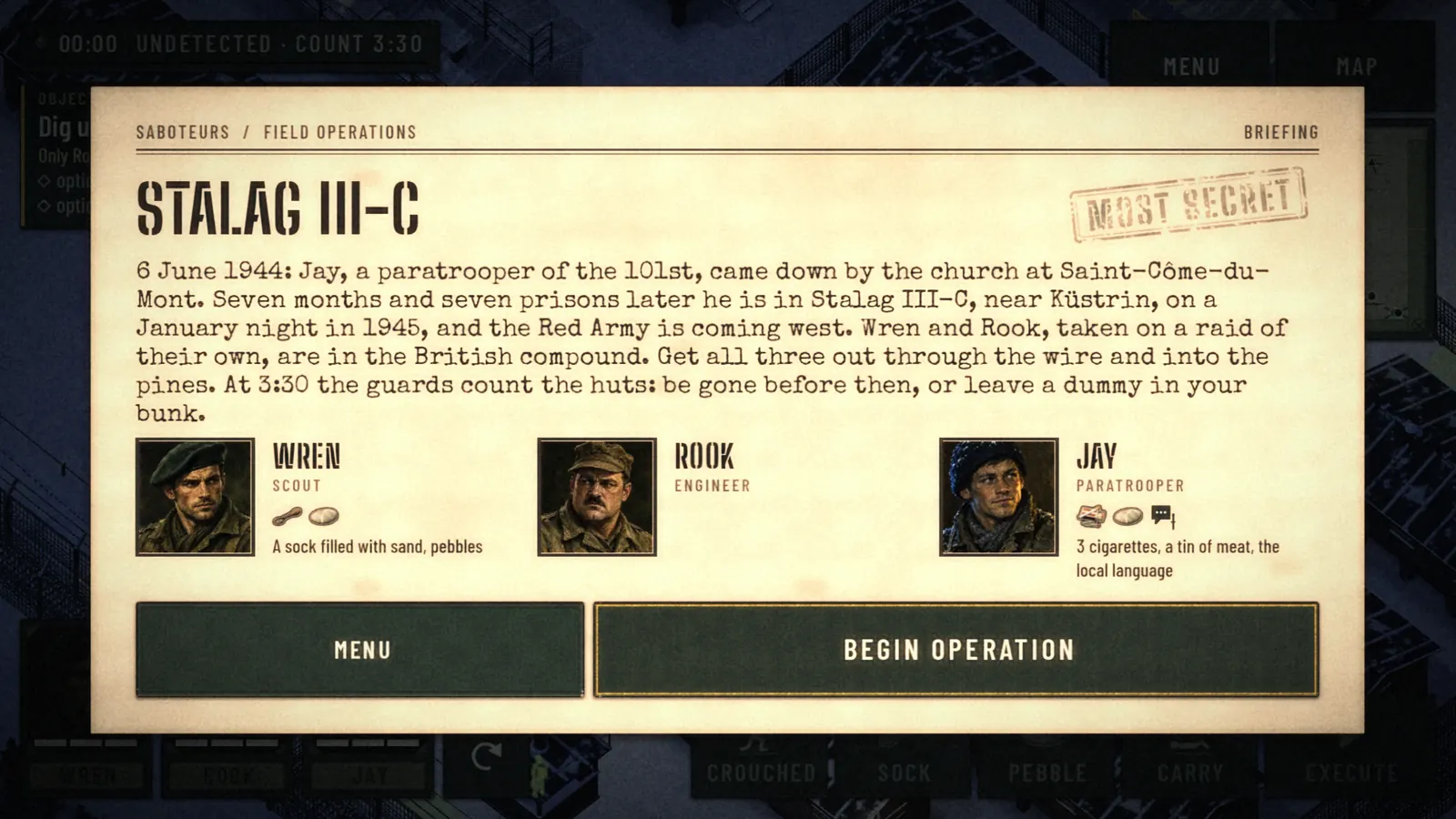
6 June 1944: Jay, a paratrooper of the 101st, came down by the church at Saint-Côme-du-Mont. Seven months and seven prisons later he is in Stalag III-C, near Küstrin, on a January night in 1945, and the Red Army is coming west. Wren and Rook, taken on a raid of their own, are in the British compound. Get all three out through the wire and into the pines. At 3:30 the guards count the huts: be gone before then, or leave a dummy in your bunk.
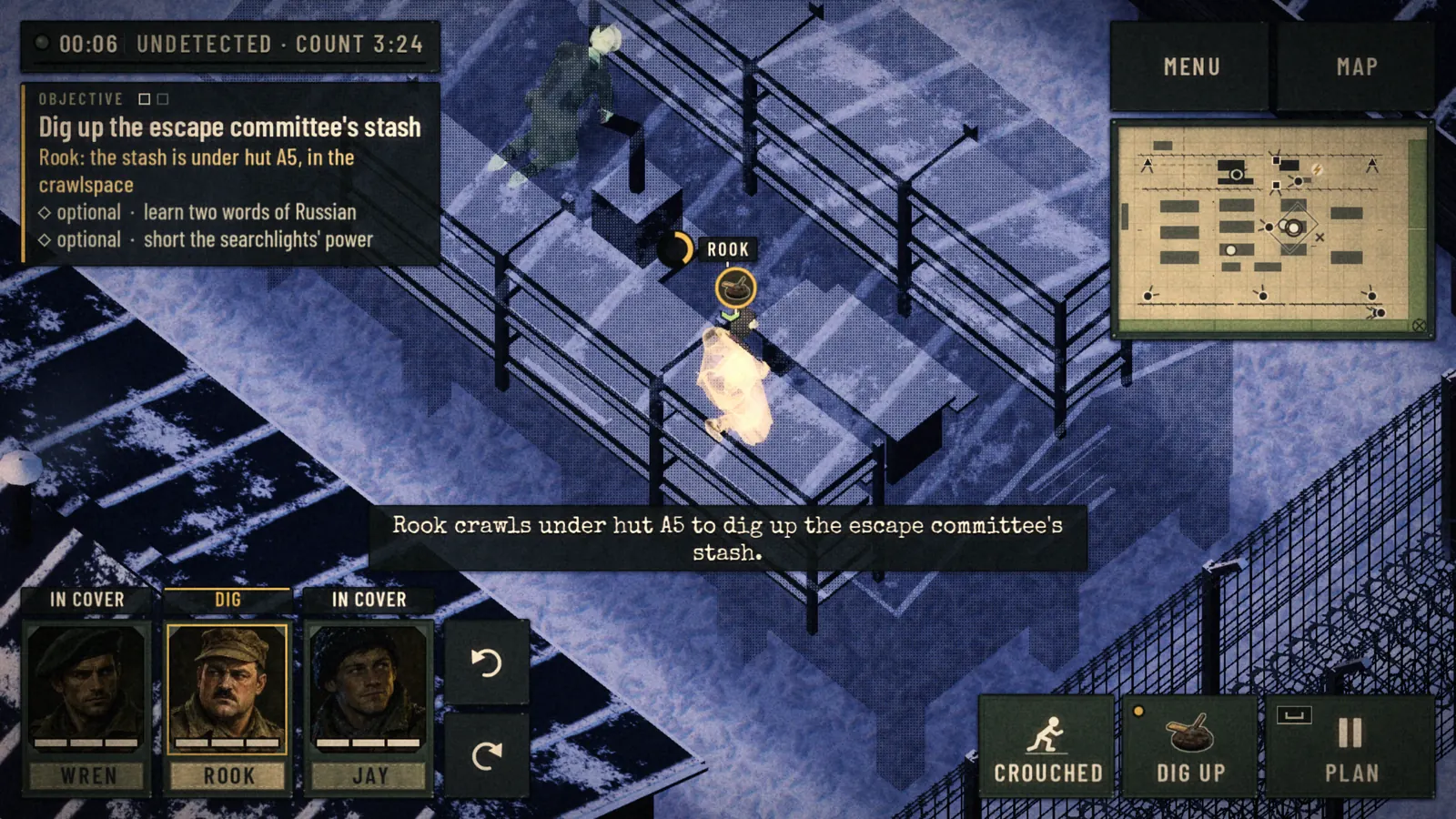
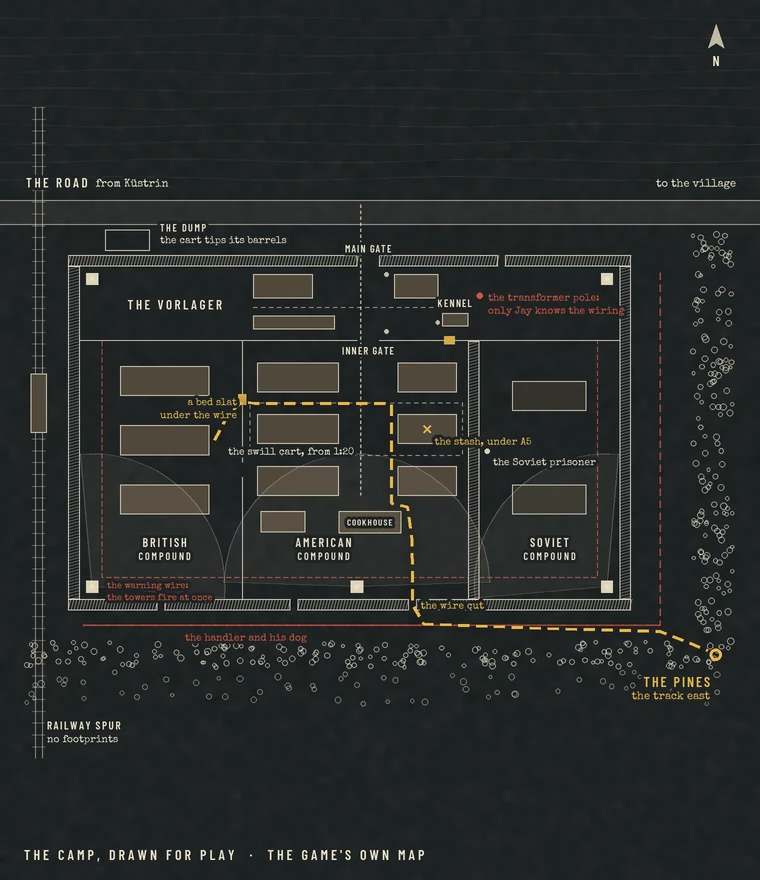
- Dig up the escape committee's stash Rook's tools are buried under hut A5: wire cutters and a bent-nail pick, made in the camp. Only he knows where.
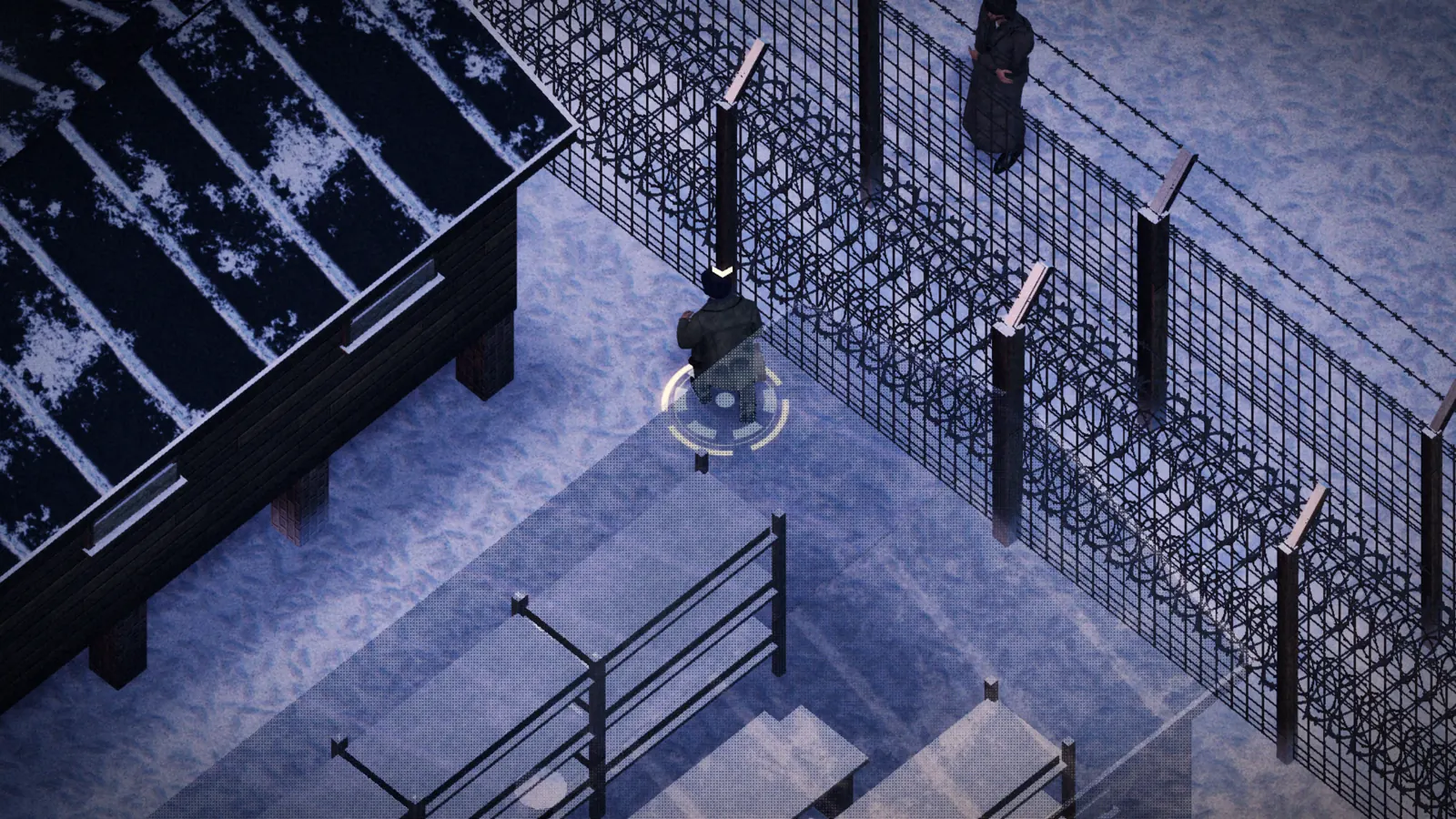
- Learn two words of Russian Optional The Soviet prisoner at his wire, east of hut A5, will give Jay two words.
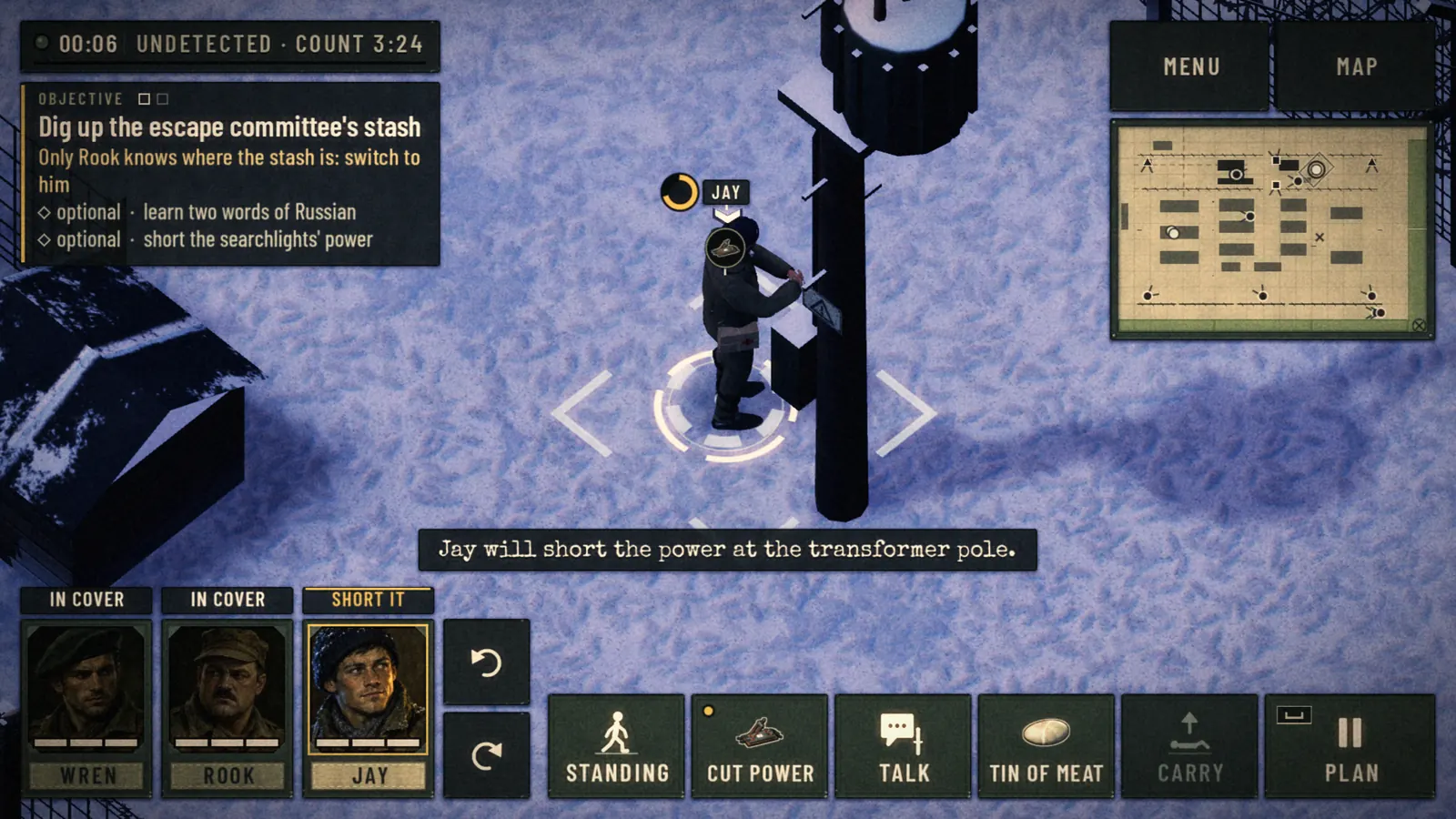
- Short the searchlights' power Optional Only Jay knows the wiring. The transformer pole is in the Vorlager, past the kennel.
- Get all three out of the camp and into the pines Through the wire and east to the track through the pines, in the south-east corner.
Lose any of the three and it is over. The seventh operation.
The squad
Three prisoners. No guns.
-
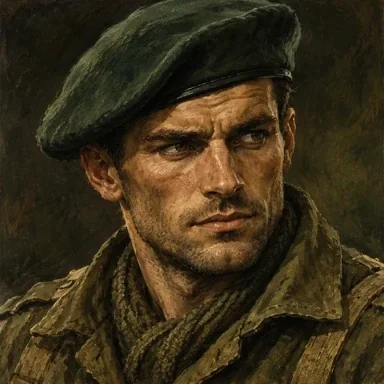
Wren
Scout
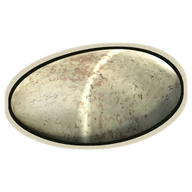
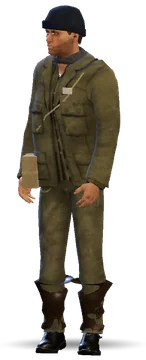
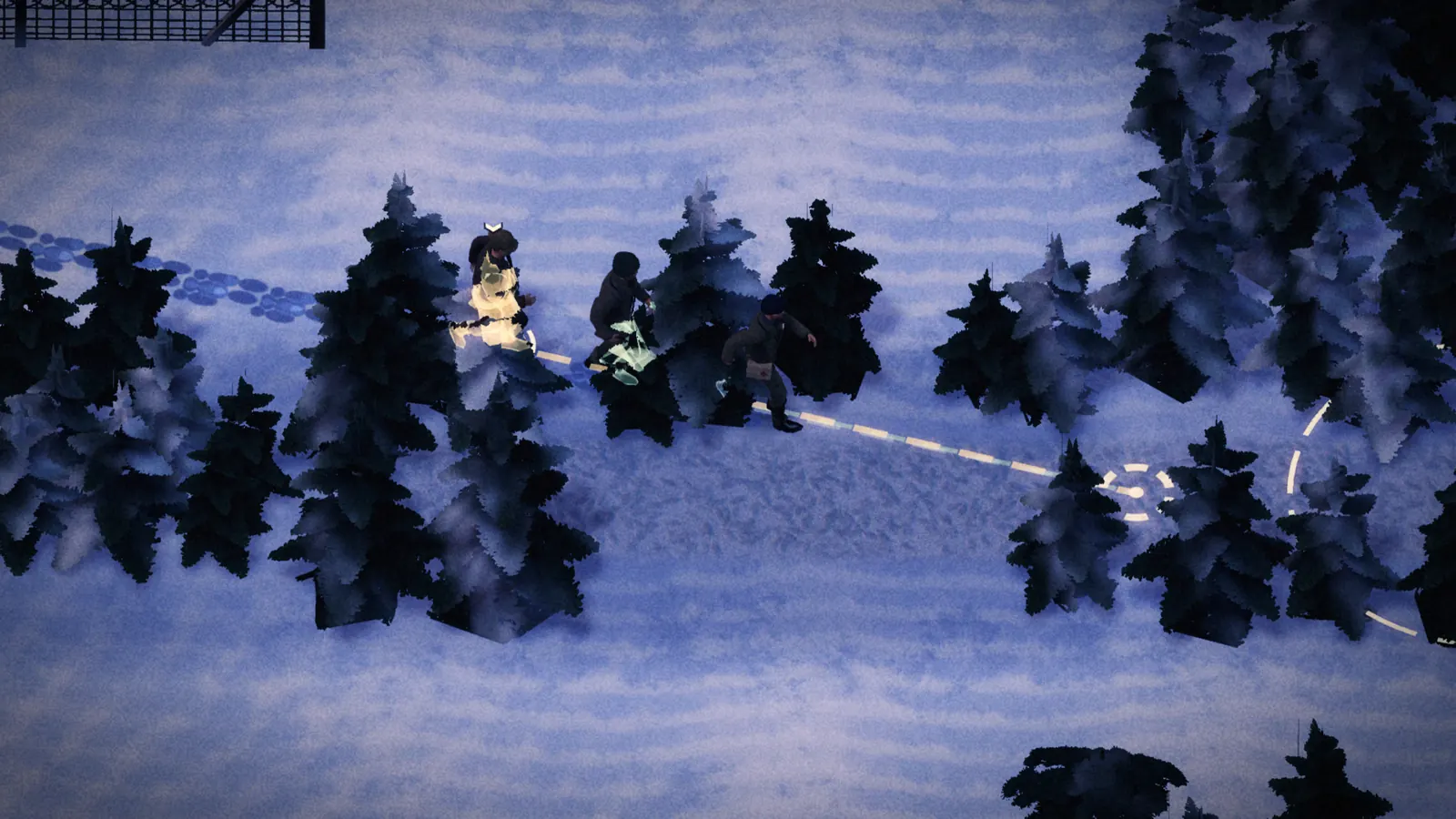
Quick and quiet, as ever, with stones from the yard for pebbles. A sock filled with sand knocks a guard out for a while; in the guard's greatcoat and cap, upright in the dark, Wren passes for one of them: not with the Feldwebel, and not close to.
Kit a sock filled with sand, stones for pebbles
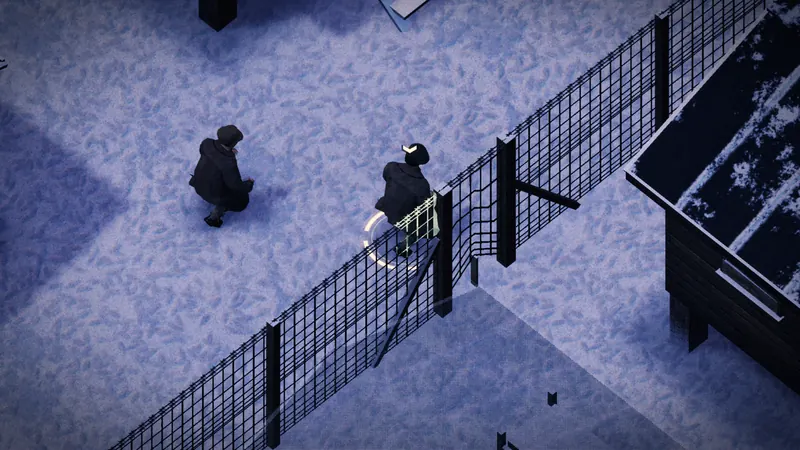
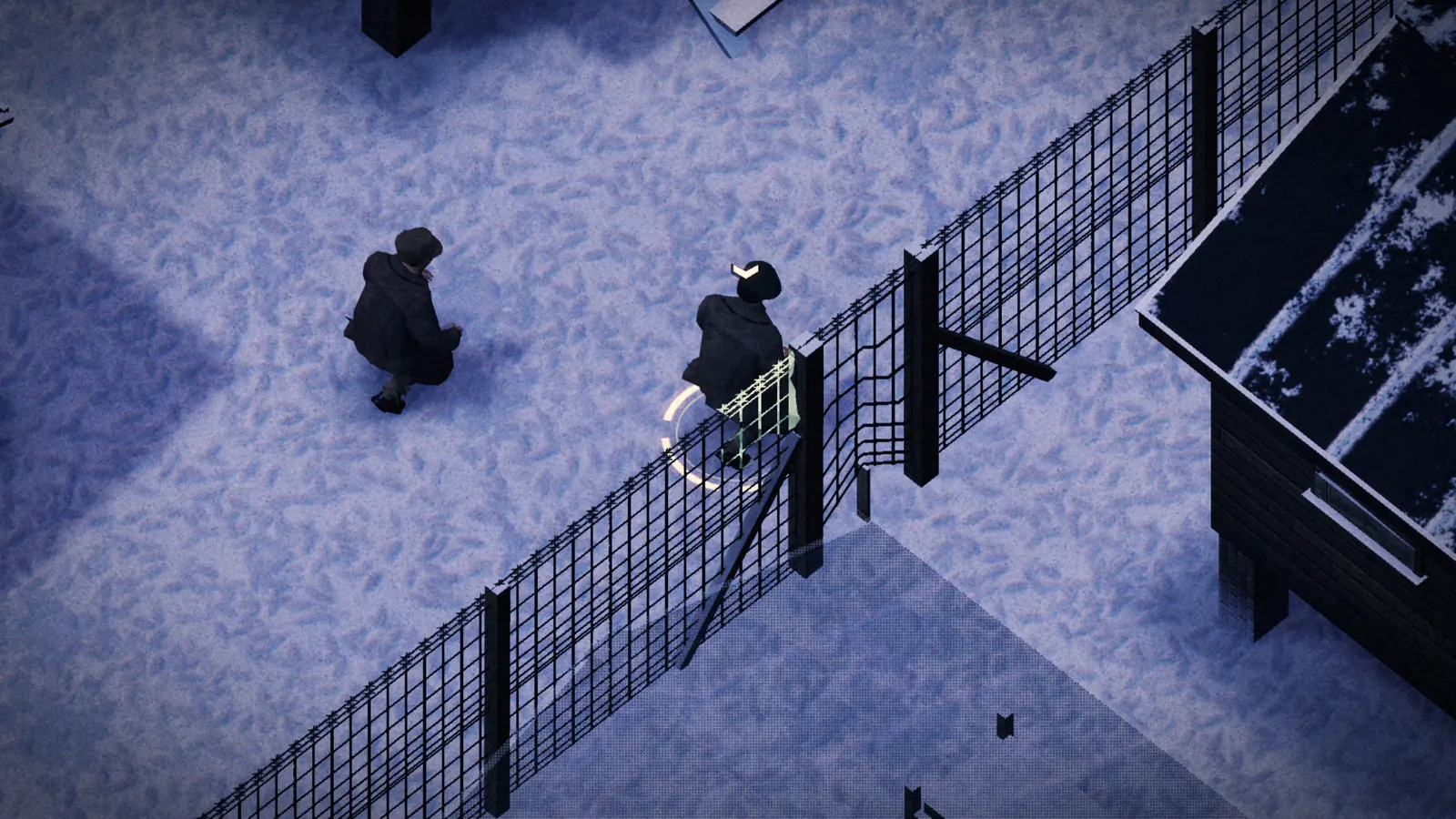
Under the wire. A bed slat props up the bottom strand. -
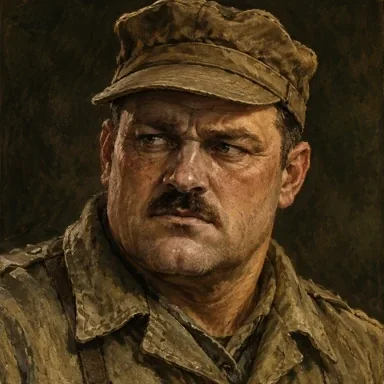
Rook
Engineer
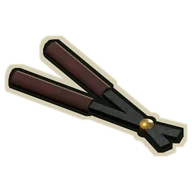
Nothing at first. Under hut A5 he digs up the escape committee's stash: wire cutters and a bent-nail pick, made in the camp, for the gates' padlocks and the double fence. With bed slats and a blanket he makes the others' dummies too.
Kit the stash's wire cutters and bent-nail pick, bed slats for dummies
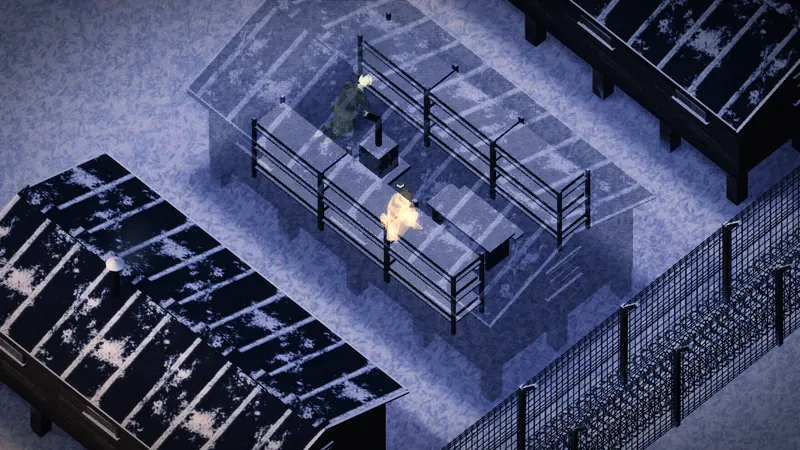
The stash. Under hut A5, in the crawlspace. -

Jay
New
Paratrooper
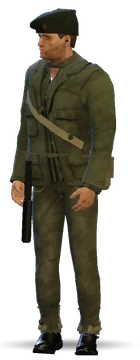
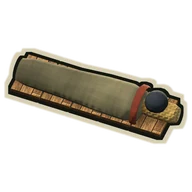
A paratrooper of the 101st, new to the squad: he came down by the church at Saint-Côme-du-Mont, and seven prisons later he is in hut A3. A pack of cigarettes stops a guard, through the wire too: while the smoke lasts the guard watches only Jay, and his dog sits. A tin of meat keeps a dog busy, and only Jay knows the wiring: shorted at the transformer pole, the searchlights die for the night.
Kit three packs of American cigarettes, a tin of meat
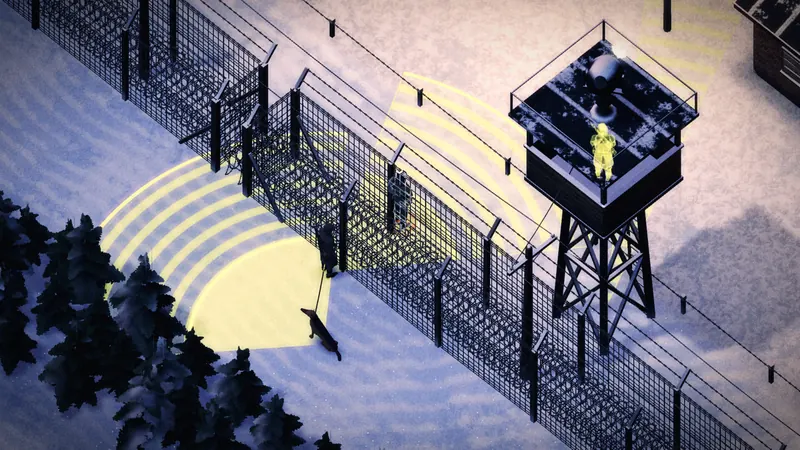
A smoke through the wire. The handler stops for it, and his dog sits.


The other side
Who's on watch
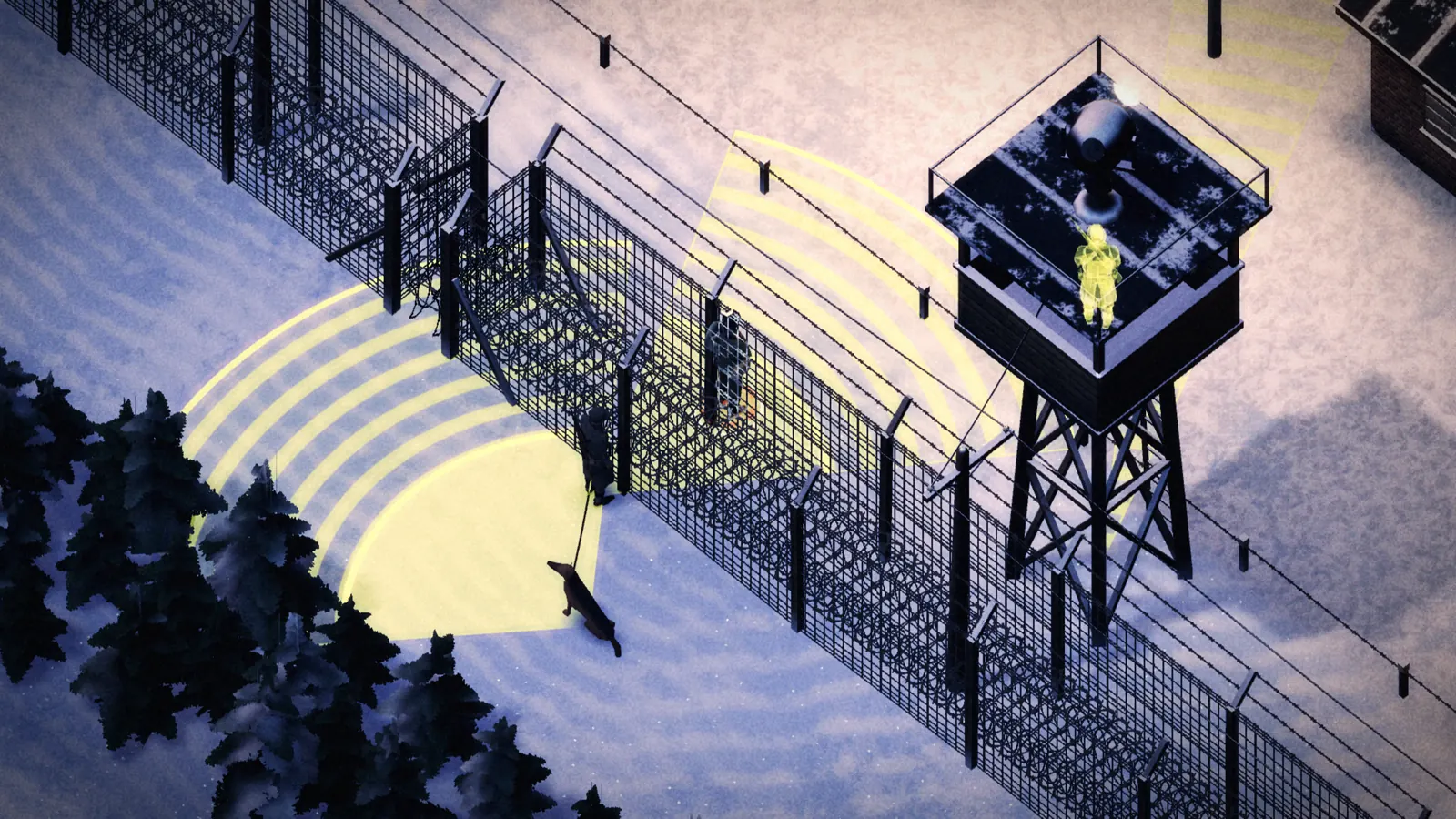
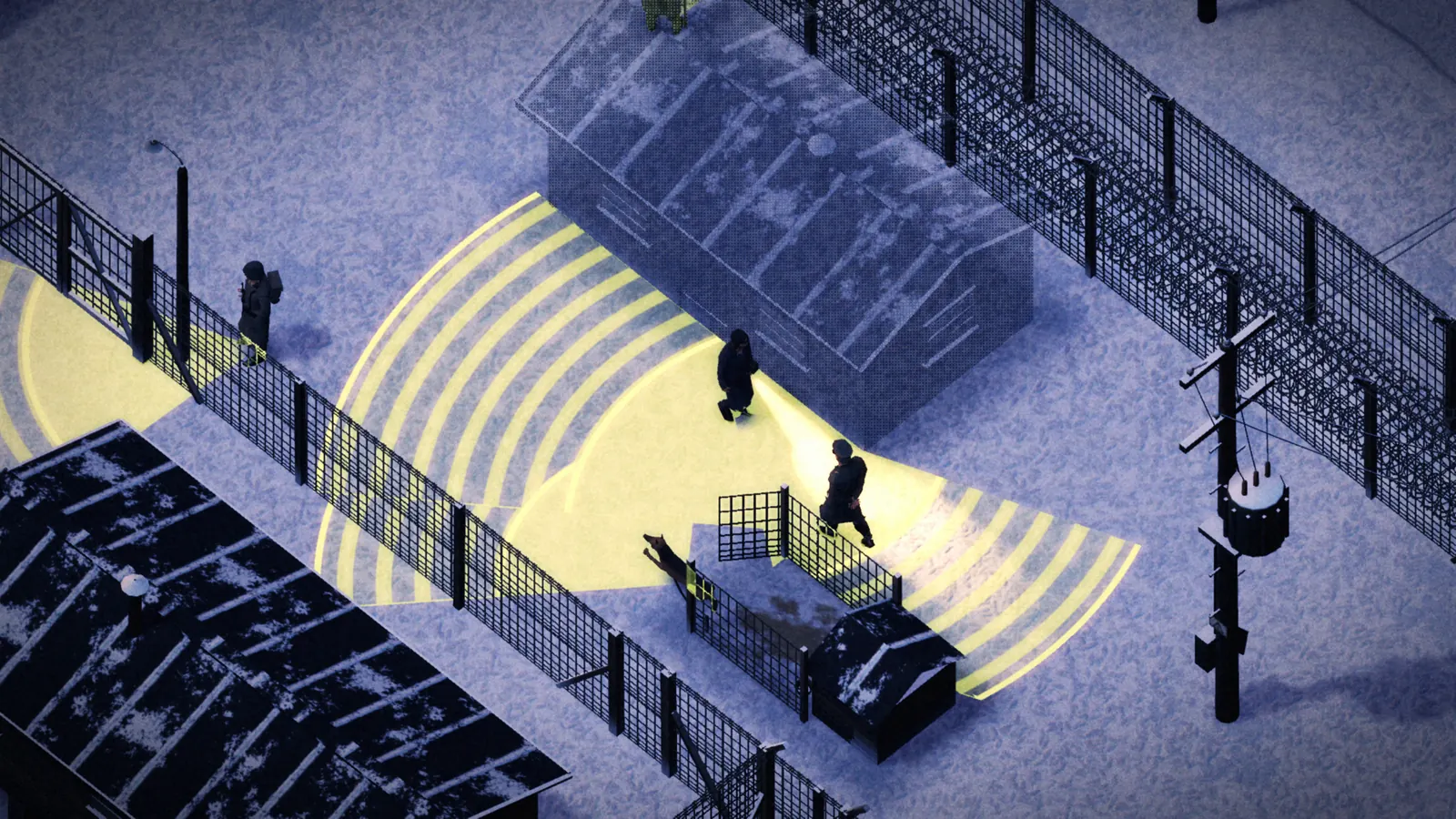
Every guard has a cone you can see and a beat you can learn.
-
Camp guard
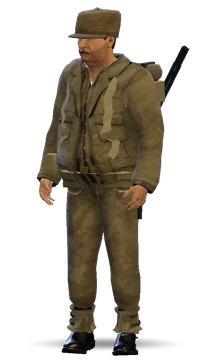
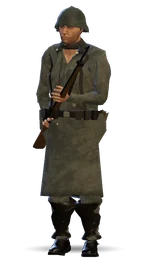
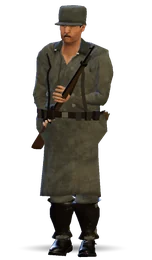
Older men in greatcoats, at the gates and up in the towers. Whoever a searchlight finds inside the warning wire is fired on at once.
-
Dog handler
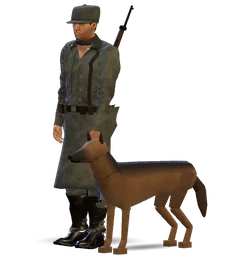
Walks his dog along the outer fence. Its nose finds a man under any cover; a tin of meat keeps it busy. Nobody hurts a dog tonight.
-
Night count
Three and a half minutes in, two guards come through the inner gate with lamps to count the huts. An empty bunk with no dummy in it, and the siren goes up.
Out in the dark
The machines
Built in the game after the real thing.
-
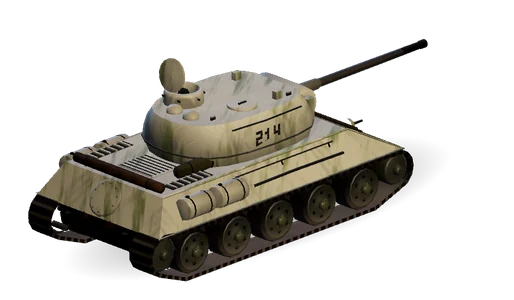
T-34/85
Days later, at dawn on a snowy road in the east: four of them, washed white for the winter. Jay climbs out of the ditch with his hands up and a pack of cigarettes in one.
From above
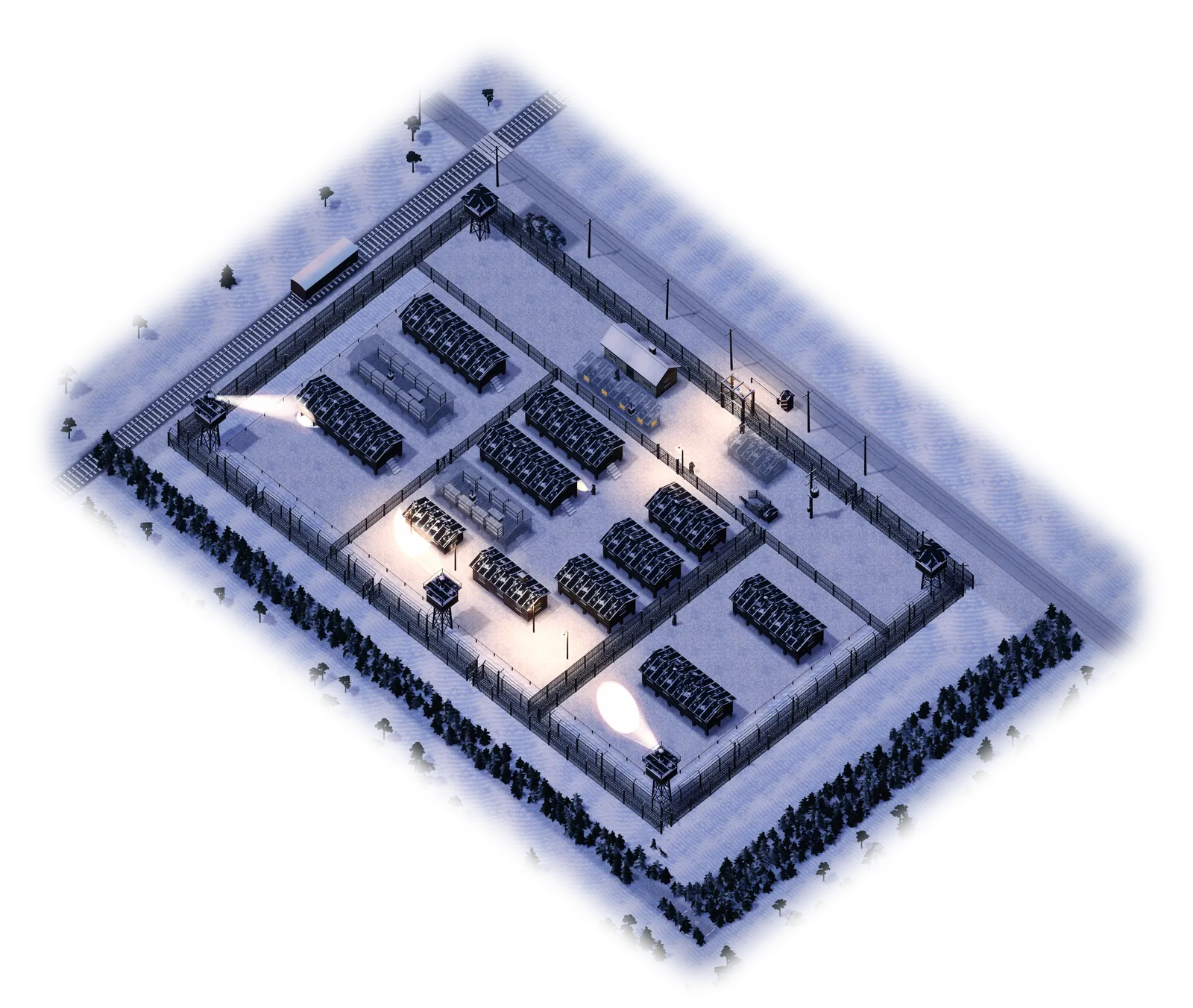
The whole ground
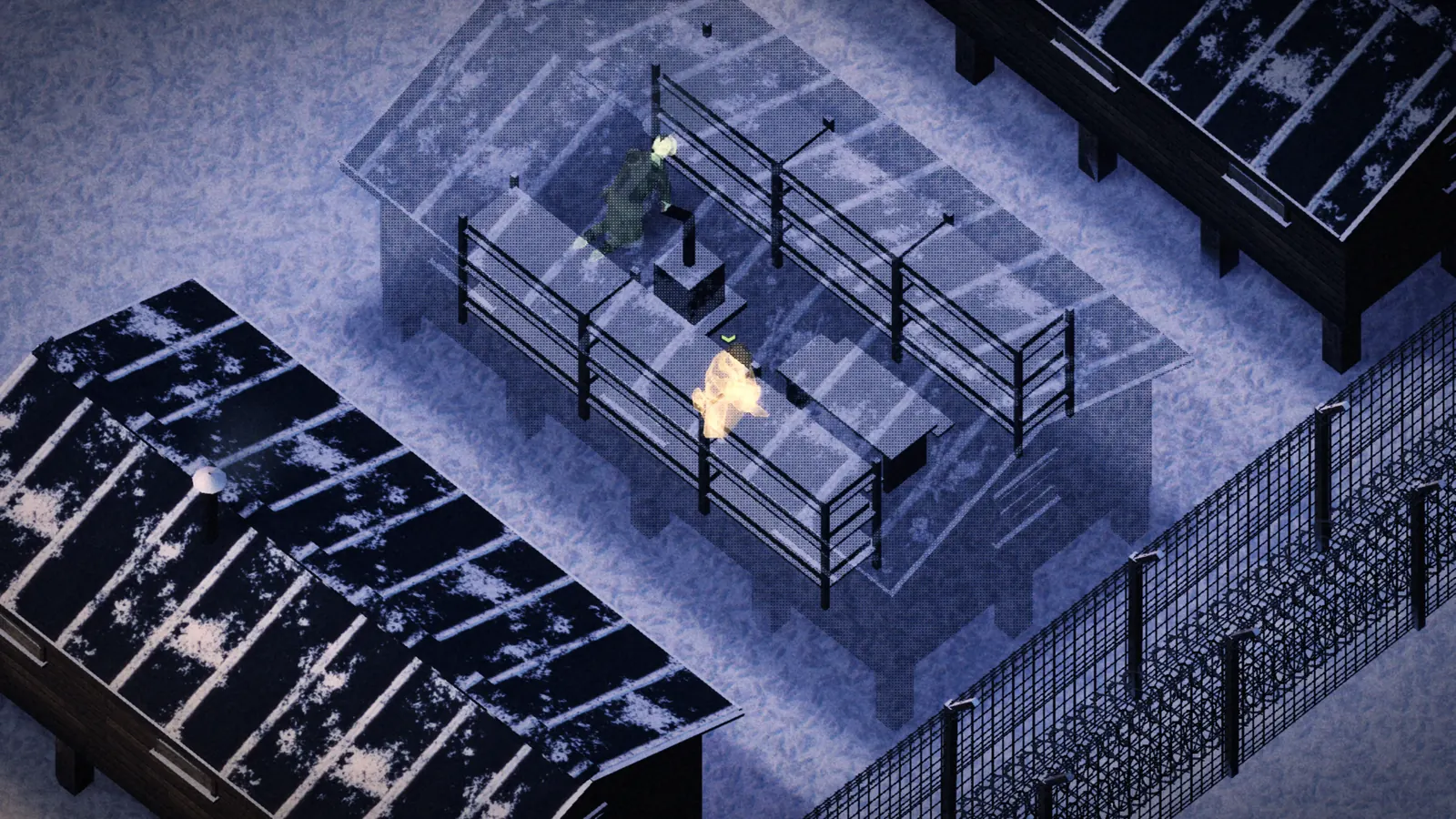
All of it at once, as the game draws it on the night: the squad at their start, the guards on their rounds. Drag it about, and zoom in on anything.
New in this operation
Four new tricks
-
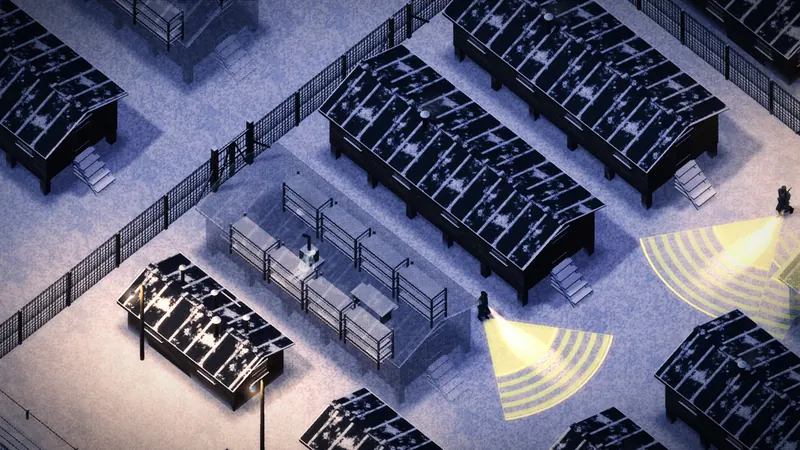
The night count
At 3:30 two guards with lamps come through the inner gate to count the huts, and a bunk with nobody in it sets off the siren. Be gone by then, or leave a dummy of bed slats and a blanket in your bunk.
-
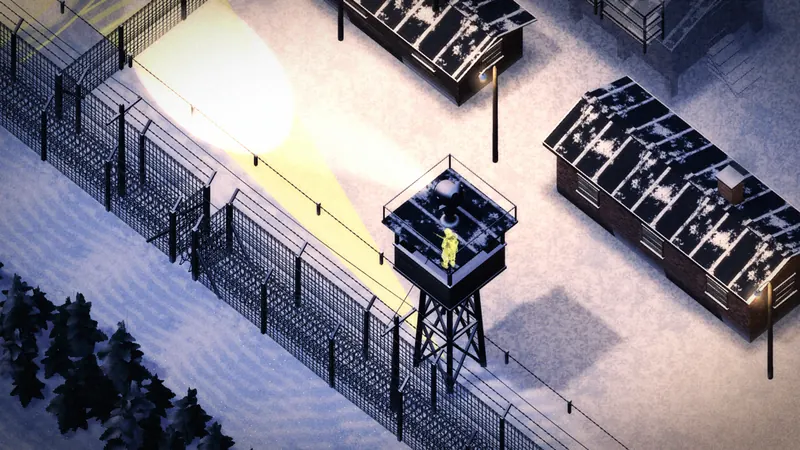
The warning wire
The towers fire at once on anyone they see between the warning wire and the fence, and inside a searchlight's beam crouching hides nobody. Cross between the beams, or with the power off.
-
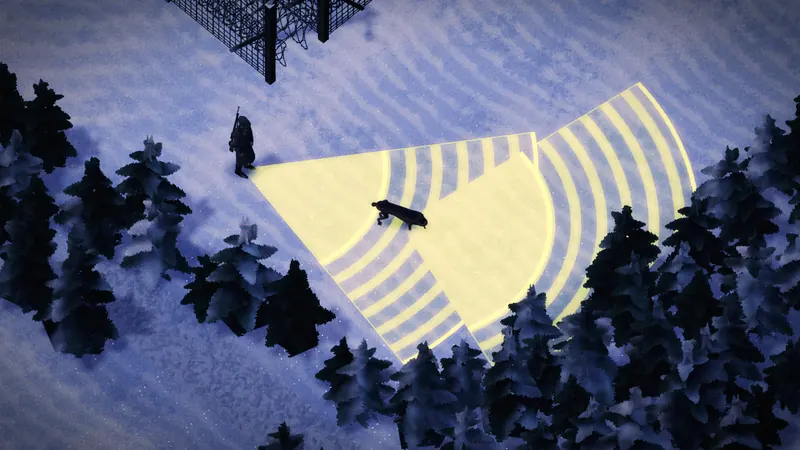
The dogs
No sock, pebble or coat works on a dog: its nose finds a man close by under any cover, and its bark brings its handler. Jay's tin of meat keeps one busy while it eats.
-
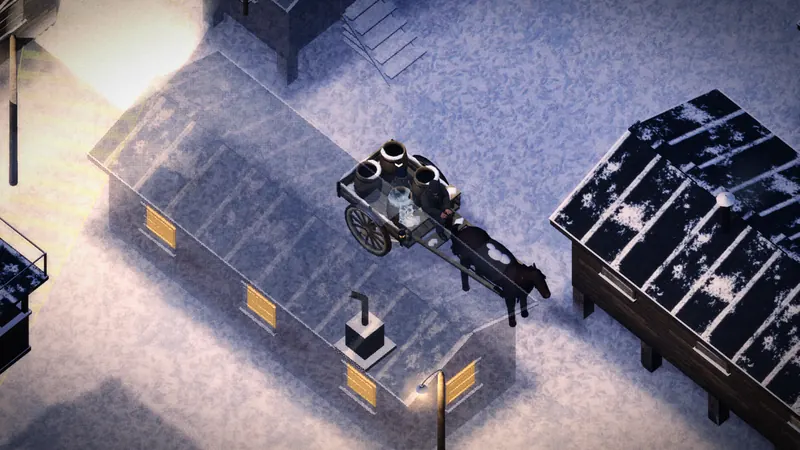
The swill cart
From 1:40 the swill cart stands at the cookhouse, and one man can hide in a barrel. At the inner gate the sentry probes the barrels with his bayonet, unless something draws him away.
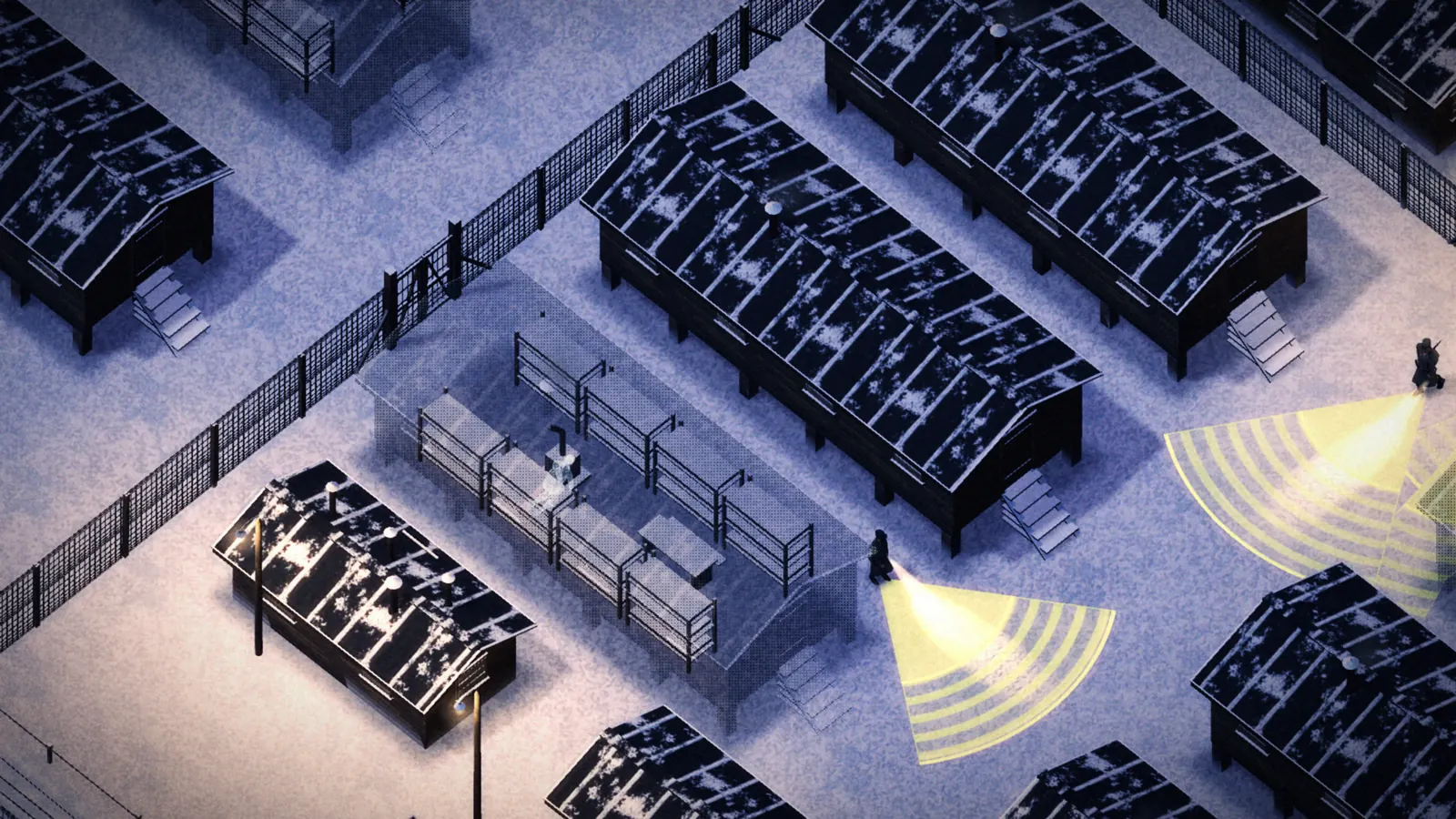
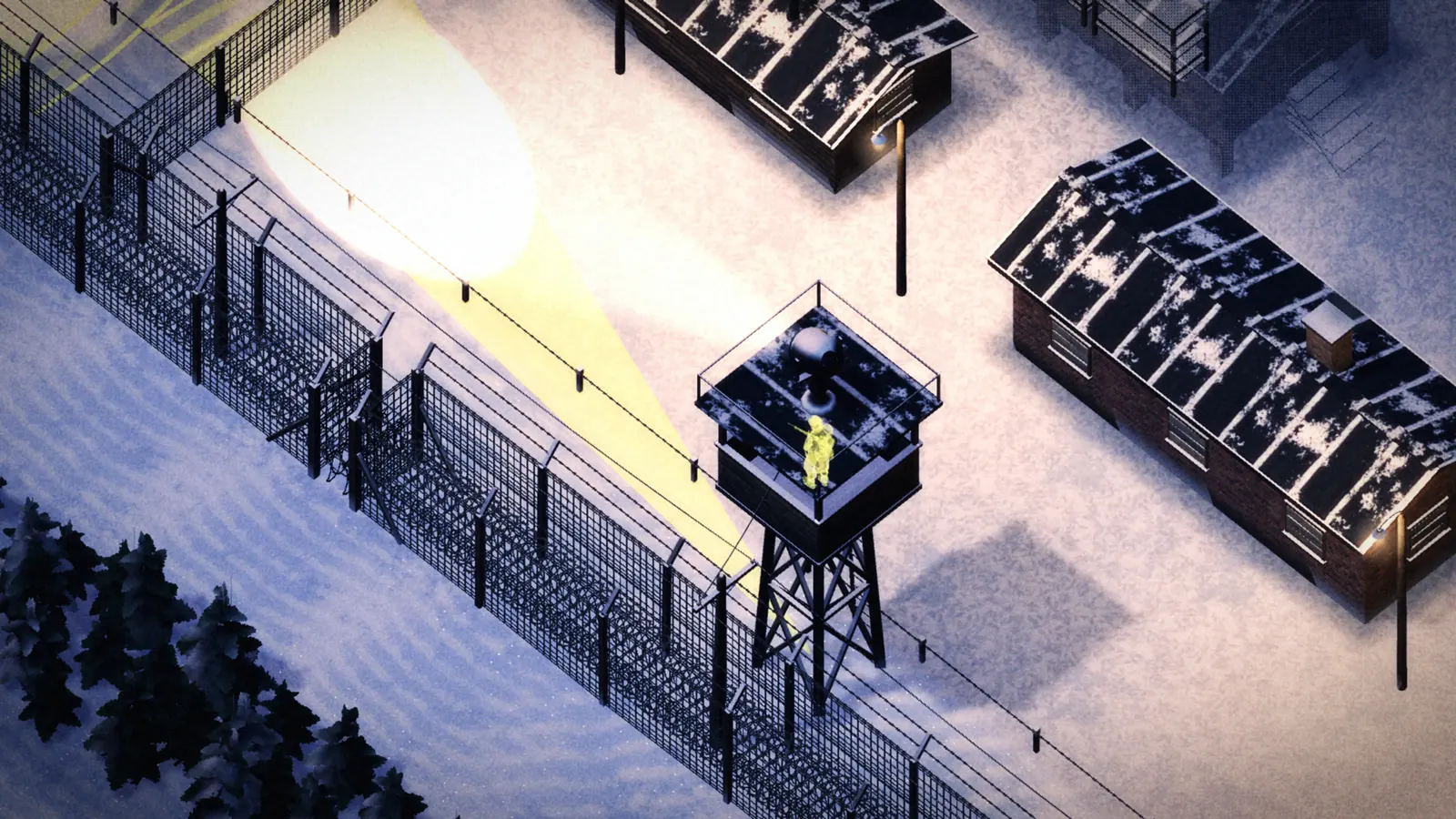
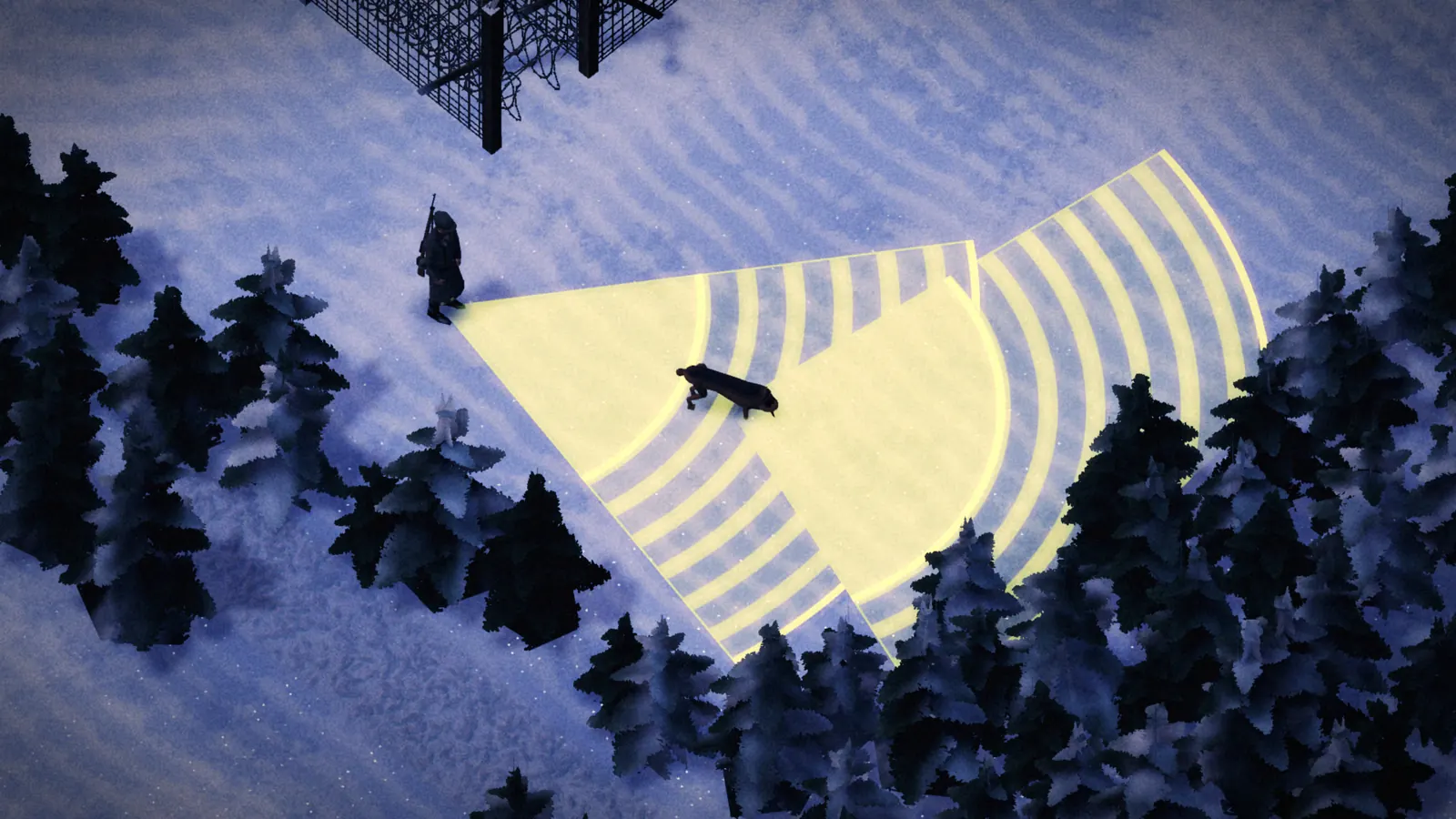
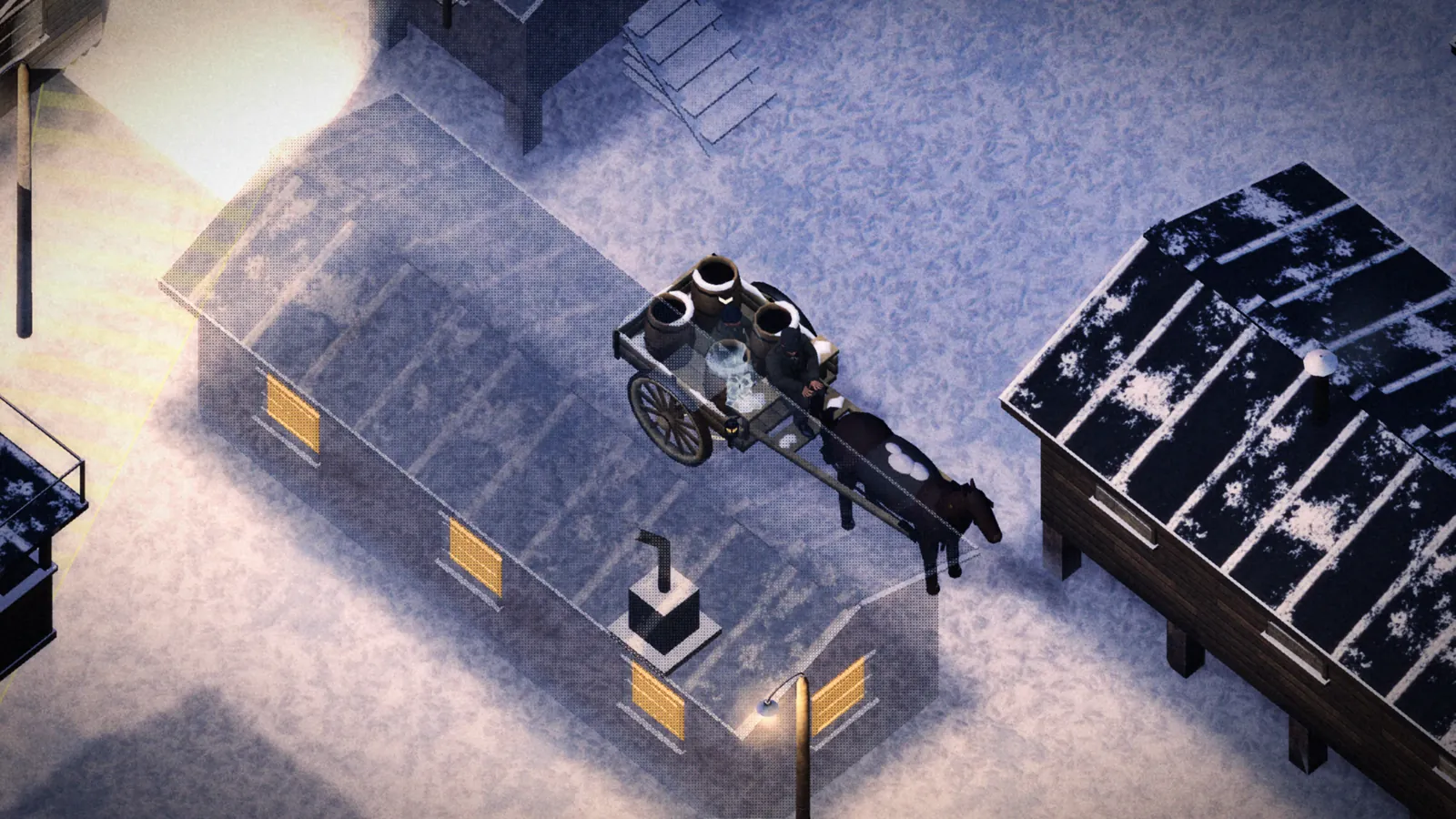
From the wire

3:30
Half past three
At half past three the count comes through the inner gate, and an empty bunk with no dummy in it sets off the siren. By then the three should be in the pines. Days later, at dawn on a road east of the Oder, Jay climbs out of a ditch in front of a column of T-34s, his hands up and a pack of cigarettes in one of them, as Joseph Beyrle walked up to a Soviet tank column in January 1945.
-
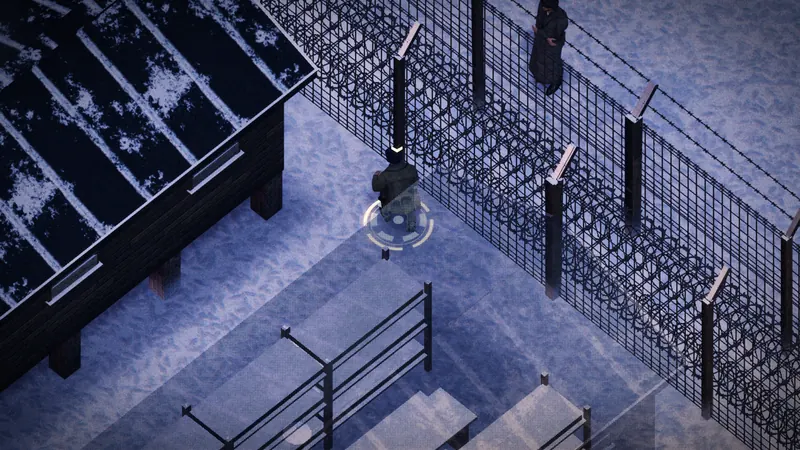
Two words of Russian. Amerikansky tovarishch: American comrade. -
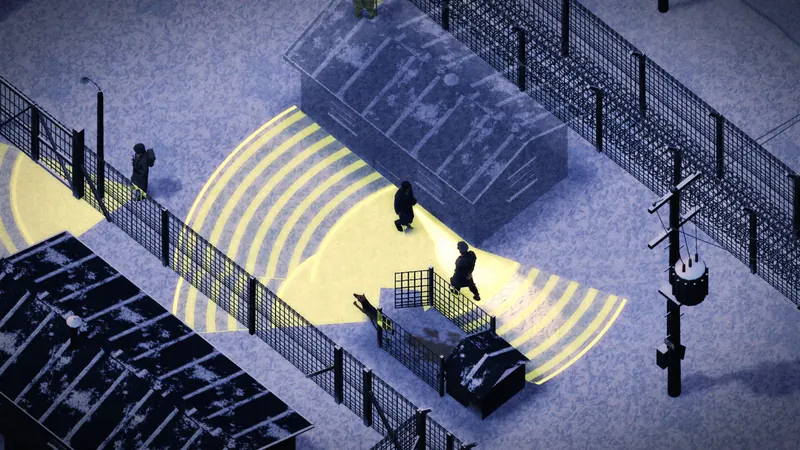
The electrician. Twenty seconds after the short, out with his lamp. -
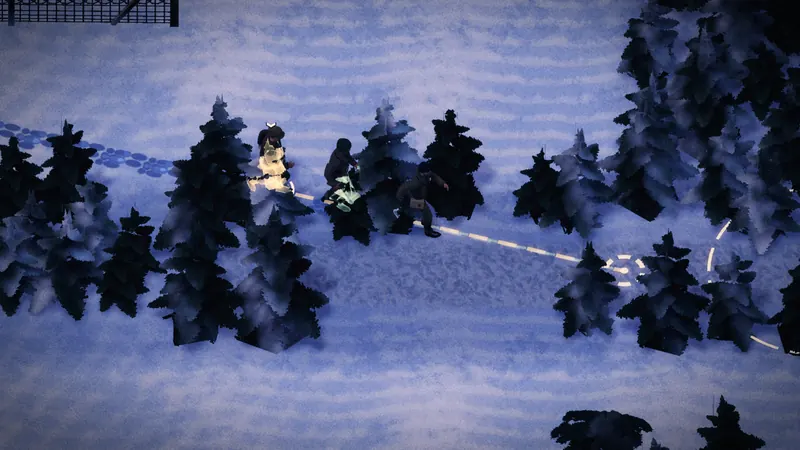
The pines. The snow keeps every footprint.
Saboteurs / Field operations The real story
The real paratrooper · June 1944 to April 1945
Joseph Beyrle
His fellow paratroopers called him Jumpin' Joe.
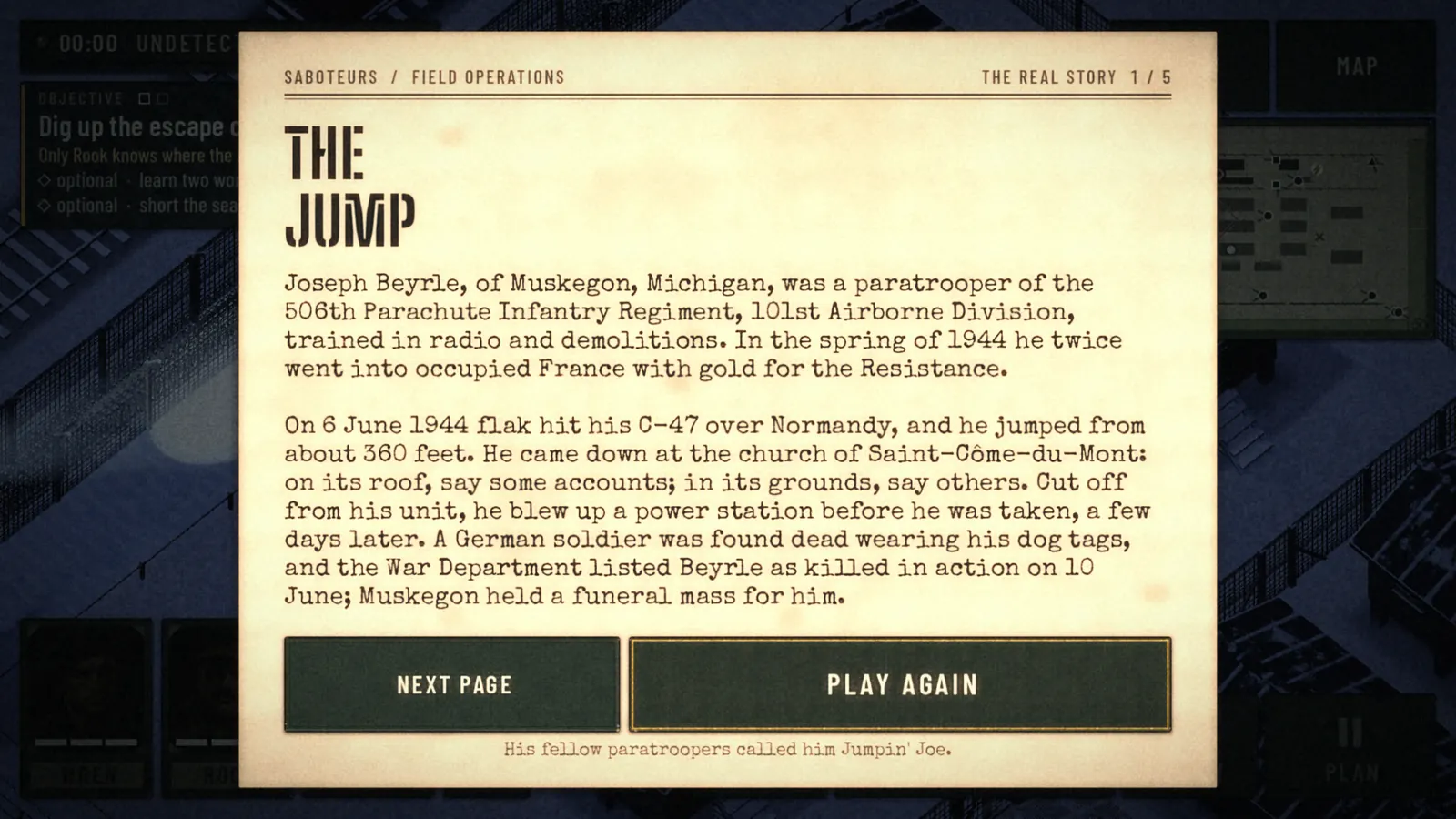
Joseph Beyrle, of Muskegon, Michigan, was a paratrooper of the 506th Parachute Infantry Regiment, 101st Airborne Division, trained in radio and demolitions. In the spring of 1944 he twice went into occupied France with gold for the Resistance.
On 6 June 1944 flak hit his C-47 over Normandy, and he jumped from about 360 feet. He came down at the church of Saint-Côme-du-Mont: on its roof, say some accounts; in its grounds, say others. Cut off from his unit, he blew up a power station before he was taken, a few days later. A German soldier was found dead wearing his dog tags, and the War Department listed Beyrle as killed in action on 10 June; Muskegon held a funeral mass for him.
We took liberties. Jay is made up, as are Wren and Rook, and none of them was ever in Stalag III-C: their night there is the game's. So is the camp's layout: its huts, wire and towers are drawn for play, not from plans of the camp.
-
Seven prisons
Over the next seven months Beyrle was held in seven prisons and camps. He escaped twice, and was caught both times. Once he and the men with him boarded a train for Berlin by mistake; a civilian gave them away, and the Gestapo beat them and called him a spy, until the army took its prisoners back.
He ended up in Stalag III-C, at Alt Drewitz near Küstrin, some 80 km east of Berlin. In early January 1945 he got out for good. Accounts of how differ. In one obituary he was hidden in a barrel that fell off a truck outside the gate; in his own telling he ran with two others through the scrub pines while a guard fired. In both, the two who went with him were killed. He went east, towards the sound of the Soviet guns.
Alt Drewitz is now Drzewice, part of Kostrzyn nad Odrą, in Poland.
-
Amerikansky tovarishch
In mid-January he walked up to a Soviet tank column with his hands up and a pack of Lucky Strikes in one of them, calling out the only Russian he knew: “Amerikansky tovarishch!”, American comrade. Guards Captain Aleksandra Samusenko, the only woman tanker in her tank army, let him stay. For about a month he fought with a battalion of the 1st Guards Tank Brigade, prized for his demolitions. At the end of January the battalion freed Stalag III-C; whether he was with it that day is not known.
In early February German dive bombers hit the column, and he was wounded in the leg. In a Soviet hospital at Landsberg an der Warthe, Marshal Zhukov heard his story and gave him papers to rejoin his own army.
Aleksandra Samusenko died of her wounds in Pomerania on 3 March 1945.
-
Two armies
At the US embassy in Moscow, where he was still on the books as dead, Beyrle was held under Marine guard until his fingerprints proved who he was. He was home in Michigan on 21 April 1945. In 1946 he married JoAnne Hollowell in the church, and before the priest, of his own funeral mass.
On 27 September 1994 President Clinton honoured him in the White House Rose Garden, with President Yeltsin there. Some accounts say both presidents gave him medals that day; the White House transcript of the ceremony does not. His son John was the United States' ambassador to Russia from 2008 to 2012.
Joseph Beyrle died in 2004 at Toccoa, Georgia, where he had trained as a paratrooper. He lies in Arlington National Cemetery.
-
The camp
On 1 December 1944 Stalag III-C held some 38,000 prisoners, most of them French and Soviet. Many worked away from it, on farms and in factories. The Soviet prisoners were kept apart from the others and starved, and as many as 12,000 of them died there, of hunger and disease. On 31 January 1945, as the Red Army came, the guards marched prisoners out of the camp; Soviet troops took the column for Germans and opened fire, and at least 22 Americans were killed.
Of some 5.7 million Soviet soldiers taken prisoner by Germany, about 3.3 million were dead by the end of the war.
In memory of the Soviet prisoners who died of hunger and disease in
Stalag III-C, and of the Americans killed on 31 January 1945.
Read about Joseph Beyrle
Saboteurs · In beta on iPhone, Android and the web
Beat the count
Saboteurs is in beta on iPhone, Android and the web. Stalag III-C is the seventh operation, and you can play it in your browser.
- iPhone Now in beta
- Android Now in beta
- Web Now in beta